New Hasakah’s Security Chief Details Next Phase of Pact, Denies Kobani Siege Amid Reports of Crisis
Hasakah Security Director Marwan Ali outlined the next phase of the agreement, including force withdrawals and handovers, denied a siege on Kobani, and addressed governance, mobilizations, and displacement.
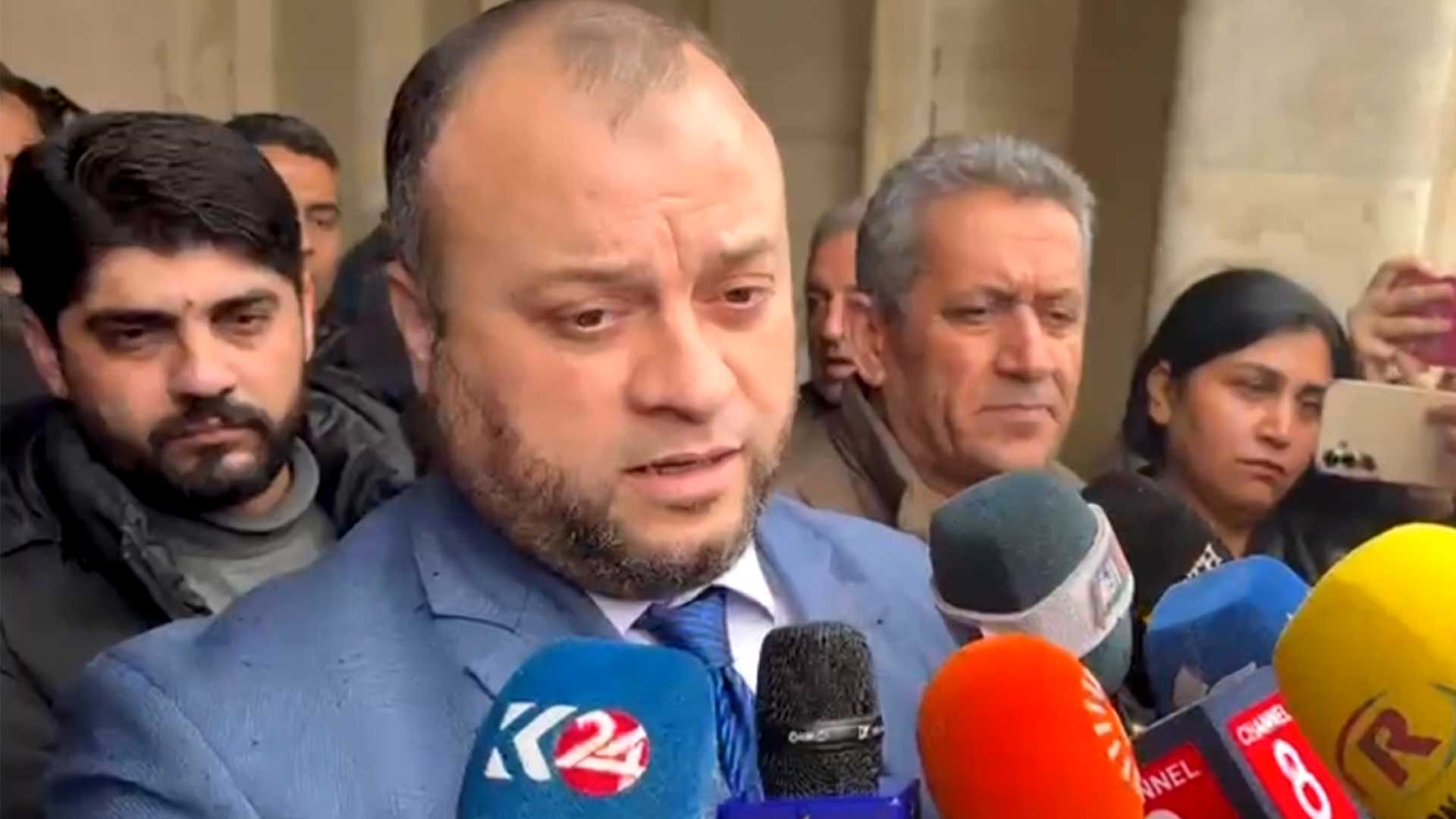
ERBIL (Kurdistan24) - In a tightly watched press conference in Hasakah, Marwan Ali, the newly appointed Director of Hasakah Security, laid out what he described as the next phase in implementing the agreement between the Syrian government and the Syrian Democratic Forces, speaking as officials and journalists pressed for clarity on security, governance, and the fate of cities still gripped by uncertainty.
Ali said the focus is now on “consolidating the terms [of the agreement],” adding that the coming stage will involve implementing the remaining articles. He said: “This includes taking over the Qamishli police outposts and the Rmelan oil fields, as well as the withdrawal of forces from both sides to their respective barracks. This is intended to mitigate or eliminate flashpoints and areas of tension between the two parties, in order to finally resolve this crisis, God willing.”
When asked whether an official mandate had been issued by him to the Governor of al-Hasakah, Noureddeen Issa, Ali rejected the premise of the question. “It is not within my jurisdiction to issue official mandates. Do you mean he mandated me?” he said. After the journalist clarified whether Issa had officially become governor, Ali replied: “Of course, he is the Governor. He was appointed by the President, not by the Commander of Internal Security. Your question is somewhat misplaced.”
Responding to concerns over reported military mobilizations in Tal Brak, Tal Hamis south of Hasakah, Ali said he had observed no such movements. “I am currently in the Ash-Shaddadi area, and there is absolutely no sign of these mobilizations you are referring to,” he said. He added that his visit to the governor, accompanied by Siamand, reflected a positive atmosphere. “God willing, in the coming days, you will see positive developments.”
A female journalist challenged Ali on the situation in Kobani, citing a lack of aid, electricity, water, and internet. Ali denied the existence of a siege. After the journalist insisted, another reporter intervened, calling for one question at a time. Ali then said: “The issue of Kobani is linked to the situation in Qamishli and al-Hasakah; it is a single issue. Forces have entered the Ash-Shuyukh area, and soon security forces will enter Kobani. Just as the withdrawal of forces will happen here, forces will also withdraw from Kobani. It is not just about the arrival of aid; it is about the restoration of normalcy to the entire region.”
On the issue of displaced persons from Ras al-Ayn (Sere Kaniye), Afrin, and Tal Abyad, Ali said discussions were ongoing. “There are camps on both sides, and there are people in al-Hasakah who have moved elsewhere or are in camps,” he said. He urged de-escalation of rhetoric surrounding the displaced. He added that once logistical and technical matters are finalized, including vacating homes, “those who were displaced from here, whether owners or current occupants, will see these properties vacated by both sides in accordance with the Agreement.”
Asked about integrating the Asayish forces into the Syrian Ministry of Interior, Ali responded: “That matter is well underway.”
In a press statement to Kurdistan24, the Syrian Observatory for Human Rights said that Kobani has been under what it described as a stifling siege for twenty-one days, beginning on Jan. 18. The city, it said, is overcrowded with displaced residents from surrounding villages and faces an almost complete absence of humanitarian aid.
According to the statement, Kobani is experiencing severe shortages of water, electricity, and internet services, along with a lack of fuel and heating materials. Vegetables are reportedly available only in limited quantities at prices beyond the means of most residents and displaced people.
The observatory said the city is also facing a critical health situation, citing a severe shortage of medicines and infant formula for more than ten days, with no indication of official crossings reopening to allow essential supplies to enter.
It added that despite talk of alleged agreements and understandings between the Syrian Democratic Forces and the transitional government, including the Ministries of Defense and Interior, the siege remains in place with no concrete signs of being lifted.
The observatory said residents view what they described as policies of starvation and deprivation against civilians as systematic war crimes carried out by forces affiliated with the transitional government and allied factions in and around the city. It said displaced people and residents are appealing to local and government authorities, as well as the international community, to take serious action, open safe routes to and from the city, and help ease civilian suffering.
As officials speak of phased implementation and restored normalcy, sharply contrasting accounts from the ground underline the fragile and contested reality now unfolding across northeastern Syria.