Erdogan Reshuffles Cabinet, Replaces Justice and Interior Ministers While Pledging Non-Interference in Syria
Erdogan dismissed Türkiye’s interior and justice ministers, named new appointees, and said Ankara seeks peace without interference, as Iraq summoned the Turkish ambassador over media remarks it says breached diplomatic norms.
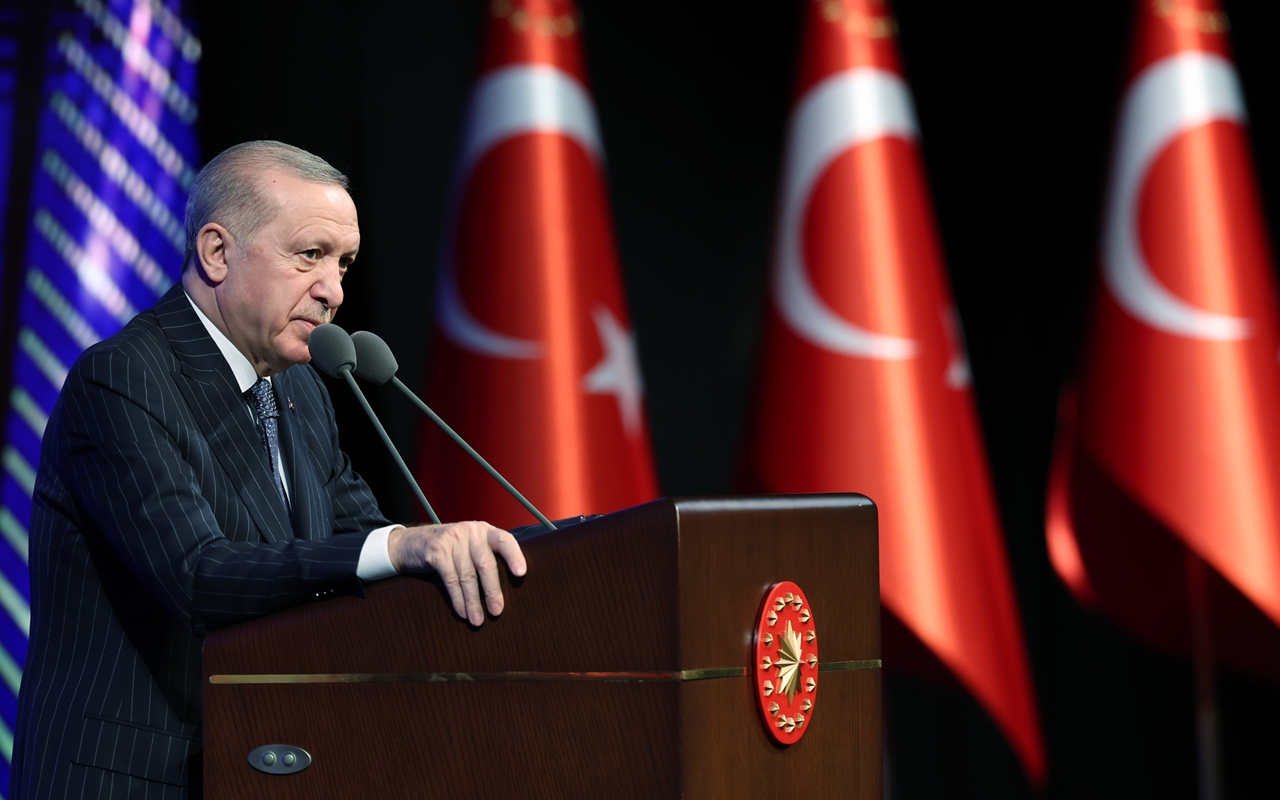
ERBIL (Kurdistan24) - President Recep Tayyip Erdogan has removed Türkiye’s interior and justice ministers in a sweeping cabinet move, replacing them with new figures, as he simultaneously reaffirmed that Ankara “does not design other countries” and instead seeks peace and stability across the region.
Türkiye’s official news agency Anadolu reported that, by order of President Recep Tayyip Erdogan, both the interior and justice ministers were dismissed from their posts and replaced by new appointees.
According to the information released, Mustafa Ciftci, the governor of Erzurum, was appointed as the new interior minister, replacing Ali Yerlikaya. At the Justice Ministry, Akin Gurlek, the Chief Public Prosecutor of Istanbul, was named to succeed Yilmaz Tunc.
It was announced that both newly appointed ministers are expected to take the legal oath before the Turkish parliament in the coming days, after which they will formally assume office.
Meanwhile, the Republican People’s Party (CHP) voiced strong objection to the appointment of the new justice minister. In a statement, the party said:
“Because of the new justice minister’s role in the legal cases against Ekrem Imamoglu, we will boycott the new minister and will not engage with him.”
Also on Wednesday, Erdogan delivered a speech addressing Türkiye’s position on the future of Syria and the broader region.
He said Türkiye would not allow Syria to return to its previous conditions and stressed the importance of establishing peace. Erdogan added that Ankara’s primary goal is to entrench stability across the region, stating:
“We hope that peace and stability will be established in Syria, in a way that its natural resources are kept away from conflict and used only for the welfare and service of the Syrian people.”
In another part of his remarks, the Turkish president focused on Syria’s internal relations and said:
“It is very important that the agreement between the Syrian government and the Syrian Democratic Forces is implemented as it is.”
At the conclusion of his speech, Erdogan reiterated that Türkiye has no intention of interfering in the internal affairs of neighboring states, declaring:
“Türkiye does not want to design other countries; we only want peace and calm to prevail in the region.”
The developments come as Iraq’s Foreign Ministry on Wednesday summoned the Turkish ambassador to Baghdad to formally convey its reservations over recent media statements by Türkiye’s foreign minister, underscoring Baghdad’s rejection of any interference in its internal affairs.
The ministry hosted Turkish Ambassador to Iraq Anil Bora Inan at its headquarters in Baghdad, following remarks made by Turkish Foreign Minister Hakan Fidan during a televised interview on CNN Türk on Feb. 9.
During the meeting, Undersecretary for Bilateral Relations Ambassador Mohammed Hussein Bahr al-Uloom expressed Iraq’s dissatisfaction with what he described as circulating statements that undermine the friendly relations between Baghdad and Ankara.
He stressed that the remarks constituted interference in Iraq’s internal affairs and a breach of diplomatic norms.
Bahr al-Uloom affirmed that Iraq is a state of institutions operating under a constitutional democratic system and cannot be compared to countries with different political systems. Regarding domestic matters, he emphasized that the issue of Sinjar and other Iraqi territories remains a purely national file handled according to Iraq’s own priorities and mechanisms.
He further reiterated Baghdad’s firm rejection of any external intervention aimed at imposing solutions or exploiting the Sinjar file for political or military leverage.
For his part, Ambassador Inan said the Turkish foreign minister’s remarks had been misunderstood due to inaccurate translation. He clarified that Fidan’s comments referred specifically to elements of the Kurdistan Workers’ Party (PKK) present in Iraq and were not directed at Iraq’s internal affairs or its citizens.
The Turkish ambassador reaffirmed that Ankara’s policy toward Iraq remains consistent, respects Iraqi sovereignty, and does not involve interference in its internal matters.
Concluding the meeting, Inan stressed his government’s commitment to maintaining strong bilateral ties and said he would convey Iraq’s position and concerns to Turkish leadership.
He underscored the importance of preserving relations between the two neighboring countries in a manner that serves the interests of both peoples.
As Ankara reshapes its cabinet and reiterates its regional posture, the diplomatic exchange between Türkiye and Iraq underscores the sensitivity surrounding sovereignty, stability, and non-interference in the region.