Japan Faces Pressure to Deliver on $550 Billion US Investment Pledge
Tokyo Weighs Early Project Announcements Ahead of Prime Minister Takaichi’s White House Visit.
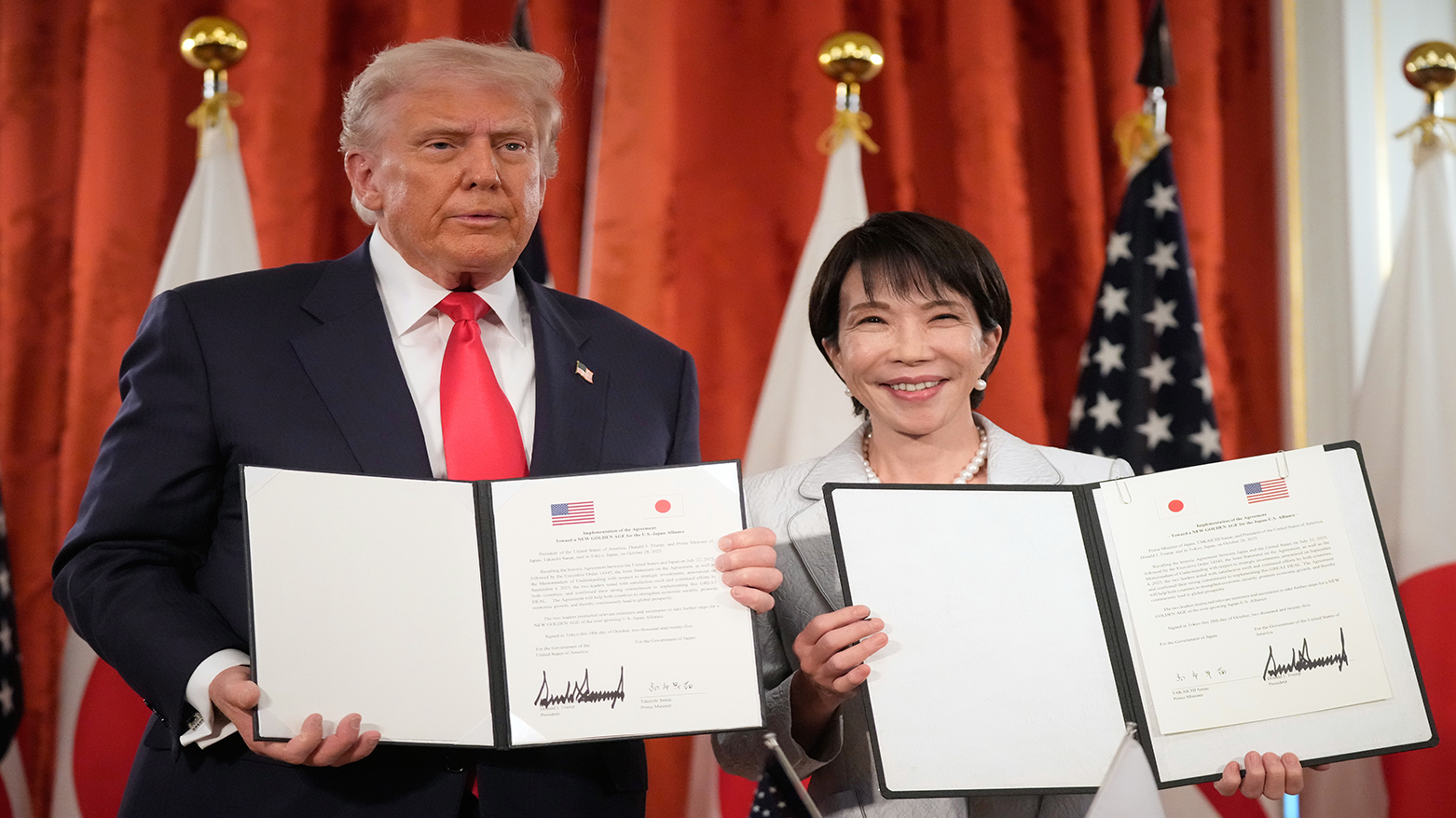
ERBIL (Kurdistan24) — Despite President Donald Trump congratulating Japanese Prime Minister Sanae Takaichi on her recent election victory, Tokyo is under mounting pressure to follow through on a sweeping $550 billion investment pledge to the United States, as both sides prepare to unveil initial projects ahead of Takaichi’s White House visit next month.
The investment commitment, announced in July, forms the backbone of a broader economic understanding between the two allies. According to the White House, Japan agreed to channel $550 billion into rebuilding and expanding “core American industries” through 2029, a move projected to generate “hundreds of thousands of US jobs.”
In return, Washington reduced threatened tariffs on Japanese imports from 25 percent to 15 percent. Trump likened the arrangement to a “signing bonus” for a baseball player, framing it as a strategic win for American industry and workers.
So far, concrete details remain limited. Ahead of Trump’s October visit to Japan, a list of prospective areas of interest from Japanese companies emerged, including nuclear reactors, artificial intelligence data center cooling systems, dredging of shipping channels, and construction of a fertilizer plant.
However, observers note that these expressions of interest fall short of finalized commitments. One diplomat involved in preparatory discussions with US Commerce Secretary Howard Lutnick described the process to the Financial Times as resembling “street-level tactics,” suggesting intense negotiation behind the scenes.
Under a memorandum of understanding between the two governments, investment proposals must pass through two review committees before being submitted to President Trump for final approval.
Once approved, Japan is required to provide funding within 45 business days. While Tokyo retains the option to decline specific projects, doing so could expose it to increased tariffs.
Profit-sharing arrangements further complicate the structure. Washington and Tokyo are set to split profits evenly until Japan recoups its initial investment. After that threshold is reached, the United States would receive 90 percent of subsequent returns.
Japanese Trade Minister Ryosei Akazawa, currently in Washington, has sought to clarify the financial mechanics. He stated that only one to two percent of the $550 billion would constitute direct capital investment.
The bulk would consist of bonds and loans from the Japan Bank for International Cooperation (JBIC), alongside credits guaranteed by the Japanese government.
Economists stress that the package is structured to limit direct fiscal exposure. “While there is an injection of capital… to buffer the potential losses by using taxpayers’ money, this $550 billion is not a give-away of our taxpayers’ money to President Trump,” UBS economist Masamichi Adachi said.
Despite political momentum, significant uncertainties remain. Analysts caution that private companies ultimately decide whether to invest, and they may be reluctant to commit without greater clarity.
“While (Takaichi) would be eager to show results… it could be a challenge, because companies make the final decision on investing in the US,” said Kohei Iwahara of Natixis.
William Chou of the Hudson Institute noted that many Japanese firms are “curious but wary,” citing a “continuing lack of clarity on the administrative and financial procedures.” Additional concerns include US labor shortages and challenges related to land acquisition and regulatory approvals.
The timeline adds urgency. With Takaichi scheduled to visit the White House on March 19, media reports suggest tensions are rising as both governments seek tangible progress.
In January, Trump warned South Korea that tariffs would be raised to 25 percent, accusing its parliament of failing to meet obligations under a separate $350 billion investment agreement with Washington. The episode has heightened concerns in Tokyo about potential repercussions if implementation falters.
To avoid a similar scenario, Japanese media report that Tokyo could announce early-stage projects worth approximately $40 billion during Akazawa’s visit. These may include gas-fired power generation for data centers, port upgrades for large oil tankers, and synthetic diamond manufacturing facilities.
Analysts say early announcements could serve a dual political purpose. “If Japan could offer the Trump administration specific new projects, it could help the White House to demonstrate its achievements to American voters,” said Kazuma Maeda of Dai-ichi Life Research Institute.
Maeda noted that the Trump administration faces challenging mid-term elections and is seeking high-profile policy successes. “The administration is eager for a signature policy,” he said.
Before departing for Washington, Akazawa acknowledged the delicate negotiations. “Regarding specific projects within the investment initiative, discussions are currently underway,” he said. “The Trump administration is a very tough administration.”
As Tokyo navigates the complex interplay of trade policy, corporate decision-making, and domestic political considerations, the coming weeks are likely to determine whether the ambitious pledge evolves into concrete economic cooperation — or becomes another flashpoint in global trade diplomacy.