Rubio Meets G7 Foreign Ministers in Munich, Reaffirms US Commitment to Global Stability
Top diplomats discuss conflicts in Africa, Europe, and the Middle East, with Washington pledging efforts on Venezuela and Ukraine.
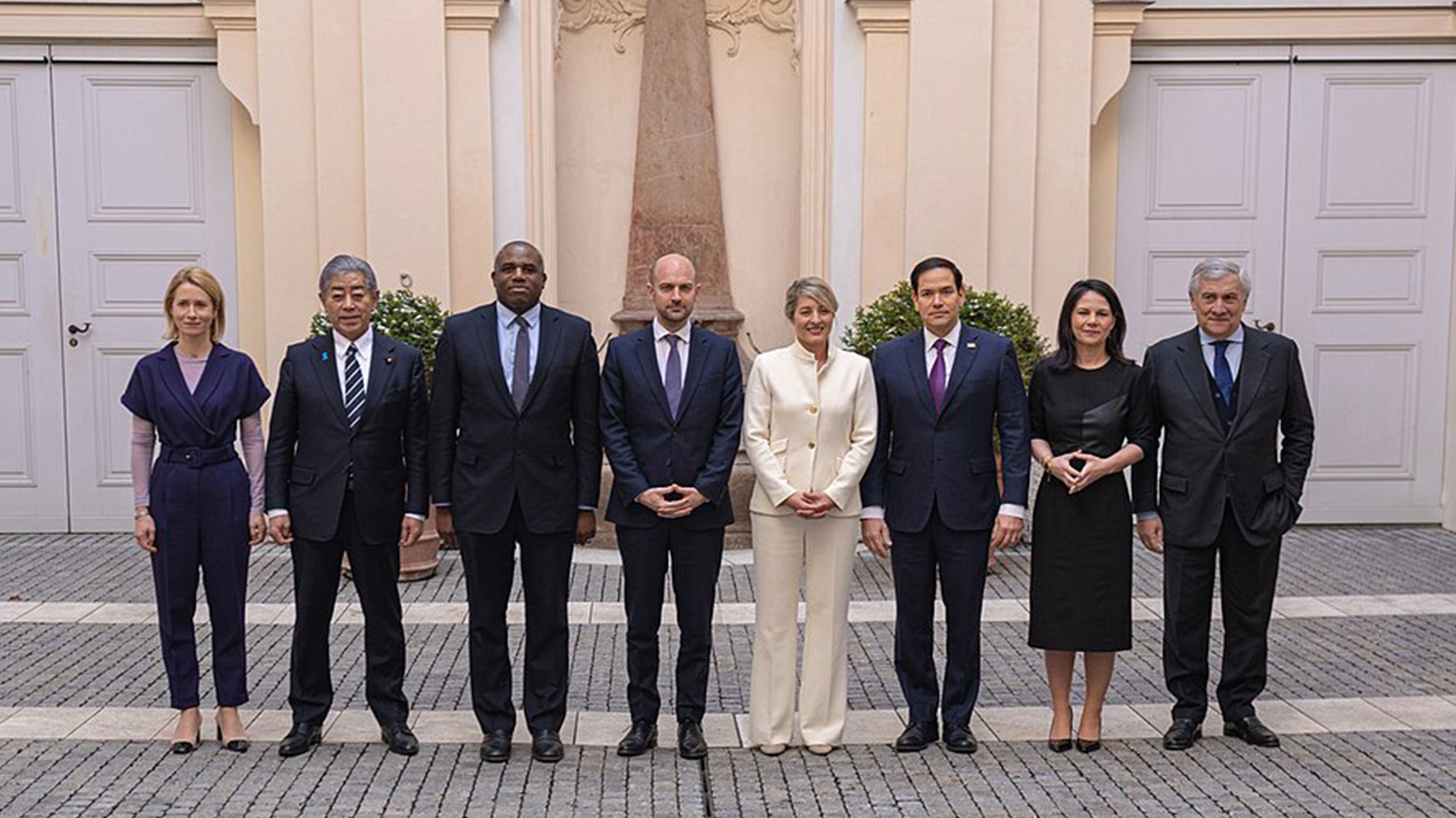
ERBIL (Kurdistan24) — US Secretary of State Marco Rubio met Saturday with foreign ministers from the Group of Seven in Munich, reaffirming Washington’s commitment to promoting stability in Venezuela and working toward a negotiated end to the Russia-Ukraine war, according to a State Department readout.
The meeting, held on the sidelines of the Munich Security Conference, focused on pressing global challenges, including ongoing conflicts threatening peace and stability in Africa, Europe, and the Middle East, as well as regional security concerns in the Indo-Pacific and the Western Hemisphere.
According to a statement attributed to Principal Deputy Spokesperson Tommy Pigott and released by the Office of the Spokesperson, Rubio and his counterparts reaffirmed the importance of strengthening G7 coordination to address threats to international peace and security.
The discussions underscored shared concerns over geopolitical flashpoints across multiple regions. While the readout did not detail specific country cases, it emphasized the collective resolve of the G7 — which comprises the United States, Canada, France, Germany, Italy, Japan, and the United Kingdom — to maintain close consultation amid escalating global tensions.
Rubio reiterated the United States’ commitment to promoting stability in Venezuela, where Washington has remained engaged on political and security developments, and to advancing diplomatic efforts aimed at ending the war between Russia and Ukraine.
In a separate joint statement released under Canada’s 2025 presidency, the Group of Seven foreign ministers said they had held detailed discussions on Russia’s war in Ukraine and reaffirmed their commitment to securing a durable peace that ensures Ukraine’s long-term sovereignty and stability.
The ministers welcomed their meeting with Ukrainian Foreign Minister Andrii Sybiha and stressed continued financial support for Kyiv, including the use of extraordinary revenues derived from Russian sovereign assets.
They signaled that any new sanctions beyond February would be tied to whether Moscow engages in what they described as genuine, good-faith negotiations to end the war, while reiterating unwavering support for Ukraine’s territorial integrity.
The statement also addressed broader geopolitical flashpoints, including the Middle East, the Indo-Pacific, and East Asia. The G7 ministers reaffirmed support for a durable Israeli-Palestinian peace, backed the full implementation of the Israel-Hamas ceasefire, and expressed support for ongoing mediation efforts by Egypt, Qatar, and the United States.
They condemned what they described as destabilizing actions by Iran, including accelerated uranium enrichment and support for armed groups, and voiced concern over military assistance provided to Russia by the DPRK and Iran, as well as dual-use support from China.
The ministers further reiterated their commitment to a free and open Indo-Pacific, opposition to unilateral changes to the status quo in the South China Sea, and the complete denuclearization of the Korean Peninsula, while also reviewing crises in the Democratic Republic of the Congo, Sudan, Haiti and Venezuela ahead of their next meeting in Charlevoix, Quebec, in March.
The G7 meeting comes at a time of heightened international uncertainty, with conflicts in Eastern Europe and the Middle East continuing to reverberate globally, and with strategic competition intensifying in the Indo-Pacific.
Besides his meeting with the G7, Rubio delivered broader remarks at the Munich Security Conference, calling for renewed transatlantic cooperation and a revitalized Western alliance capable of confronting emerging economic, military, and technological challenges.
The G7 foreign ministers’ talks in Munich reflect ongoing efforts among leading industrial democracies to coordinate policy responses and present a unified front in addressing complex global crises.