Kurdistan President, SDF Commander Discuss Syria and Regional Security at Munich Meeting
Nechirvan Barzani stresses political dialogue and the protection of Kurdish rights within a unified Syria as security concerns persist
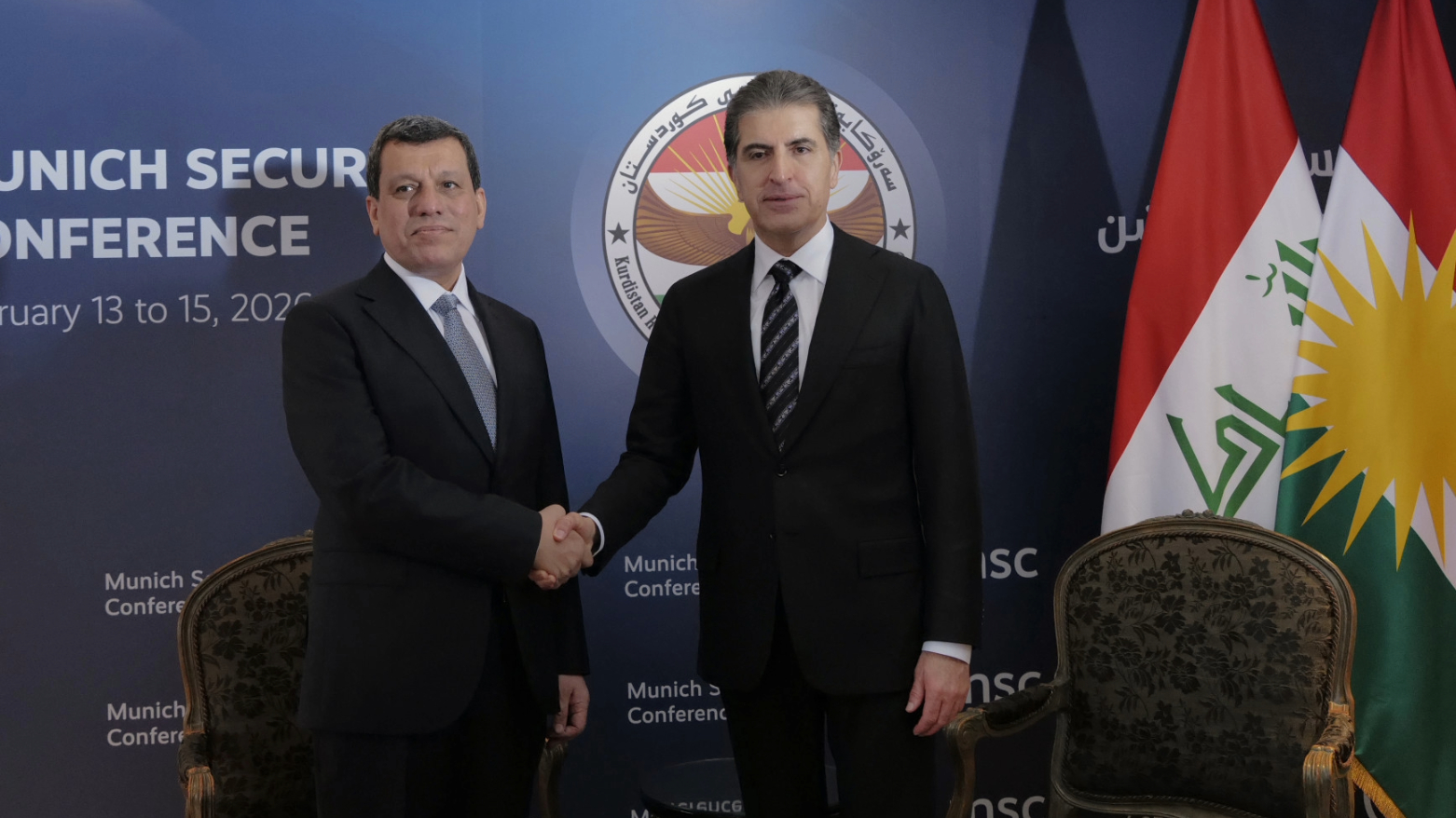
ERBIL (Kurdistan24) — Kurdistan Region President Nechirvan Barzani on Sunday met with Syrian Democratic Forces (SDF) Commander Mazloum Abdi on the sidelines of the Munich Security Conference to review the latest political and security developments in Syria and the broader region, including the situation of Kurds and the SDF’s organizational role in northern Syria.
Barzani emphasized the importance of sustained dialogue and negotiation to resolve Syria’s political challenges, highlighting that Kurdish rights, along with the rights of other local groups, must be safeguarded within a unified Syria under the framework of the country’s constitution and future governance structures.
Commander Abdi expressed his gratitude to President Masoud Barzani and the Kurdistan Region Presidency for their continuous efforts and constructive role in stabilizing the region and supporting the ceasefire reached between the SDF and Damascus.
The meeting also addressed ongoing security threats, including the resurgence of ISIS and other terrorist activities, underscoring the continued need for regional coordination to maintain stability.
Since the collapse of centralized authority in Syria following the 2011 uprising and ensuing civil war, the country has experienced shifting power dynamics involving the Assad government, opposition factions, extremist groups, and Kurdish forces in the north and east.
In recent years, under President Ahmed al‑Sharaa, Damascus has moved to reassert control over territories long held by various armed groups, leading to periodic escalations in fighting with local Kurdish forces — notably the Syrian Democratic Forces (SDF) — who had established autonomous governance in parts of northern Syria during the fight against ISIS and as part of a broader push for political recognition.
Clashes between the Syrian government and the SDF intensified, prompting regional concern and humanitarian stress. A fragile ceasefire was recently reached through negotiated understandings, aimed at halting direct hostilities and creating space for political dialogue.
Throughout this period, the Kurdistan Region leadership has played a notable diplomatic role. Leveraging long‑standing relationships with regional and international partners Kurdistan Region leaders facilitated back‑channel communications and confidence‑building efforts between the Syrian government and the SDF.
Kurdish mediation efforts — often conducted alongside regional stakeholders — helped ease tensions, promote localized ceasefires, and push both sides toward broader negotiations. These initiatives reflect the Kurdistan Region’s broader commitment to stability in Syria and its interest in ensuring that Kurdish rights and governance arrangements are protected within a future political settlement, even as Damascus seeks to restore state authority across the country.