Al-Maliki Sets Condition: Will Step Aside Only if Shiite Bloc Votes No
US and International Pressure Mount as Iraq’s Shiite Bloc Faces Internal Divisions Over Prime Ministerial Race
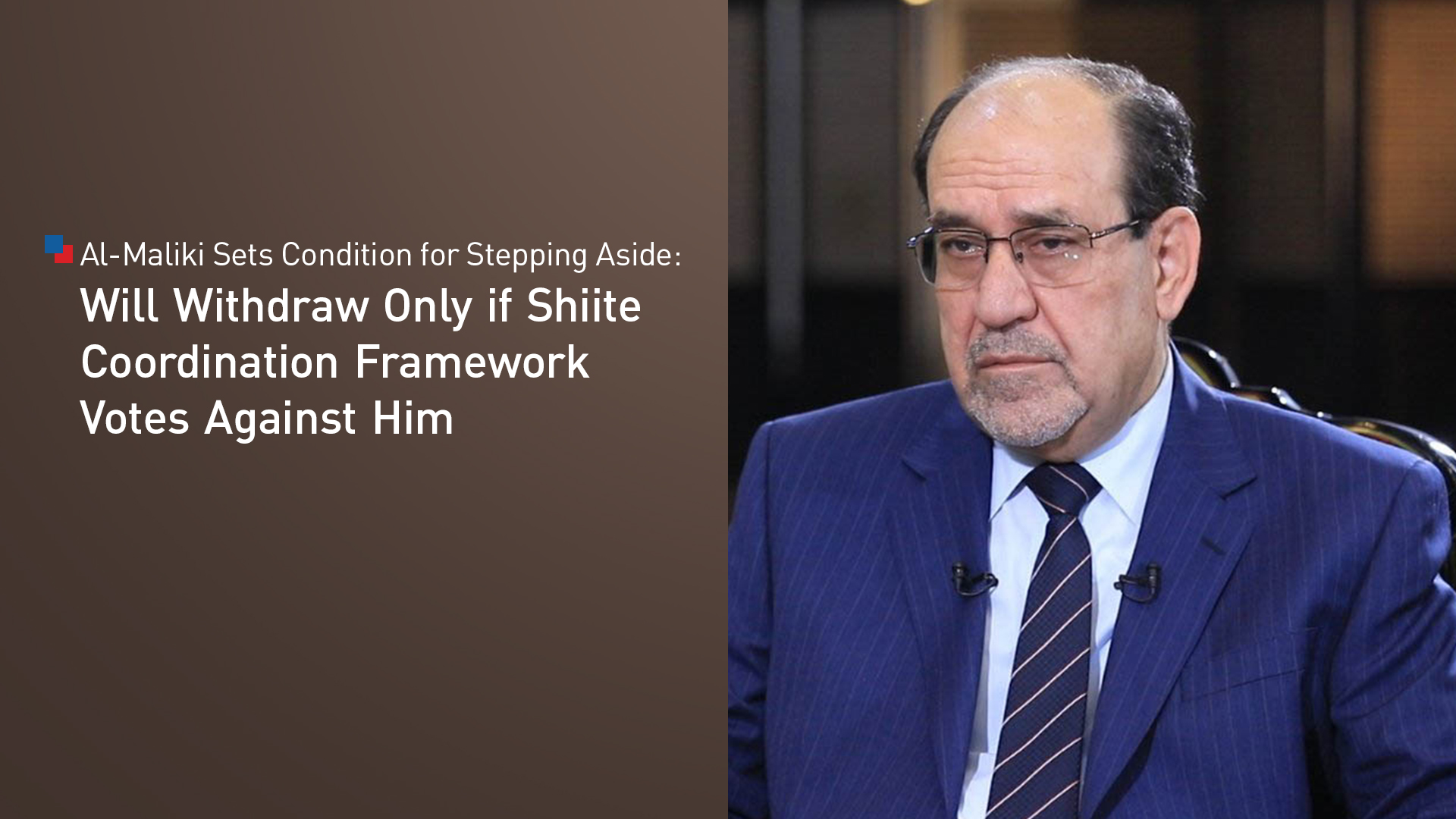
ERBIL (Kurdistan24) — Amid ongoing political turbulence in Iraq, new developments have emerged regarding the candidacy of Nouri al-Maliki for the position of prime minister. Sources indicate that al-Maliki will only agree to withdraw from the race if the majority of leaders within Iraq’s Shiite Coordination Framework vote to remove him from the candidacy, while he continues to face mounting international pressure to step aside.
Mahmoud Hayani, a member of the Coordination Framework, told reporters that this is the single condition al-Maliki has set for withdrawing. “Maliki has stated that he will step back only if the majority of Coordination Framework leaders formally vote to take him out of the race,” Hayani explained.
“He is not willing to act under any other internal or external pressure,” he added.
According to Kurdistan24 sources, a new message from the United States was delivered to the Coordination Framework leaders on Monday, signaling Washington’s reaffirmation of opposition to al-Maliki’s candidacy and urging them to prevent him from returning to the premiership.
The potential withdrawal of al-Maliki under this condition is already reshaping the political field. Ali Fahad, a member of the Hikma bloc, suggested that Hamid Shatri now emerges as the strongest contender.
“Shatri has the greatest chance because he faces the least internal and international opposition,” Fahad said.
Conversely, the prospects for Mohammed Shiaa al-Sudani have diminished in the wake of al-Maliki’s potential withdrawal, reflecting a significant reshaping of coalition support and alliances.
To date, Coordination Framework meetings aimed at consolidating positions and agreeing on a candidate have proceeded cautiously. No date has been formally set for leaders to convene, highlighting the internal divisions among Shiite political forces over the selection of a prime minister.
Observers note that the struggle over al-Maliki’s candidacy underscores broader challenges in Iraq’s political system, including factionalism, external influence, and the ongoing difficulty of achieving consensus among Shiite blocs that dominate parliament.
The unfolding contest carries implications beyond Iraq’s borders. International actors, particularly the United States, appear determined to shape the outcome, emphasizing how domestic Iraqi politics remain intertwined with regional and global strategic considerations.
In this context, al-Maliki’s potential candidacy—and the precise condition under which he would step aside—is not only a test of internal political coordination but also a barometer of the influence exerted by foreign powers over Iraq’s leadership selection process.
The Coordination Framework is Iraq’s main Shiite parliamentary bloc, formed after the 2021 elections to unify Shiite parties and consolidate influence over government formation. Historically, the bloc has played a decisive role in selecting prime ministers, but internal divisions have often delayed consensus and prolonged political stalemates.
Al-Maliki’s potential candidacy has intensified these divisions, as leaders weigh his political legacy against growing international pressure and domestic concerns over sectarian tensions.
Al-Maliki served as prime minister from 2006 to 2014, a period marked by strong centralization of power and allegations of marginalizing Sunni and Kurdish political actors. His return to the premiership is controversial both domestically and internationally, with the United States and other Western powers actively signaling opposition to his candidacy.
The situation underscores how Iraq’s internal Shiite politics remain intertwined with regional and global strategic interests, making the upcoming Coordination Framework decisions critical for the country’s political stability.