Khamenei Issues Stark Warning to U.S. as Nuclear Talks Resume in Geneva
“The U.S. President has said that for 47 years, the United States hasn’t been able to eliminate the Islamic Republic. That is a good confession,” Khamenei said, adding, “You, too, will not be able to do this.”
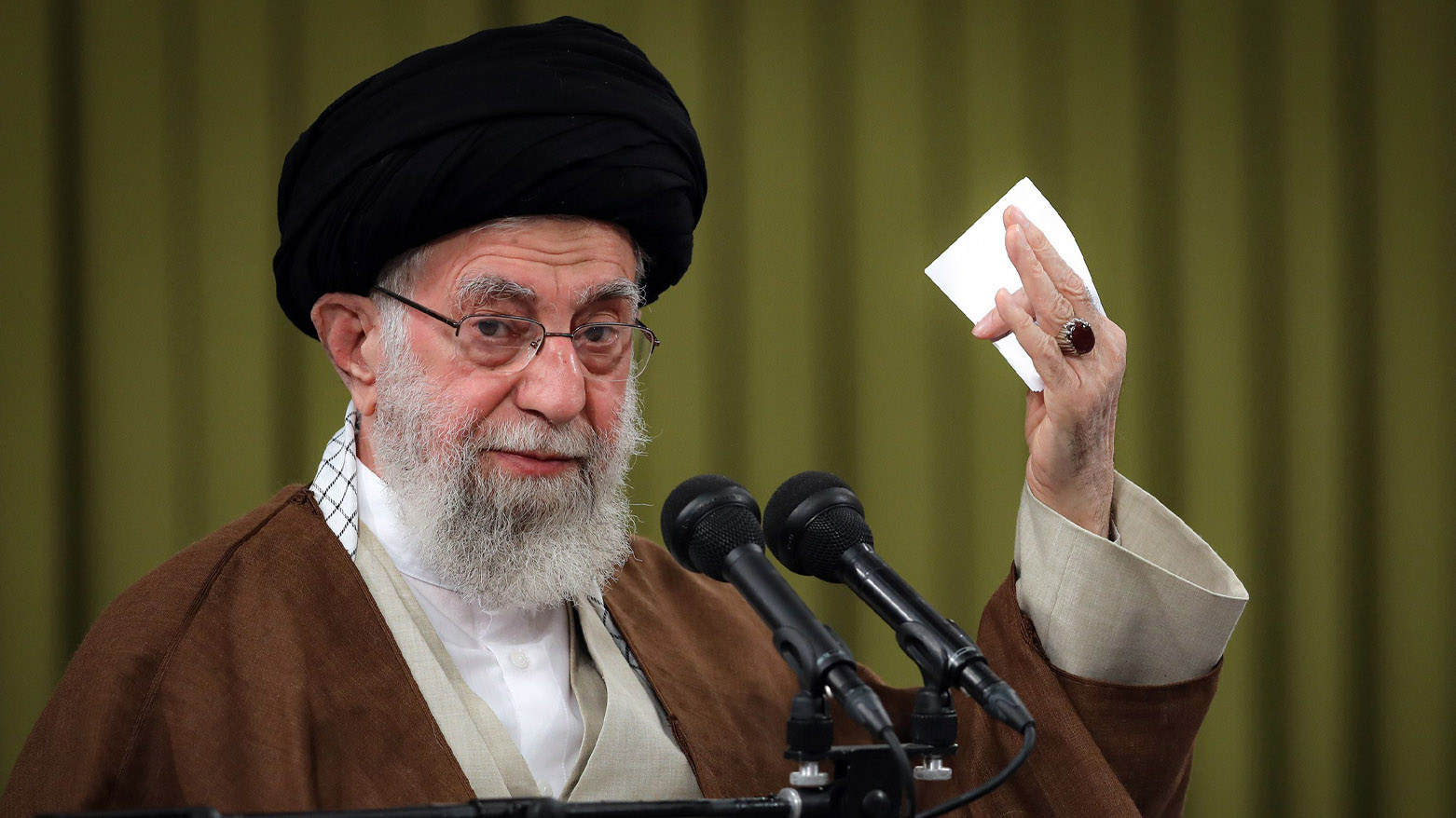
ERBIL (Kurdistan24) — Iran’s Supreme Leader Ayatollah Ali Khamenei delivered a sharply worded message to the United States on Tuesday, declaring that Washington would never succeed in defeating the Islamic Republic, as Iranian and U.S. delegations convened in Geneva for renewed negotiations over Tehran’s nuclear program.
In remarks published on his official X account, Khamenei spoke during a meeting in Tehran with thousands of people from East Azerbaijan Province, held on the eve of the anniversary of the Feb. 18, 1978 uprising in Tabriz—an event widely regarded as a pivotal moment in the lead-up to Iran’s 1979 Islamic Revolution.
The gathering commemorated the historic mobilization against the rule of Shah Mohammad Reza Pahlavi, reinforcing the regime’s revolutionary narrative of resistance to foreign influence.
Referring indirectly to U.S. President Donald Trump, Khamenei dismissed repeated American assertions of military superiority. “The strongest military force in the world may at times be struck so hard that it cannot get up again,” he said, according to the post.
He also addressed reports of U.S. naval deployments in the region, stating that while a warship is “a dangerous piece of military hardware,” there are weapons capable of sending such vessels “to the bottom of the sea.”
Khamenei also pointed directly to remarks by U.S. President Donald Trump, noting that the American leader had acknowledged that Washington has failed for 47 years to eliminate the Islamic Republic. “That is a good confession,” Khamenei said, adding defiantly, “You will not be able to do so in the future either.”
The remarks came as Iranian and U.S. representatives met Tuesday in Geneva for talks aimed at reviving or reshaping understandings surrounding Iran’s nuclear activities. The discussions follow years of heightened tensions after the United States withdrew from the 2015 nuclear accord—formally known as the Joint Comprehensive Plan of Action (JCPOA)—and reimposed sweeping economic sanctions on Tehran.
Iran has since expanded uranium enrichment levels beyond the limits set under the agreement, prompting Western powers to warn that Tehran is moving closer to weapons-grade capability—an accusation Iranian officials deny, insisting their program is solely for peaceful civilian purposes.
Tuesday’s meeting in Geneva is widely seen as a critical diplomatic test. Both sides face mounting strategic pressures: Washington seeks to prevent further nuclear escalation and regional destabilization, while Tehran aims to secure sanctions relief amid persistent economic strain at home.
Khamenei’s remarks come as Iranian officials continue diplomatic engagement while publicly maintaining a firm stance toward Washington. By referencing the 1978 Tabriz uprising, the Supreme Leader linked current tensions with the United States to events associated with the 1979 Islamic Revolution, a central element of the Islamic Republic’s political identity.
Analysts note that such statements serve multiple audiences: domestic supporters, regional rivals, and Western negotiators. They also observe that the contrast between public rhetoric and behind-the-scenes diplomacy illustrates the complexity of U.S.–Iran relations as Geneva talks continue.