'Acceptance of the Right to Enrichment Was Our Condition for Talks with the U.S.,' Iran’s CG in Erbil Says
Iran Engages in Diplomacy After Regional Mediation, Setting Clear Conditions on Nuclear Negotiations, Iran’s Consul General in Erbil Says
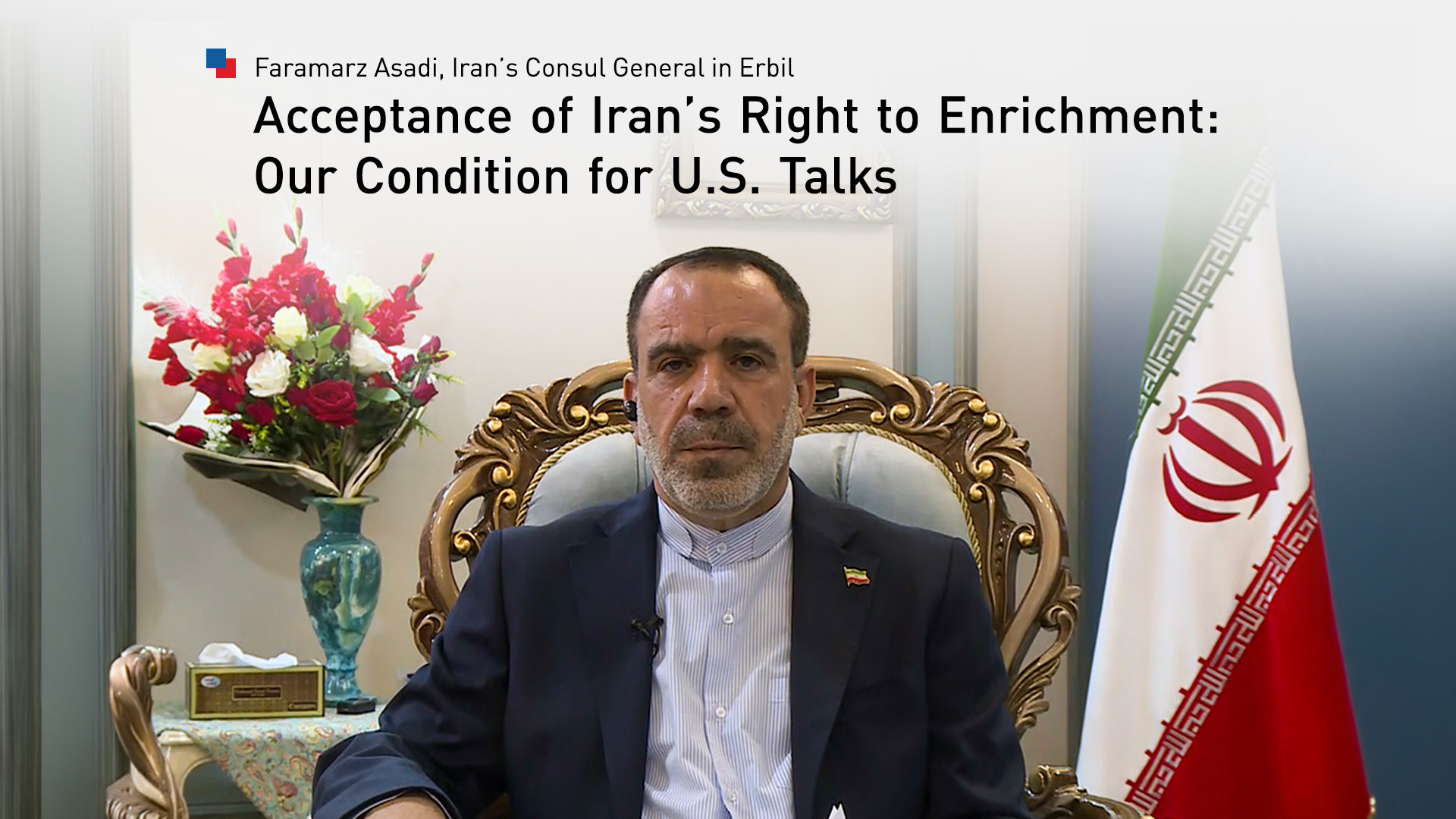
ERBIL (Kurdistan24) — Faramarz Asadi, the Consul General of the Islamic Republic of Iran in Erbil, outlined the latest developments in Iran’s indirect negotiations with the United States, underscoring the country’s strategic priorities and highlighting the historic and multifaceted relationship between Iran and the Kurdistan Region.
In an exclusive interview with Kurdistan24 on Tuesday, Asadi stressed that Tehran agreed to return to talks only after its specific conditions were accepted and described ties with the Kurdistan Region as “transcending a normal relationship,” noting their historical depth.
“The Islamic Republic of Iran returned to diplomacy after regional leaders and countries entered as mediators and requested that Iran engage in negotiations with the United States,” Asadi said.
He emphasized that Tehran’s conditions were clear: the talks must focus exclusively on the nuclear issue and the right to enrichment, with no additional topics considered.
“The opposing side has accepted our conditions… Iran is ready to discuss these two issues with the other side—politically and diplomatically—but we will not bow to pressure from anyone,” he said.
Asadi also reflected on the Iranian public’s skepticism toward the United States, citing polls indicating that more than 80% of Iranians remain wary of Washington’s intentions. He reiterated that the Islamic Republic had prepared for all scenarios, whether the negotiations succeed or fail.
“Naturally, the country has prepared itself for any scenario—both agreement and non-agreement. We expect to achieve a result in the negotiations, given that they have returned to the table,” he said, highlighting Tehran’s insistence on defending its rights while pursuing diplomacy.
Faramarz Asadi also highlighted the Iranian perspective on external pressures and interference during sensitive periods. He recalled that even amid ongoing negotiations, armed conflict erupted, and domestic protests within Iran were reportedly manipulated by foreign actors into what he described as a “coup-d’état situation.”
“Nevertheless, the Islamic Republic of Iran has prepared itself for such matters and for all stages and phases. It is ready for any situation,” Asadi said, emphasizing Tehran’s readiness to navigate both diplomatic and security challenges.
The Consul General further criticized what he characterized as inconsistencies in U.S. behavior during the talks. “Are you not currently witnessing the Americans' contradictions in their behavior, speech, actions, and during the negotiations? How is the Islamic Republic of Iran supposed to accept this?” he asked.
Asadi pointed to a military strike by the "so-called Zionist regime" against Iran that occurred in the midst of previous rounds of negotiations, claiming it was coordinated with U.S. support.
He also cited alleged foreign involvement in internal protests that escalated into violence and resulted in the deaths of some Iranian citizens, framing these events as part of a pattern of pressure and interference that Tehran says it remains prepared to counter.
The remarks come as Iranian and U.S. delegations convene in Geneva on Tuesday under the mediation of Oman, in an effort to revive stalled negotiations over Iran’s nuclear program. Regional countries, including Turkey and Oman, have played a crucial role in facilitating talks and preventing escalation.
According to Asadi, while Oman has acted as the primary intermediary, Iran appreciates the broader regional involvement in stabilizing the situation.
Beyond the nuclear talks, Asadi highlighted Iran’s commercial and strategic ties with the Kurdistan Region.
“The commercial and trade status between the Kurdistan Region and the Islamic Republic has a historical background… the first gates opened to the people of the Kurdistan Region for trade were those of the Islamic Republic of Iran,” he said.
He described the economic relationship as “a stable, historical, and normal neighborly routine” that has been developing for over thirty years and continues to expand.
Asadi concluded by reiterating Iran’s commitment to dialogue and diplomacy while defending its rights on the international stage.
“The Islamic Republic wanted to prove to the world that we are people of diplomacy and negotiation… We are completely flexible, but we stand by our rights in various international matters and are willing to negotiate,” he said.