SDF Declares General Amnesty, Says ‘Phase of War Has Ended’ in Western Kurdistan
SDF Commander Mazloum Abdi announced a general amnesty for prisoners, including those detained in recent fighting, and outlined steps toward institutional integration and stability.
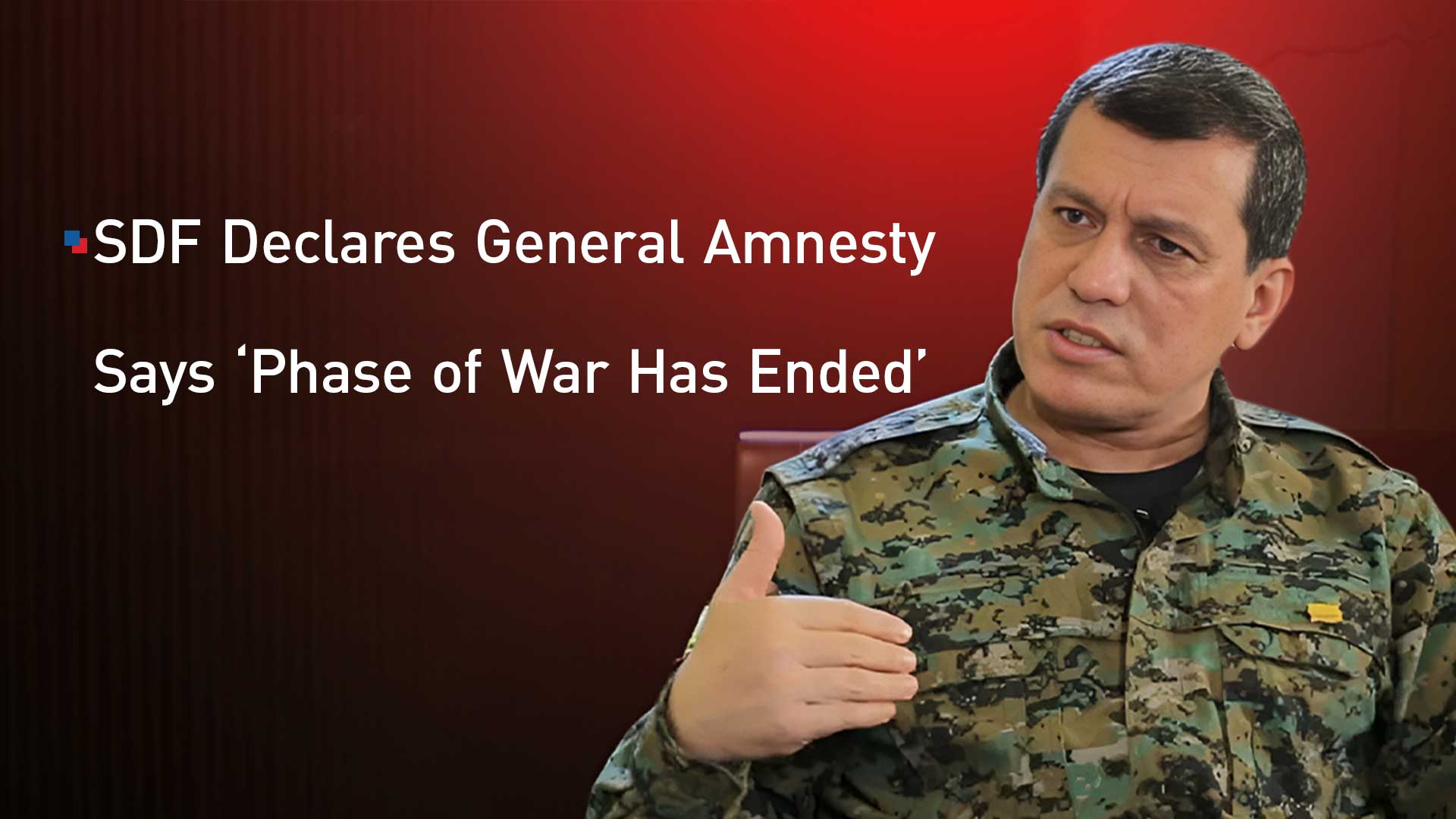
ERBIL (Kurdistan24) - In a sweeping declaration before a large public gathering in Hasakah, the Commander-in-Chief of the Syrian Democratic Forces announced a general amnesty for prisoners, declaring that the phase of war has ended and that the region is entering a period of stability and coexistence.
On Tuesday, Mazloum Abdi, Commander-in-Chief of the Syrian Democratic Forces (SDF), announced that a general amnesty for prisoners will be issued, adding that those detained during the recent battles will also be released.
Speaking during a large public gathering in the city of Hasakah held under the slogan “Together to Protect Our Community,” Abdi delivered a message of reassurance and hope to the people of the region, stressing that the phase of war has concluded and that the time has come to consolidate stability and coexistence.
He stated that the Jan. 29 agreement has been activated as a roadmap, announcing that an agreement has been reached to reorganize the Syrian Democratic Forces under the umbrella of the Ministry of Defense, while safeguarding all fighters and commanders who defended the land and possess experience in the fight against terrorism.
Regarding the security file, Abdi assured that the existing security structures and Asayish forces will remain in place and will continue their duties under the umbrella of the “Ministry of Interior” to preserve the stability of the cities. He also noted that the process of integrating institutions has begun, and that current employees and officials will remain in their positions and become part of the new administrative structure.
The SDF commander further revealed that a positive and broad meeting was held in Munich with the Syrian government’s foreign minister and head of intelligence. Both sides agreed to accelerate steps toward unification and confidence-building, under the supervision and support of international countries that guarantee the implementation of the agreement.
A key point in his remarks was the emphasis on preserving the specific character of Kurdish regions. Abdi clarified that, according to the agreements, Kurdish areas will be administered by their own people, and their cultural and administrative rights will be protected. He added that this will take place within a shared system that also safeguards the rights of other components, including Arabs and Syriacs.
Abdi called on all sides to confront hate speech, resentment, and sedition. He expressed confidence that the future of the region is moving toward reconstruction and lasting stability, stressing that no effort will be allowed to undermine social peace.
Framing the amnesty as part of a broader transition from conflict to stability, Abdi presented the decision as a step toward reconciliation, institutional integration, and long-term security.