Kurdish Leaders Warn of Rights Threats Amid Baghdad Parliamentary Maneuvers Affecting Representation
Support for Nouri al-Maliki wanes within the Shiite Coordination Framework, fueling uncertainty over Iraq’s next prime minister
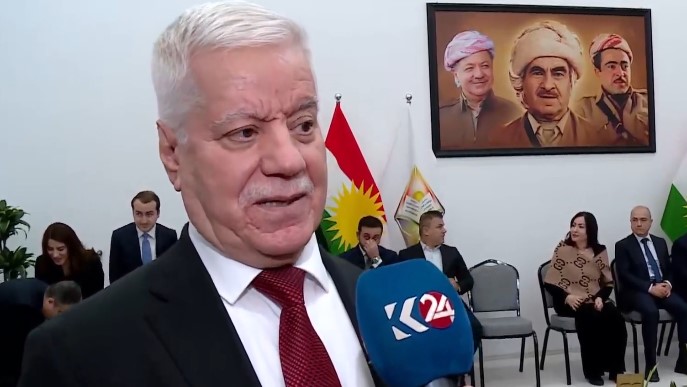
ERBIL (Kurdistan24) — Hussein Sheyhani, a member of the Sadiqoun Movement’s Politburo, on Wednesday told Kurdistan24 that support for Nouri al-Maliki within the Shiite Coordination Framework has declined, prompting the bloc to consider alternative strategies.
According to Sheyhani, six key leaders within the framework have withdrawn their backing of Maliki for the prime premiership, leaving the bloc divided on its approach. Sheyhani explained that the dwindling support is partly due to internal disagreements.
“We now face two options: either Maliki steps aside voluntarily, or the framework makes a collective decision on withdrawing his candidacy,” he said, emphasizing the delicate balance required to accommodate the interests of all ethnic and sectarian groups while navigating pressure from external actors, including the United States.
The issue gained further attention following a recent warning by U.S. President Donald Trump, stating that Washington would withhold further support for Iraq if Maliki were to assume the prime premiership.
Separately, Sherwan Dubardani, an Iraqi parliamentarian from the Kurdistan Democratic Party's (KDP) bloc, on Wednesday strongly criticized efforts by Baghdad to marginalize Kurdish interests and alter political arrangements, noting that recent moves in the parliament undermine principles of “consensus and partnership.”
In a statement to Kurdistan24, Dubardani said, “During the last parliamentary session on Tuesday, maneuvers between Shia and Sunni factions were made to pass measures that would harm Kurdish rights and destabilize established political agreements.”
He added that over 50 constitutional provisions remain unimplemented by Baghdad, highlighting longstanding structural challenges.
Regarding the rotation of the Chief of Staff of the Iraqi Army, Dubardani emphasized that the post is a legitimate right of the Kurdish people, but Shia and Sunni factions are attempting to bypass Kurdish input on key security and military positions, citing Nineveh Governorate as an example where Kurdish control over security posts has been diminished.
He described these developments as a direct threat to the Kurdistan Region’s stability and constitutional rights.
In response, Dubardani urged Kurdish political forces to unify in Baghdad, form a high-level political council, and ensure that Kurdish ministers in the Iraqi government maintain a firm stance to prevent decisions from being implemented without their approval.
Meanwhile, Kamal Kerkuki, a member of the KDP Politburo, on Wednesday affirmed that the presidency of Iraq is a constitutional right of the KDP, given its electoral mandate in the Kurdistan Region and the support of over a million votes in the national parliamentary elections.
In an interview with Kurdistan24, Kerkuki highlighted the importance of maintaining Kurdish representation at all levels of the federal government and ensuring mechanisms are in place to protect Kurdish interests.
Kerkuki also emphasized the role of Kurdish parliamentarians in safeguarding constitutional processes. “It is clear how they operate,” he said, “and I commend Farhad Atroshi for his effective role as deputy speaker of the Iraqi parliament at a critical time.”
Commenting on the stance of other Iraqi factions and federal institutions, particularly the Federal Supreme Court and the presidential rotation process, Kerkuki warned that any unconstitutional actions would violate Iraq’s legal framework, noting that similar illegal measures have been attempted repeatedly in the past.