Türkiye Urges U.S.-Iran Negotiations as Turkish FM Warns Against Escalation
Türkiye’s foreign minister urged U.S.-Iran negotiations and warned against escalation, citing positive signals in talks but noting rising regional military activity.
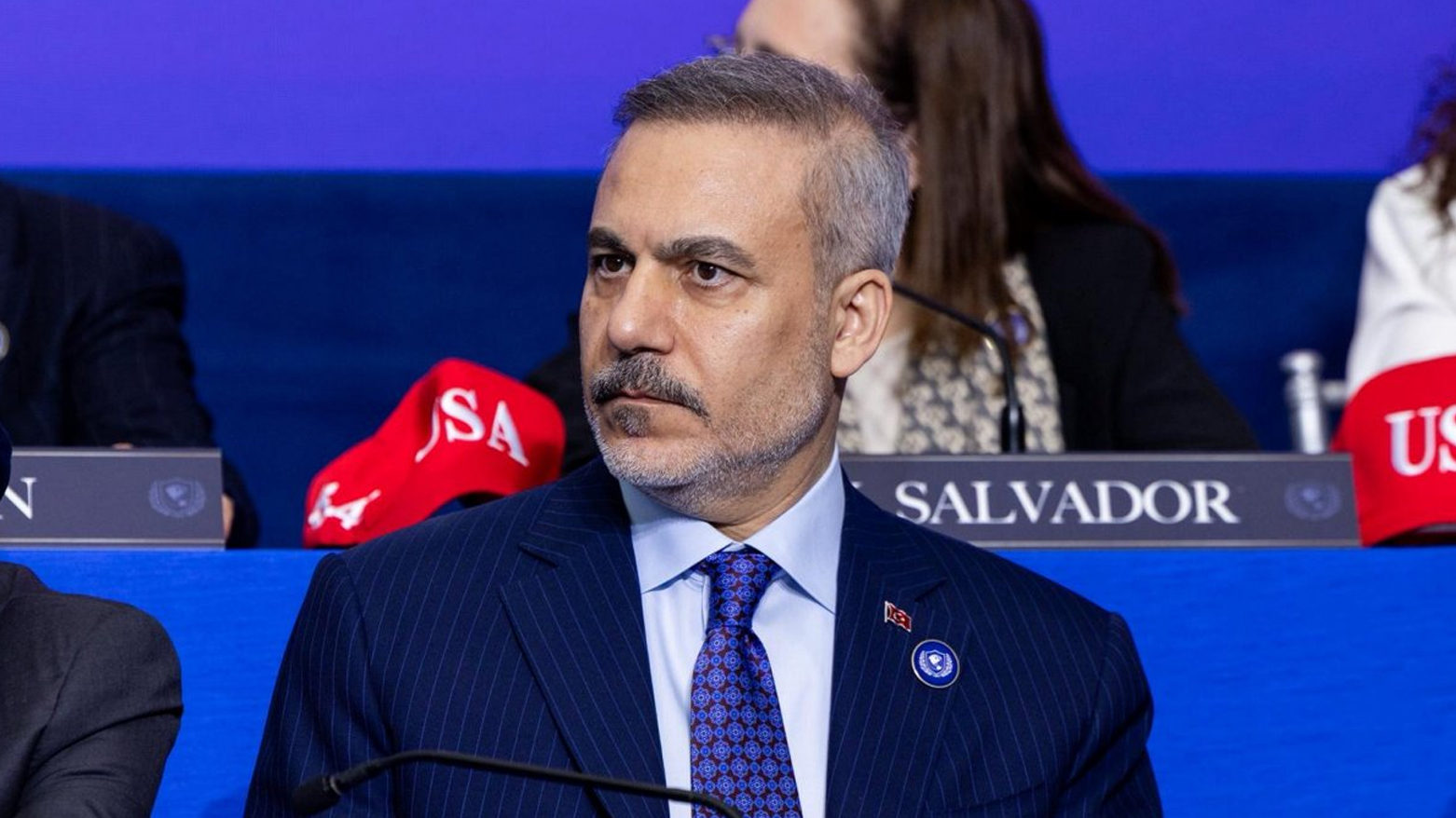
ERBIL (Kurdistan24) - Türkiye’s foreign minister said Thursday that Ankara hopes the United States and Iran will reach a “genuine negotiation” and avoid the need for military action, as diplomatic contacts continue alongside heightened regional military activity.
“Our wish is that there will be no need for a military operation or war, and that the parties genuinely reach a negotiation here,” Foreign Minister Hakan Fidan told Anadolu Agency and TRT in Washington.
Fidan spoke after attending the inaugural Board of Peace meeting presided over by the U.S. President Donald Trump, which brought together representatives from more than 45 countries to discuss Gaza’s reconstruction and broader international stabilization efforts, according to Anadolu Agency and Daily Sabah.
Referring to contacts between Washington and Tehran, Fidan said a diplomatic process that began in Istanbul had led American and Iranian officials to resume discussions.
“As you know, this is an issue we follow closely. The process that started in Istanbul has led Americans and Iranians to begin speaking again. This is an extraordinarily important development,” he said.
He noted that following diplomatic efforts launched in Istanbul, the two sides met twice — once in Muscat, the capital of Oman, and once in Geneva, Switzerland. Fidan added that he met with one of the parties in Washington to assess the direction of the talks.
“Essentially, there are many reasons to be hopeful,” he said. “We hope they reach a result, especially on the nuclear file.”
Fidan said his recent discussions involving Oman as a mediator, along with direct contacts with American and Iranian officials, had been more constructive than in the past.
“My impression from the current talks — speaking with the Omani mediator, with the United States, and with Iran — is that the parties are giving unprecedentedly positive signals, particularly in advancing certain concrete issues,” he said.
At the same time, he cautioned that rising U.S. military activity in the region is being closely monitored.
“We observe that military mobility has also increased,” Fidan said. “Of course, we are closely monitoring whether this military activity is intended to put pressure on the ongoing negotiations or whether it is preparation for a pre-planned military operation.”
Despite what he described as encouraging diplomatic signals, Fidan emphasized that the process remains delicate.
“How this becomes practically implementable, when it will happen, how the parties perceive it, and how that perception guides their next steps — we are at a critical threshold right now,” he said. “It needs to be followed carefully.”
U.S. President Donald Trump said Thursday that it would soon become clear whether a deal with Iran is possible, warning that Washington may be forced to escalate if negotiations fall short, according to the reports.
The remarks come amid continued public statements from U.S. and Iranian officials outlining their respective positions.
In a previous interview with Kurdistan24, Gabriel Sawma, a member of President Trump’s advisory board, said he expects Iran to ultimately negotiate a settlement with Washington on terms set by the administration, including ending uranium enrichment and halting ballistic missile development.
“I think at the end, they are going to negotiate a settlement,” Sawma said on Feb. 19. He described the administration’s approach as combining diplomatic terms with military pressure and sanctions, adding that the Middle East is “under the influence of the United States’ policies” and that Washington would not allow China, Iran, or Russia to expand their role in the region.
Sawma also referred to what he described as a substantial U.S. military presence in the Middle East, saying the buildup was intended to strengthen Washington’s negotiating position. He said President Trump “wants peace in the world” and does not want war, but added that the administration would not compromise on its core demands.
Tehran, for its part, has formally communicated its position to the United Nations. In a letter addressed to Secretary-General António Guterres and the president of the Security Council, Iran’s ambassador to the United Nations, Amir Saeid Iravani, said Iran “will not initiate any war” but would respond “decisively, proportionately, and within the framework of its inherent right to self-defense” if subjected to military aggression.
According to the previously reported letter, Iravani cited public comments by President Trump regarding the potential use of the Diego Garcia base and the airfield in Fairford in the event of a breakdown in negotiations.
He said such statements “constitute a flagrant violation of the United Nations Charter and international law” and warned that “all bases, facilities, and assets of the hostile force in the region will be considered legitimate targets” if Iran is attacked.
The letter called on the Secretary-General and members of the Security Council to ensure that the United States ends what it described as illegal threats to use force and abides by its obligations under Article 2(4) of the U.N. Charter.
It also stated that Iran has participated in nuclear talks “with seriousness and good faith” and with a “constructive approach,” seeking what it described as a “mutually acceptable, result-oriented solution.”
Against that backdrop, Fidan reiterated Türkiye’s preference for diplomacy and its support for a negotiated outcome.
Speaking at the Board of Peace meeting, he highlighted Ankara’s willingness to contribute to post-war reconstruction in Gaza, including rebuilding the health and education sectors and training a police force. “In addition, we are ready to provide troops to the International Stabilization Force,” he said.
Reaffirming Türkiye’s long-standing position on a political solution, Fidan added: “Mr. President, Türkiye will continue to support your efforts for a just and lasting peace. We firmly believe that the foundation of such peace lies in a two-state solution. Let us work toward this goal for the benefit of all peoples in the region.”
While diplomatic contacts between Washington and Tehran continue, Turkish officials said they are closely monitoring both the progress of negotiations and developments on the ground.
Fidan described the moment as a “critical threshold,” underscoring that how the talks are perceived and implemented will shape the next steps of the parties involved.