‘Force of Kezi’: Kurdish Women’s Resilience Captured in New Video Art
The video art piece by Shaina Mahmood Zada continues the region-wide effort to assert Kurdish women’s presence and resilience in both cultural and public spheres.
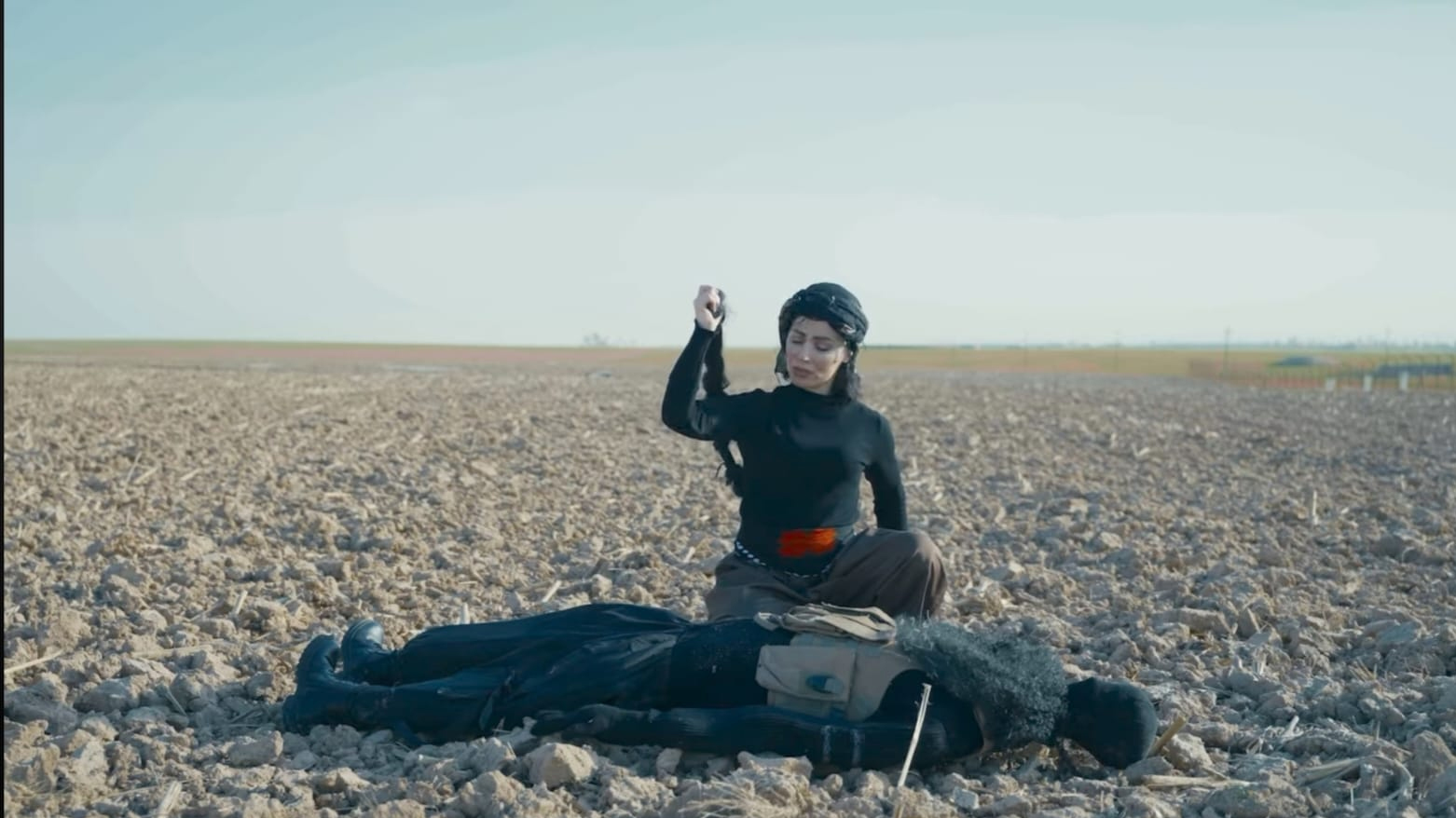
ERBIL (Kurdistan24) - Kurdish photographer Shaina Mahmood Zada has released a video art piece titled Force of Kezi (Hezi Kezi - Kezi means braided hair in Kurdish), highlighting the symbolic significance of the braid in Kurdish women’s identity and resistance, Shaina said in an interview with Kurdistan24 on Monday.
Speaking from Erbil, Shaina described the work as a testament to the enduring strength and historical role of Kurdish women, asserting that “their voice, strength, and resistance remain as high and enduring as the mountains, standing for history and pride.”
The artist, an Erbil-based graduate of the Institutes of Fine Arts in both Erbil and Koya, said the video conveys the resilience of Kurdish women through movement and gesture. “Through the moving body and powerful gestures, it serves as a living archive of the stance and resistance of those Kurdish women whom history has embraced,” Shaina said.
She emphasized that the work demonstrates persistence despite adversity, noting, “Despite the pain and the cutting of our braids, we were not broken; rather, we returned with even more bravery, courage, and stronger braids.” Shaina has previously created diverse photographic works and participated in multiple exhibitions that have received recognition in the Kurdish artistic community.
The release of Shaina’s video coincides with a broader regional cultural response following a viral video showing a Syrian Arab Army (SAA) soldier displaying what he claimed was a severed braid from a deceased Kurdish female fighter in Raqqa, northern Syria.
The footage prompted protests across the Kurdistan Region of Iraq and the broader Middle East, with Kurdish women initiating a hair-braiding campaign to symbolize resilience and cultural continuity. The demonstrations, which began on Friday in Erbil, were described by participants as a direct rebuttal to the video, which many interpreted as an act of intimidation against Kurdish women.
University lecturer Vienna Salam, 31, told Agence France-Presse (AFP) at an Erbil gathering that braiding was “our way of fighting back and of representing our identity as Kurdish women.”
The campaign, widely shared on social media under the title “The Braid Campaign,” engaged activists, media professionals, and civilians, highlighting the braid as a cultural symbol with anthropological significance in Kurdish society. Activist Bahar Ali explained that the braid represents strength, dignity, and steadfastness, and that attempts to cut it are perceived as moral violations.
Artistic responses to the campaign have been widespread. Kurdish sculptor Saman Hidayat, based in Germany, unveiled a two-meter-tall oak sculpture titled Kurdish Revolutionary Women Kazi (Braid), depicting the braid as a symbol of continuity and resistance. Hidayat said he plans to cast the sculpture in bronze and mount it on four stones to represent the four regions of Kurdistan.
Parallel artistic initiatives include a joint exhibition in Sulaimani, featuring 50 works from 20 artists, collectively conveying the message: “If they cut one braid, we will weave thousands more.” Visual artist Parwin Ali described the show as both a cultural statement and a form of solidarity with Kurdish women affected by the Syrian conflict.
The symbolic significance of the braid has also been recognized in administrative actions. The Erbil Governorate announced the naming of a municipal roundabout “Kezi” (The Braid) as a civic landmark representing Kurdish resilience and unity, with the measure approved unanimously by the Erbil Municipal Council.
Governor Omed Khoshnaw noted that the decision signals a shared bond among Kurds and elevates the braid to the status of official heritage. In Sulaimani, Governor Haval Abubakr announced the construction of a “Kezi Monument” to commemorate Kurdish dignity and national identity, following a regional effort to institutionalize the braid as a symbol of resistance.
Cultural activism has been accompanied by humanitarian support for Western Kurdistan (Rojava), where security conditions have deteriorated.
The Barzani Charity Foundation (BCF), coordinating with Erbil authorities, launched an aid campaign that collected 210 million Iraqi dinars in three days to provide food, medicine, blankets, and other essentials to displaced residents. Officials said the initiative is ongoing, with multiple deliveries dispatched to conflict-affected areas.
Other artistic efforts include the upcoming exhibition Natural Region in Germersheim, Germany, by Kurdish artist Bahadin.
Opening on February 28, the show emphasizes the beauty and resilience of Kurdish women through symbolic butterfly motifs, with bilingual texts accompanying the paintings. Bahadin said the exhibition conveys women’s freedom and serves as a cultural tribute to resilience amid adversity.
Taken together, these developments illustrate a coordinated cultural, civic, and humanitarian response within the Kurdistan Region, linking artistic expression, public demonstrations, official recognition, and aid provision to underscore solidarity with Kurdish women and communities affected by conflict in northeastern Syria.
Shaina’s video release, situated within this broader regional mobilization, adds to the ongoing visual and symbolic affirmation of Kurdish women’s endurance. "Force of Kezi" highlights both the historical and contemporary significance of women’s roles in preserving cultural identity, resistance, and dignity.
Kurdistan24 Art correspondent Germian Gilli contributed to this report.