Kurdistan Region Plans Major Highway Upgrades Across Provinces Over Next Three Years, Minister Says
Construction Begins on 74-Kilometer, 150-Meter-Wide Arterial Highway in Erbil, Promising Rapid Progress
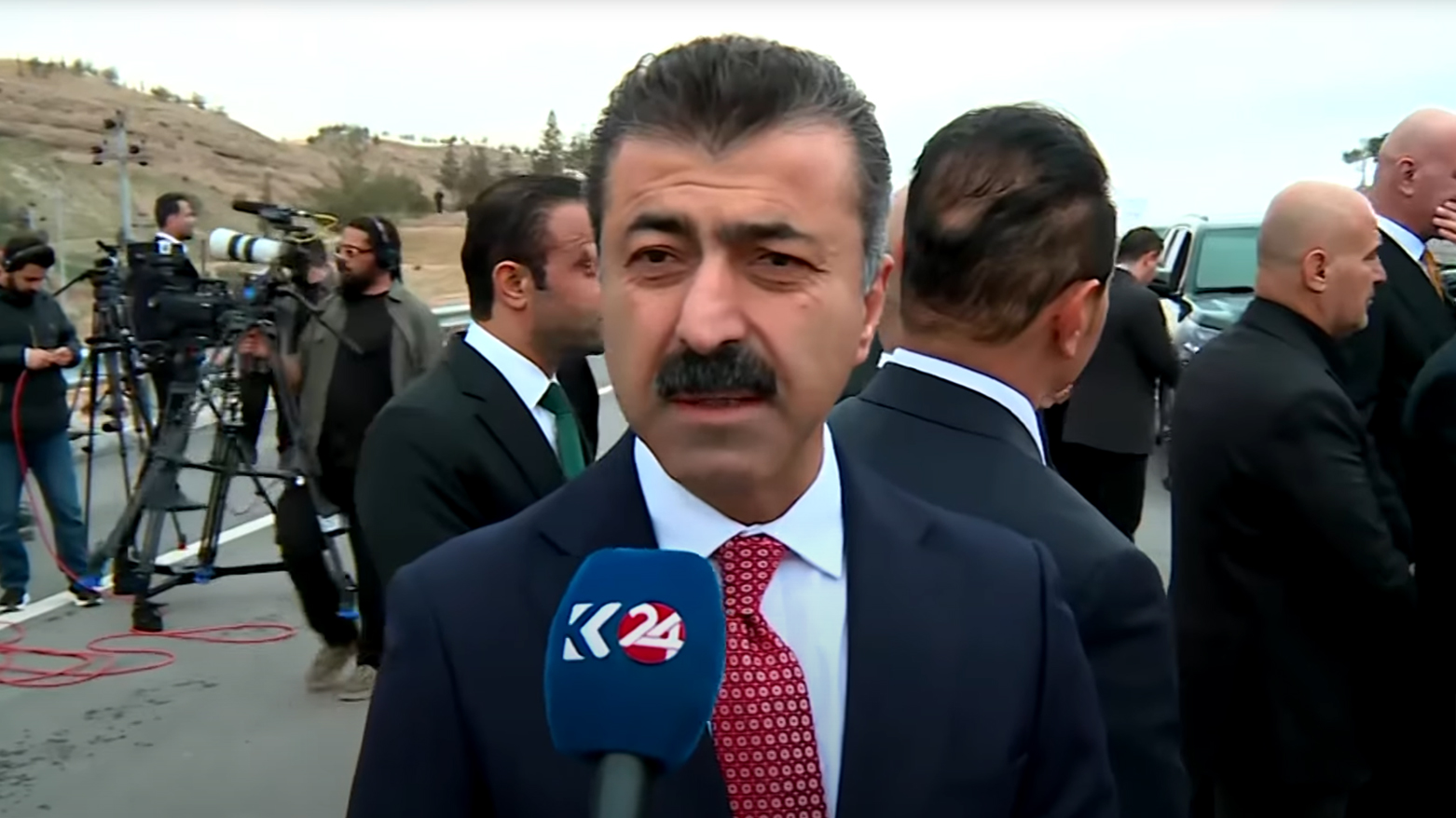
ERBIL (Kurdistan24) — Dana Abdulkarim, Minister of Reconstruction and Housing of the Kurdistan Regional Government (KRG), told Kurdistan24 on Tuesday that the government is working to upgrade all main highways connecting the Kurdistan Region’s provinces to two-way roads over the next three years.
Abdulkarim highlighted the inauguration of a new strategic route spanning more than 22 kilometers, implemented under the direction of Prime Minister Masrour Barzani and executed by the Hemin Group.
“The road was constructed to international standards and links the capital Erbil with Sulaimani, Raparin, and other districts,” he said.
The minister outlined the ministry’s broader infrastructure plans, noting that work on routes connecting Dokan–Chwarqurna and Erbil–Koya is already progressing efficiently.
Regarding other projects, he stated that the Koya–Dokan highway design is complete and ready for tender, while two key routes connecting Erbil to Chwarqurna via Haibet Sultan Tunnel and from Gomaspan to Doli Samquli, Halabja, and Penjwen are in development.
The Sayyid Sadiq–Halabja route is finished, with work on its two-way expansion toward Penjwen scheduled to begin soon.
Abdulkarim acknowledged that budgetary constraints currently prioritize strategic international-standard routes, while other projects remain planned for implementation as funding and timing allow.
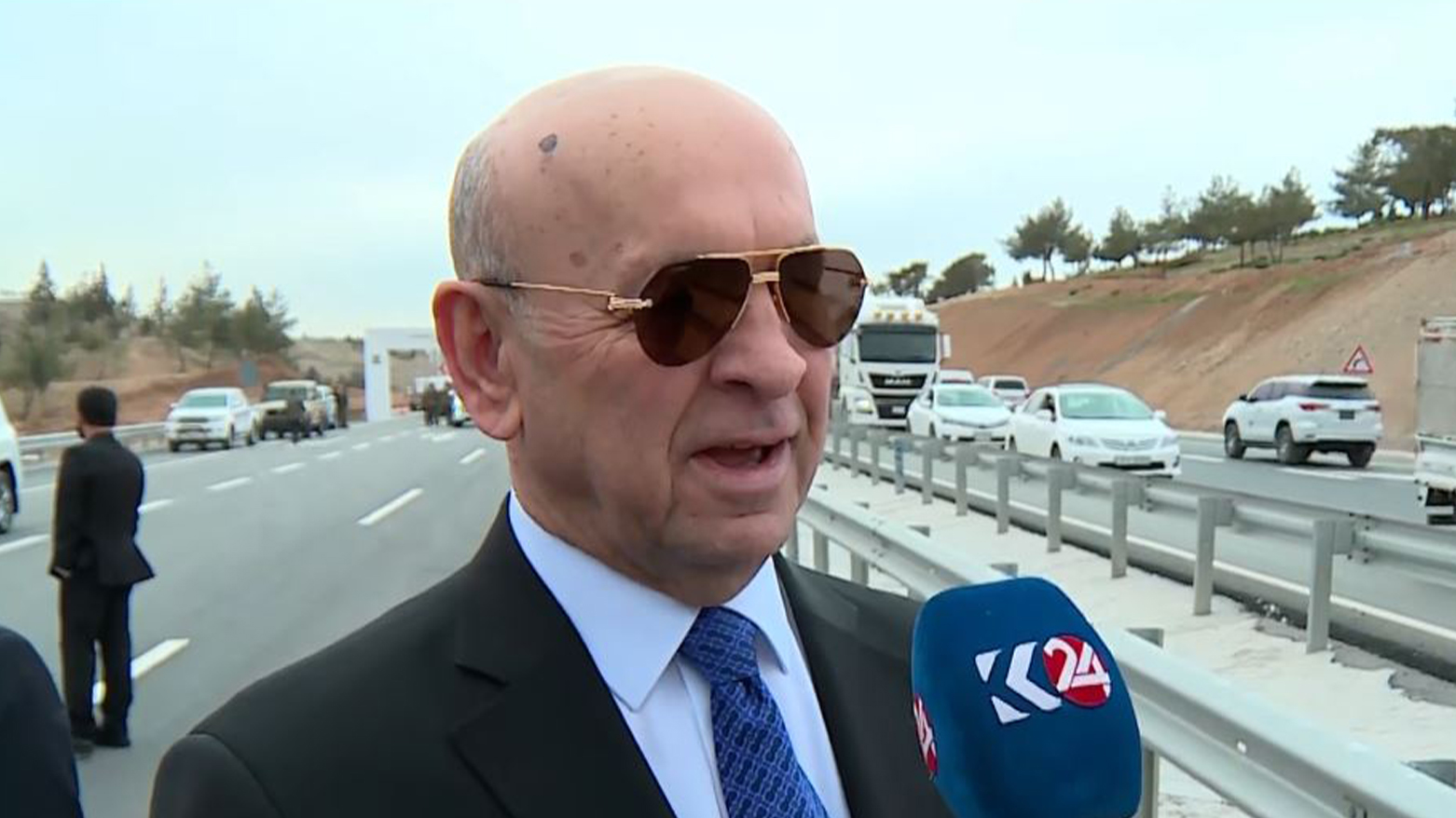
Separately, Khalid Khushnaw, head of Heimen Group, confirmed that work will begin this year on the 150-meter-wide arterial highway in Erbil, stretching 74 kilometers. He noted that while the completion date is not yet fixed, construction is progressing rapidly.
These initiatives are part of the Kurdistan Region’s broader strategy to modernize its road network, enhance traffic safety, and strengthen interprovincial connectivity, supporting both local mobility and economic development.
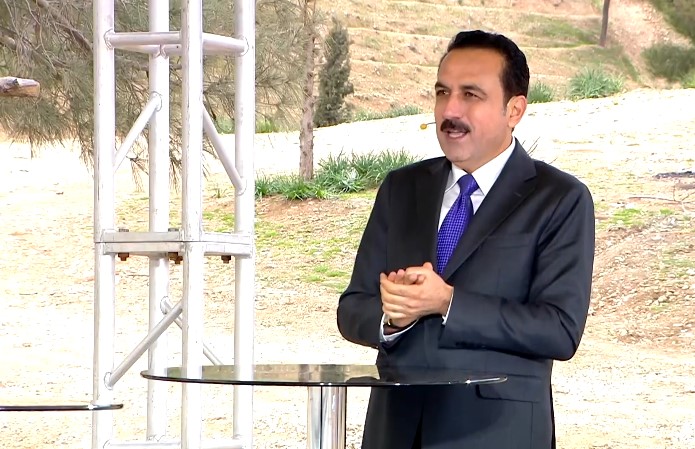
In a related development, Kurdistan Region Prime Minister Masrour Barzani inaugurated the Erbil–Gomaspan highway project in a ceremony earlier in the day. Completed in under a year by Hemn Group, the Prime Minister described the project as a landmark infrastructure development aimed at improving transportation efficiency and enhancing public safety.
At the ceremony, PM Barzani praised the project team and construction company for delivering the road “in record time and with high quality according to international standards,” emphasizing that it is now fully operational and serving citizens across the region.
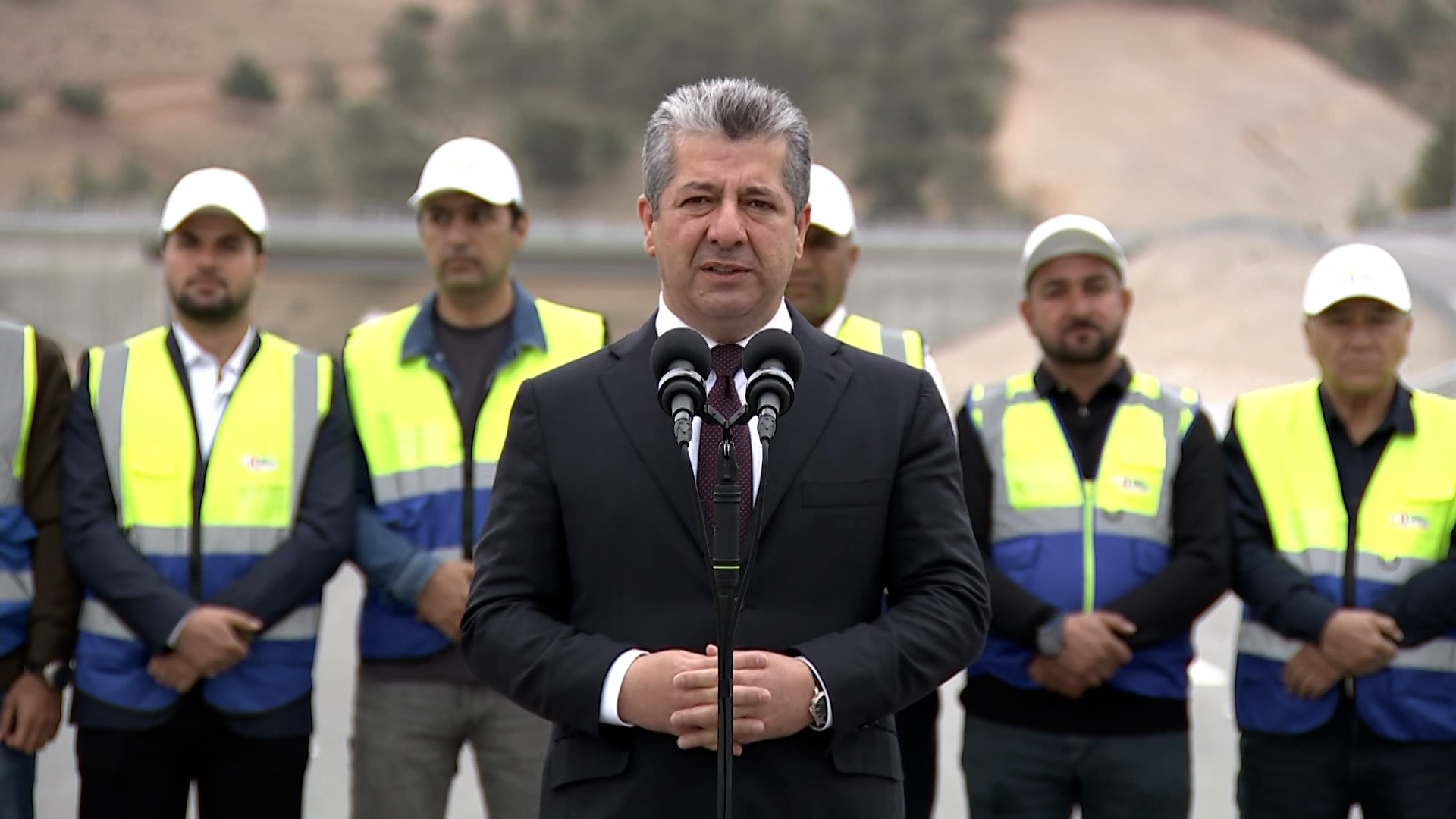
Omed Khoshnaw, Governor of Erbil, who was also attending the ceremony, described the inauguration of the Erbil–Gomaspan strategic highway as a significant milestone for both the tourism and transportation sectors, emphasizing that the road not only links Erbil and Sulaimani but also greatly facilitates mobility for residents and rural communities across the area.
Speaking to Kurdistan24, Khoshnaw said the project stood as one of the key achievements of the KRG's ninth cabinet. He noted that major infrastructure projects are now being executed by domestic companies and Kurdish engineers, adding that the highway was built to high engineering quality and in accordance with international standards, and was completed ahead of schedule.
Addressing financial challenges, Khoshnaw pointed out that despite difficult fiscal conditions caused by federal budget cuts from Baghdad, Erbil’s reconstruction drive has continued uninterrupted.
He stressed that as Iraq’s fourth-largest city, Erbil holds a constitutional and legal entitlement to provincial development funds—estimated between 250 and 300 billion Iraqi dinars annually—from which it has been deprived since 2012.
Nevertheless, he said, projects have advanced through the determination of the KRG. Khoshnaw also announced that the Koya water project, valued at 120 billion dinars, will begin soon, while the design for the Erbil–Pirmam road rehabilitation project has been finalized and will move to implementation once funding is secured.
He further underscored the direct oversight of Prime Minister Masrour Barzani, noting that the prime minister closely monitored not only construction quality but also design details—citing the Gomaspan road project, where adjustments were made to ensure travelers could view the nearby dam landscape, including cutting 60 meters into the mountainside to enhance visibility.
These projects reflect the KRG’s broader strategy to modernize the region’s transportation infrastructure, enhance intercity connectivity, and support economic growth.
By upgrading key highways and implementing international construction standards, the government aims not only to improve traffic flow and public safety but also to ensure efficient, reliable access to services for citizens, strengthen regional integration, and lay the foundation for long-term sustainable development across the Kurdistan Region.
This article was updated by Kurdistan24 on Feb. 24, 2026, at 2:26 pm.