U.S. Military Convoy Crosses Into Zakho as Syria Withdrawal Advances
On Tuesday, as dozens of vehicles crossed into Zakho, the continued drawdown underscored the ongoing implementation of the U.S. exit from Syria, following earlier withdrawals and base handovers confirmed this month.
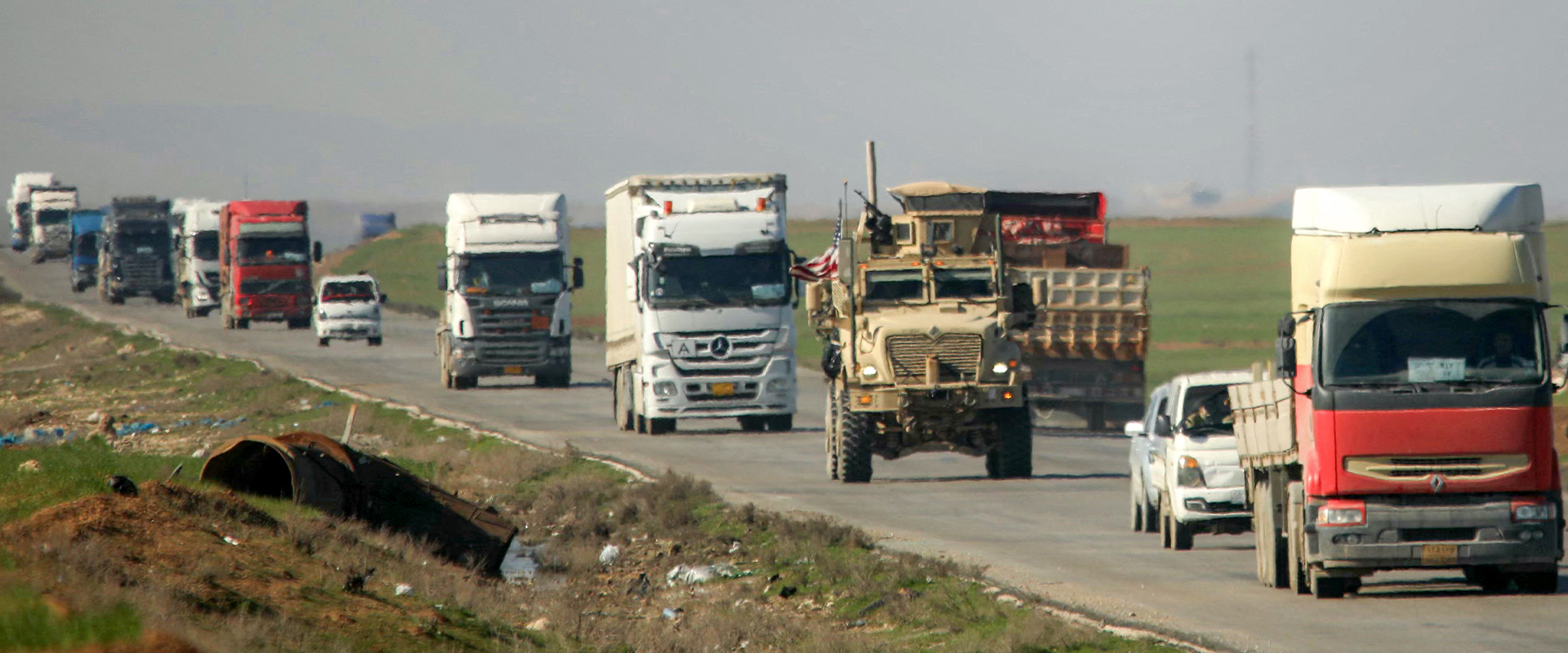
ERBIL (Kurdistan24) - A convoy of American soldiers and military equipment crossed from Syria into the Zakho Administration on Tuesday as part of the ongoing withdrawal of U.S. forces from Syrian territory, according to Kurdistan24’s correspondent in Zakho.
The correspondent reported that the convoy, consisting of dozens of vehicles and trucks carrying soldiers, weapons, and military materiel, reached the border of the Kurdistan Region on Tuesday. The movement was described as part of the evacuation of U.S. bases and outposts in Syria.
The arrival of the convoy follows the continuation of a phased withdrawal process that has unfolded throughout February. According to information from Kurdistan24’s correspondent, the convoy entered the Kurdistan Region after departing from positions in Syria, where U.S. forces have maintained a presence for years as part of the International Coalition to fight ISIS.
The development comes one day after the second phase of the U.S. withdrawal began from the Qasrak military base in the Qamishlo area. The Qasrak facility was described as the largest U.S. military base in Rojava, also known as Western Kurdistan. The departure from Qasrak marked a significant step in the broader drawdown process.
Simultaneously, three informed sources told Agence France-Presse (AFP) that U.S. forces are expected to completely withdraw from Syrian soil in less than a month. According to AFP, the withdrawal timeline indicates that remaining American forces could depart within weeks, though no official U.S. statement detailing a final date was included in the report.
Earlier this month, additional withdrawals were confirmed. On Feb. 10, U.S. Army soldiers withdrew from the Al-Tanf base in southern Syria toward Jordan, handing over the facility to the 54th Division of the Syrian Ministry of Defense. The transfer was carried out as part of coordination between U.S. and Syrian authorities, according to the reported information.
On February 15, the Syrian Ministry of Defense announced that, following coordination with U.S. forces, the Shaddadi base in Hasakah province had been evacuated. Syrian Army soldiers were subsequently stationed at the site, according to the ministry’s statement.
The Shaddadi base, located approximately one kilometer south of the city of Shaddadi, had housed around 350 American soldiers. According to the available information, the facility included helicopter landing capabilities and functioned as a primary drone launch hub for U.S. forces operating in the area.
The United States has maintained military installations in multiple locations across Rojava and other parts of Syria since 2015. The deployment was established within the framework of the International Coalition formed to combat ISIS and counter terrorism. According to statistics cited in the report, more than 1,500 American soldiers were deployed across military bases in Syria.
Among the installations was the Rimelan base, located in the northern plains of Hasakah province, where approximately 500 soldiers were stationed. Another facility, known as Malikiyah base or River Airport and referred to by U.S. forces as Rimelan-2, is situated north of Hasakah and housed about 150 soldiers.
The Tel Beydar base, positioned roughly 30 kilometers west of Hasakah, also accommodated U.S. personnel, though the exact number of troops stationed there was not specified in the report.
In Tartus province, near Lake Basil Dam, the Live Stone base hosted approximately 50 soldiers and eight helicopters, according to the reported figures.
The Qasrak base, located 45 kilometers east of Tel Tamer near the M4 highway, housed a number of American soldiers before the commencement of the second withdrawal phase. The Himo base, situated four kilometers west of Qamishlo Airport, held approximately 350 soldiers.
In Hasakah city, the Sports Complex base, located south of the Ghweran neighborhood, served as a security site for a prison holding ISIS detainees. Around 150 U.S. soldiers were stationed there alongside Syrian Democratic Forces (SDF) personnel to secure the facility.
Another installation, the Sawama base, lies approximately 10 kilometers south of Hasakah along the railway connecting Hasakah and Deir ez-Zor. Around 50 U.S. soldiers were stationed at Sawama for the purpose of training SDF forces, according to the report.
The withdrawal process has unfolded in stages, with base evacuations and handovers occurring in coordination with Syrian authorities. The sequence of departures from Al-Tanf, Shaddadi, and Qasrak indicates a structured dismantling of U.S. positions across northeastern Syria.
The convoy’s arrival in Zakho represents the latest confirmed movement of personnel and equipment out of Syria. The vehicles that crossed into the Kurdistan Region on Tuesday carried both soldiers and military hardware, reflecting the broader evacuation of operational assets.
According to AFP, informed sources indicated that the full withdrawal of U.S. forces from Syria could be completed within less than one month. The report did not specify the total number of troops remaining at the time of publication.
U.S. forces initially established their presence in Syria in 2015 to support operations against ISIS as part of the International Coalition. Over the years, they developed a network of bases across Hasakah, Qamishlo, Shaddadi, and other areas in Rojava.
The current withdrawal marks the dismantling of that network, with bases being vacated, equipment transported, and facilities transferred to Syrian authorities where applicable.