Iranian Media Confirm Killing of Mahmoud Ahmadinejad in Israeli-US Airstrike
Former Iranian president’s death comes amid escalating hostilities and reports of strikes targeting senior leadership
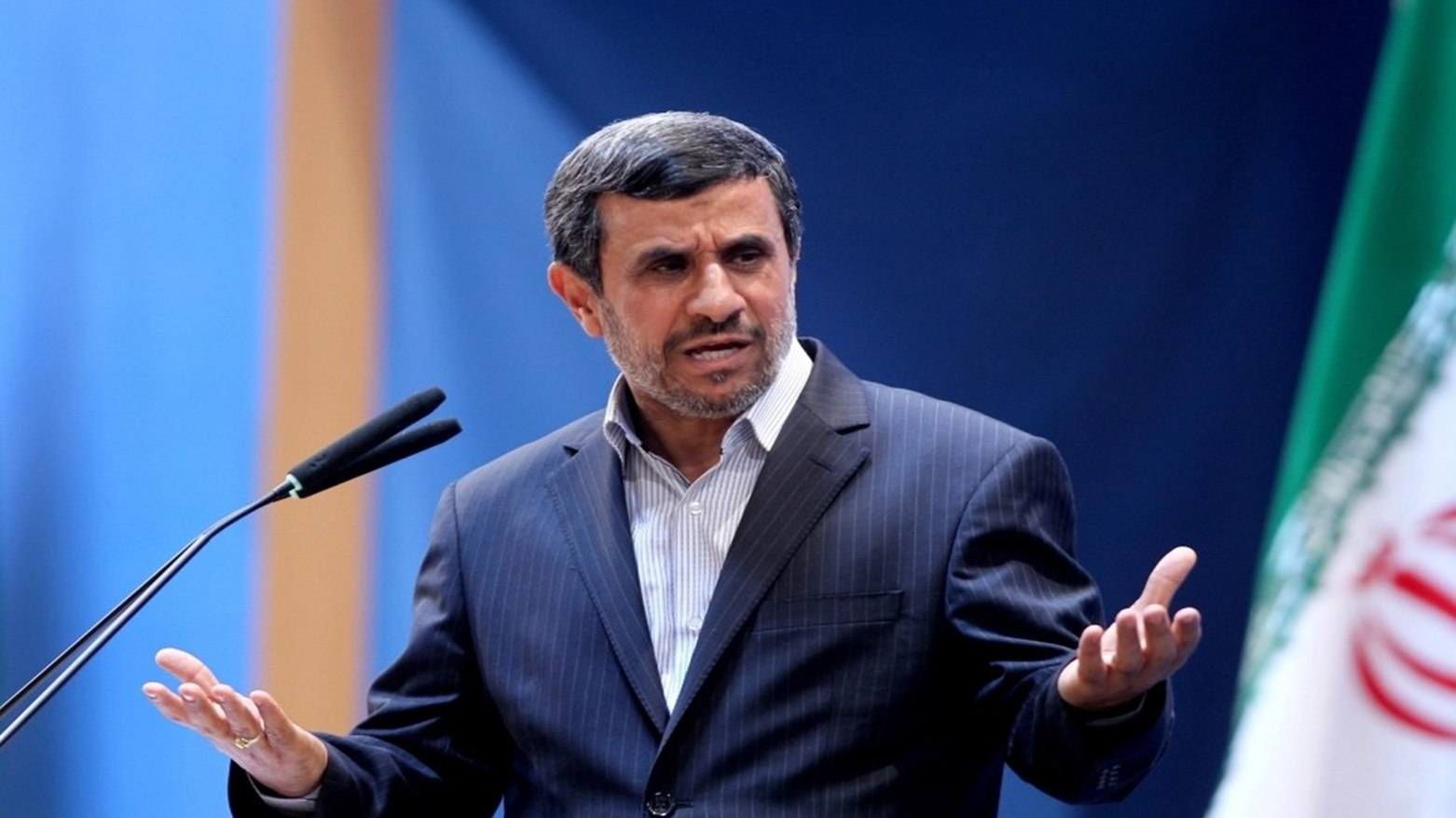
ERBIL (Kurdistan24) — Mahmoud Ahmadinejad, who served as Iran’s president from 2005 to 2013, was killed in an Israeli-US airstrike on his residence in eastern Tehran, according to a report by the Iranian Labor News Agency (ILNA) on Sunday.
The pro-regime outlet said the strike targeted Ahmadinejad’s home in the Narmak district, northeast of the capital, late Saturday. Several of his bodyguards were also reportedly killed. International media cited similar accounts, indicating that the 69-year-old former president died when the area was struck multiple times during the first day of coordinated attacks.
Ahmadinejad, the sixth president of the Islamic Republic, was widely regarded as a populist hardliner whose presidency was defined by confrontational rhetoric toward the United States and Israel, and an uncompromising stance on Iran’s nuclear program. His rhetoric and policies proved popular among conservative constituencies at home but drew strong condemnation from Western governments.
His 2009 re-election triggered the most significant political unrest in Iran since the 1979 Islamic Revolution. Reformist and moderate challengers disputed the results, leading to mass antigovernmental protests that were ultimately suppressed by authorities.
Although the unrest was quelled, it exposed deep fractures within Iran’s political and clerical establishment. Supreme Leader Ali Khamenei, who was also reported killed on the first day of the joint Israeli-US attack on Iran, endorsed the election outcome at the time, allowing Ahmadinejad to begin a second term.
Born in 1956 in Garmsar to a blacksmith’s family, Ahmadinejad earned a doctorate in traffic and transport engineering from Tehran’s University of Science and Technology, where he later lectured. He rose to prominence after being appointed mayor of Tehran in 2003, implementing conservative social policies and rolling back reforms introduced by moderate predecessors.
His unexpected landslide victory in the 2005 presidential election surprised much of the international community, which had anticipated a win for former president Ali Akbar Hashemi Rafsanjani. Ahmadinejad’s campaign emphasized social justice, wealth redistribution, and resistance to Western pressure, and he was supported by conservative networks, including influential clerical and parliamentary factions.
Throughout his presidency, Ahmadinejad strongly defended Iran’s nuclear and missile programs. He rejected international sanctions imposed by the United Nations Security Council and maintained that Iran’s nuclear activities were for peaceful civilian purposes under the Nuclear Non-Proliferation Treaty.
He also repeatedly drew controversy over his comments regarding Israel and the Holocaust. Ahmadinejad questioned the historical narrative of the Holocaust and called for the end of what he described as the “Zionist regime.” In 2005, remarks attributed to him were widely translated as calling for Israel to be “wiped off the map,” a characterization he later argued was a misinterpretation of his reference to the words of Ayatollah Ruhollah Khomeini. His 2009 speech at the United Nations, in which he described Israel as founded on racist principles, prompted a walkout by delegates from numerous countries.
There has long been debate over Ahmadinejad’s role during the 1979 hostage crisis at the US Embassy in Tehran. While some former American hostages claimed he was involved, Ahmadinejad denied participating, and several known hostage-takers disputed the allegation. He is reported to have joined the Revolutionary Guards after the revolution and to have served during the 1980–88 Iran-Iraq war.
The joint US-Israeli military offensive — which began on Saturday with a coordinated campaign of air and missile strikes across Iran — has rapidly expanded into a broader conflict with far-reaching implications. The initial attacks targeted political and military leadership in Tehran and key strategic infrastructure, prompting Iran to launch retaliatory missile and drone strikes on US and allied bases throughout the Middle East.
The escalation has drawn international concern over regional stability, disrupted air travel, and raised fears of a protracted confrontation that could redraw security dynamics across the Gulf and beyond.