Russia Confirms Support for Iran as U.S.-Israel War Continues in Middle East
Russia confirmed its support for Iran in the ongoing U.S.-Israel war, providing intelligence assistance to Tehran as the conflict continues across the Middle East.
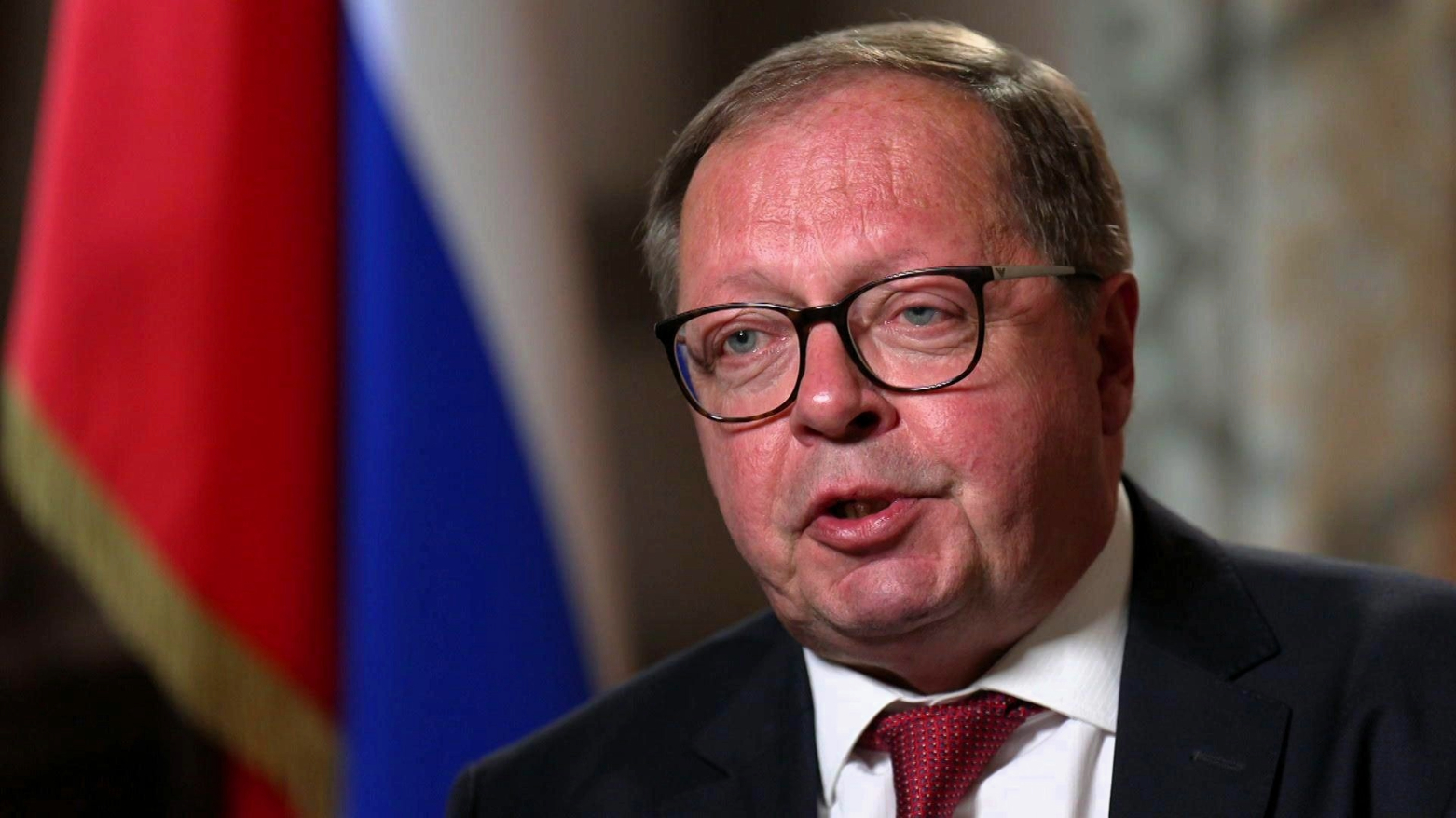
ERBIL (Kurdistan24) - Russia’s ambassador to Great Britain, Andrey Kelin, stated Sunday that Moscow is providing support to Iran amid the ongoing war with the United States, signaling direct backing by one of Washington’s main nuclear rivals. Kelin told Sky News that Russia “is not neutral” in the conflict and criticized what he described as Western attribution of blame solely to Iran, noting that “no one says that the United States and Israel started an attack against Iran. And Iran is only responding to this attack.”
Kelin emphasized the urgency of ending the conflict, stating that the “best scenario is an immediate end to the war.” His remarks coincide with reports that Russia has transmitted intelligence to Tehran regarding U.S. military facilities in the Middle East, assisting Iran in targeting American positions.
The disclosure of Russian support comes as the war between U.S.-Israeli forces and Iran entered its second week, following joint operations that began with the killing of Iran’s Supreme Leader Ayatollah Ali Khamenei and other senior commanders. Israel has carried out airstrikes targeting key Iranian leadership and military infrastructure, including facilities in Tehran and command centers in Beirut. AFP reported that Israeli strikes at a hotel in central Beirut, used by the Quds Force of Iran’s Revolutionary Guards, killed at least four people.
Iranian authorities have responded with missile and drone attacks on U.S. and Israeli targets across the Middle East. Iranian President Masoud Pezeshkian said Sunday that Tehran “will be forced to respond” if any neighboring country is used to launch attacks against Iranian territory. The Revolutionary Guards indicated their forces could sustain an “intense war” for up to six months at the current pace, according to AFP, with advanced long-range missiles expected to be deployed in coming days.
The conflict has spread to Gulf countries hosting U.S. military assets. Saudi Arabia intercepted more than a dozen drones targeting locations in Riyadh, including the diplomatic quarter. Qatar reported two cruise missiles and ten ballistic missiles launched from Iran, while the United Arab Emirates said its forces were intercepting incoming projectiles. In Kuwait, aviation fuel tanks at the international airport were hit, prompting the national oil company to reduce crude production due to threats to the Strait of Hormuz. Video footage also showed one projectile striking Dubai airport, and blasts were reported in Baghdad and Erbil over the weekend.
Within Iran, damage to infrastructure and civilian areas has been mounting. The Iranian health ministry reported at least 926 civilian deaths and approximately 6,000 wounded since the onset of hostilities, though AFP noted these figures have not been independently verified. Residents described heightened anxiety and a heavy security presence across cities. A 26-year-old teacher told AFP on condition of anonymity, “I don't think anyone who hasn't experienced war would understand it.”
U.S. officials have downplayed concerns regarding Russian intelligence assistance to Iran. Defense Secretary Pete Hegseth, in an interview with CBS’s “60 Minutes” Friday, said, “We’re tracking everything…We have the best intelligence in the world. We’re aware of who’s talking to who…We’re not concerned about that. We mitigate it as we need to.” White House Press Secretary Karoline Leavitt added that the alleged Russian support “clearly is not making a difference with respect to the military operations in Iran because we are completely decimating them.”
Meanwhile, the war has led to significant destruction and casualties in Lebanon, where Israeli strikes on Hezbollah positions in Beirut killed at least 294 people over the past week. Israeli Prime Minister Benjamin Netanyahu has vowed to continue operations “with all our force,” claiming near-total control of the skies over Tehran and ongoing air campaigns against Iranian military facilities, including underground command centers and missile storage sites.
China and Russia have largely refrained from direct military engagement, though Moscow’s reported support to Iran contrasts with Beijing’s official position. Chinese diplomat Wang Yi said Sunday that the war “should never have happened” and emphasized that “the world cannot return to the law of the jungle.”
The intensifying conflict has caused disruption across the region, including attacks on civilian and strategic energy infrastructure, heightened military activity in Gulf states, and reported casualties among U.S. service members. AFP noted that six U.S. service members were killed in a drone attack on a U.S. base in Kuwait last Sunday, while the CIA station in Riyadh was also reportedly struck.