Iraqi Politician Mithal al-Alusi Condemns Deadly Attack on Erbil
Al-Alusi denounces the killing of young airport employee Welat Tahir as a “treacherous act” carried out by outlawed militias
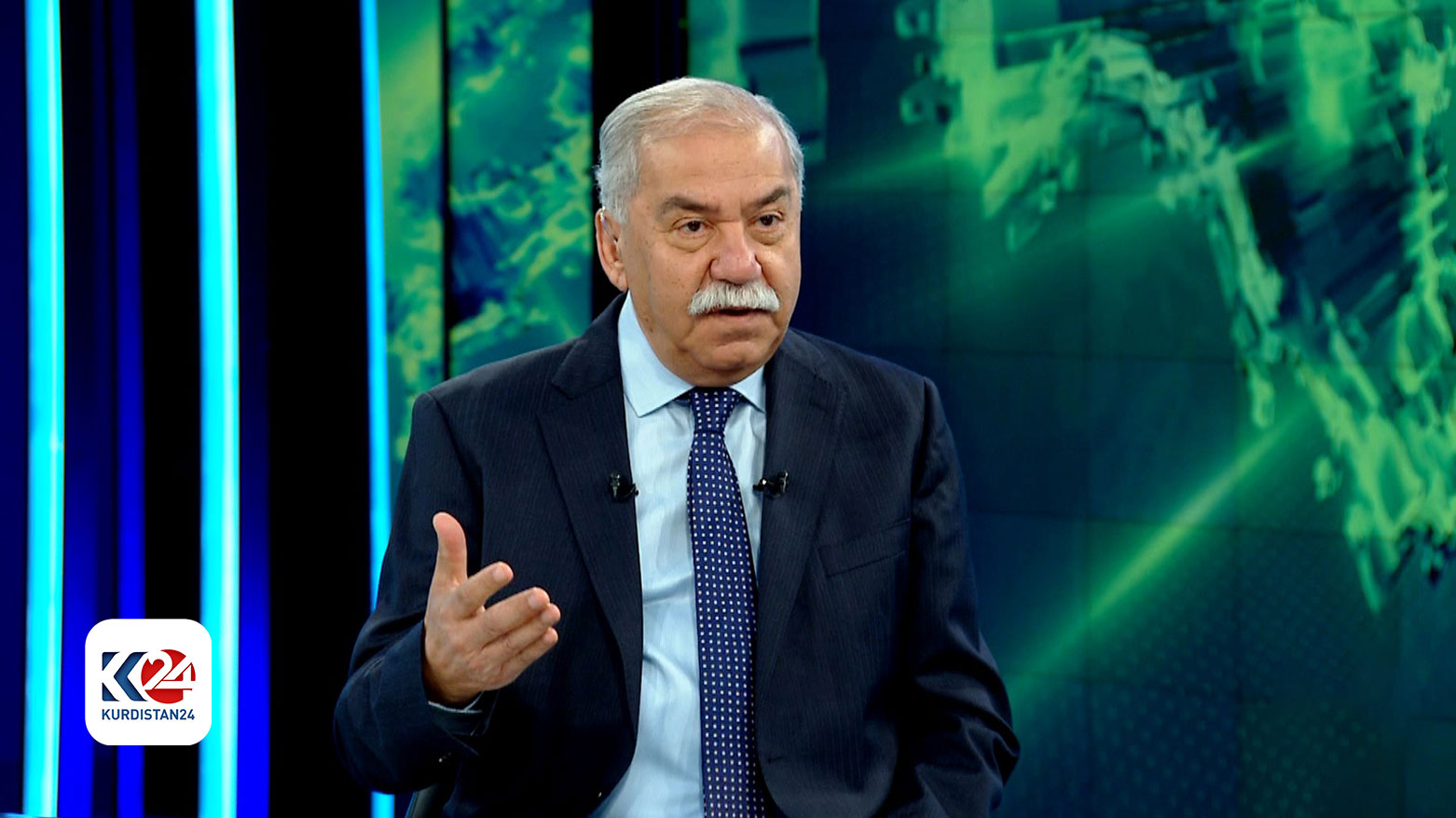
ERBIL (Kurdistan24) — Iraqi politician Mithal al‑Alusi strongly condemned the recent attack targeting the city of Erbil, which resulted in the death of a young airport employee, Welat Tahir, describing the incident as a “treacherous act” carried out by armed groups operating outside the law.
In a statement posted on his official account on X, al-Alusi opened his remarks with poetic lines expressing anger and frustration over the continued bloodshed in Iraq. “Rise from your wounds—you have endured for too long. Your patience, Iraq, is no longer beautiful,” he wrote.
Al-Alusi mourned Tahir, describing him as “a young man in the prime of life,” and said he had fallen victim to what he called a “cowardly bombardment by foreign terrorist militias,” referring to the Iran-backed armed factions behind repeated attacks targeting the security and stability of the Kurdistan Region.
The Iraqi politician also paid tribute to victims of terrorism across the country, saying “glory and eternity belong to the righteous martyrs of Iraq and Kurdistan,” while warning those responsible for the attack that “disgrace and shame await cowardly terrorism, and the day of reckoning is near.”
Al-Alusi’s remarks come amid a wave of political and public condemnations following the latest attack on Erbil, the capital of the Kurdistan Region, which has repeatedly been targeted by rockets and drones in recent years.
On Saturday night, Iran-backed Iraqi militias launched several drones toward Erbil International Airport. While air defenses intercepted some of the drones, debris from one of the downed aircraft struck the airport area, killing Welat Tahir, a security employee, and injuring several of his colleagues.
The incident forms part of a broader escalation since the outbreak of war on Feb. 28 involving the United States, Israel, and Iran. Since then, multiple Iran-aligned armed groups have intensified drone and rocket attacks on locations across the Kurdistan Region.
Officials say several cities and provinces have been affected, with Erbil International Airport among the primary targets. Some strikes have also hit residential neighborhoods inhabited by civilians, causing material damage and casualties among civilians as well as government employees.
The repeated attacks have drawn widespread condemnation from Kurdish and Iraqi political figures, who warn that such actions threaten stability in both the Kurdistan Region and Iraq as a whole.
Kurdistan Region President Nechirvan Barzani and Prime Minister Masrour Barzani also issued condolence statements for Tahir, honoring his sacrifice and expressing solidarity with his family.
In a statement published on X, Barzani described the incident as part of “unjust, oppressive, and terrorist attacks” against the region and shared in the grief of all affected. He prayed that Almighty God would grant the soul of Martyr Welat a place in Paradise and provide patience and solace to his family and loved ones.
Meanwhile, Kurdish leader, President Masoud Barzani, issued a firm condemnation of the attacks, warning that continued assaults by Iraqi armed groups threaten the region’s stability.
In a public message on Sunday, Barzani denounced strikes on civilian sites, economic infrastructure, and Peshmerga positions, calling on the Iraqi government, the Council of Representatives of Iraq, and political parties—particularly the Shiite Coordination Framework—to intervene and halt the aggression.
“We call upon the Iraqi Government, the Council of Representatives of Iraq, and the political parties—specifically the Coordination Framework—to intervene seriously and set a limit to these aggressions,” Barzani said, warning that restraint in the face of such attacks has limits.