Iran's FM Spokesperson: Iran Always the Graveyard for Foreign Ambitions, Will Defend Borders
Iran’s Foreign Ministry stressed the country will defend its borders, with Esmaeil Baqaei saying, “The will of the Iranian nation is the criterion, not the will of malevolent foreigners.”
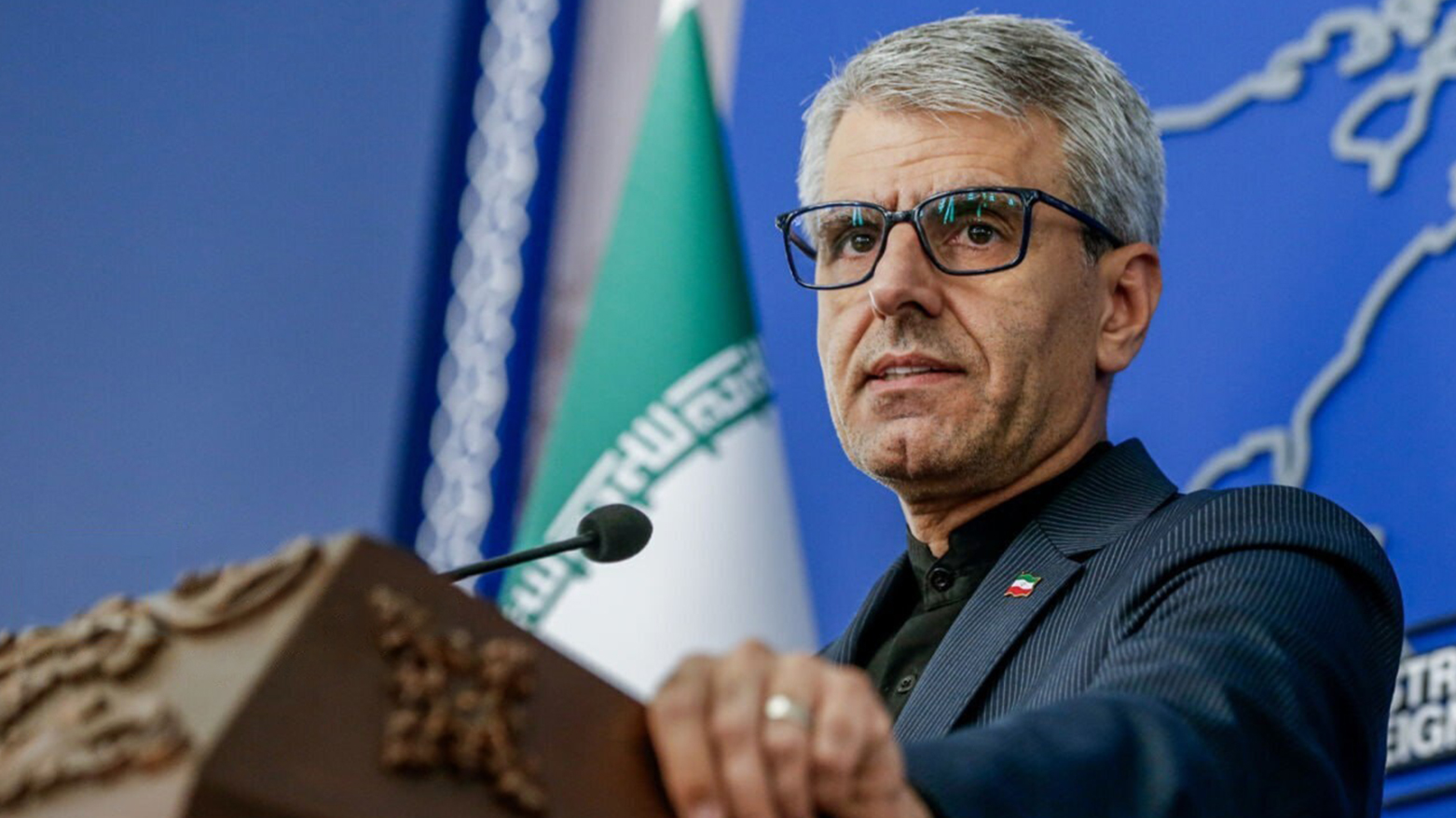
ERBIL (Kurdistan24) - Iran’s Ministry of Foreign Affairs reaffirmed on Monday that the country will defend its territorial integrity and borders, with officials stating that Iranians are prepared to sacrifice their lives to safeguard the nation. The remarks came in response to questions regarding statements by U.S. President Donald Trump on the ongoing conflict and reports suggesting potential U.S. military designs on Iranian islands, including Kharg.
During the press briefing, Esmaeil Baqaei, spokesperson for the Ministry of Foreign Affairs, was asked about comments by the U.S. President implying that Iran’s map could change as a result of the war and the possibility of foreign ground operations. Baqaei responded by emphasizing that the will of the Iranian people, not external actors, determines the nation’s sovereignty and territorial integrity.
“The will of the Iranian nation is the criterion, not the will of malevolent foreigners,” Baqaei said. He added that nations are defined by historical, social, and religious developments, and that the borders of every country represent the essence of national identity. “Regarding the Iranian people as well, the map of Iran represents everything that every single Iranian takes pride in and for which they are ready to offer their lives to safeguard,” he stated.
Baqaei described Iran as historically resistant to foreign designs. “Iran has always been the graveyard of the desires and illusions of foreigners,” he said, noting that the Islamic Republic is committed to protecting the foundation of the country, its borders, and territorial integrity. He further cautioned that countries assuming a passive stance in the face of ongoing military operations risk miscalculating the consequences. “Other countries that have either adopted indifference or imagine that if they sit in a corner of complacency and observe this illegal process, they will eventually emerge from it safely themselves, are gravely mistaken,” he said.
The spokesperson framed the current conflict in the context of broader international norms, warning that ongoing military actions threaten established rules governing state sovereignty and global security. “What is currently occurring has placed all recognized international norms at risk,” Baqaei said. He called on governments and individuals concerned with international security and human dignity to remain attentive to developments. “Indifference in the face of injustice will ultimately turn the indifferent into accomplices of oppression and injustice,” he added.
In another part of his weekly briefing, Baqaei accused European countries including France of creating the conditions that led to the United States and Israel attacking the Islamic republic and triggering a war.
"European countries have unfortunately helped create these conditions," said foreign ministry spokesman Esmaeil Baqaei.
"Instead of insisting on the rule of law, instead of standing up to the bullying and excesses of the United States, they spoke and agreed with them at the UN Security Council regarding the discussion on restoring sanctions, and all these things together emboldened the American and Zionist parties to continue committing their crimes."
Baqaei’s remarks were delivered amid heightened tensions following joint U.S.-Israeli military strikes on Iranian facilities on February 28, 2026. The attacks reportedly targeted military headquarters and oil storage infrastructure in Tehran and were reported to have killed Supreme Leader Ali Khamenei along with several senior commanders.
The Foreign Ministry spokesperson underscored that Iran’s defense of its borders extends beyond symbolic rhetoric. He emphasized that the Iranian people are willing to make tangible sacrifices to maintain national sovereignty. The statement was framed as both a response to perceived foreign threats and a reaffirmation of Iran’s commitment to its territorial identity.
Baqaei also addressed broader concerns regarding regional security and the responsibility of the international community. He asserted that all governments and free-thinking individuals with an interest in upholding human dignity and security have a duty to oppose actions that threaten recognized borders and sovereignty.
The Ministry’s statement comes amid an environment of intensifying regional conflict, including recent attacks on Gulf states and rising concerns from neighboring countries regarding Iranian military operations. Baqaei positioned Iran’s stance as a defensive measure, grounded in historical precedent and legal claims of national sovereignty, and highlighted the role of the Iranian population in maintaining territorial integrity.
Throughout the briefing, Baqaei emphasized that Iran perceives any foreign attempt to alter its borders or occupy its territory as a violation of international law and the nation’s inherent rights. He reiterated that Iran will respond decisively to any actions threatening its sovereignty, asserting that both foreign powers and regional actors must recognize the limits of external influence.
The Foreign Ministry spokesperson concluded by framing Iran’s position as both a national and international imperative. He called on the global community to remain vigilant and to avoid indifference to acts that undermine sovereignty, human dignity, and international norms. Baqaei’s remarks underscored the government’s position that the defense of Iranian borders is a matter of both national pride and legal obligation.
Baqaei’s statements reflect Tehran’s continued messaging in the wake of the February 28 strikes, reinforcing the government’s commitment to national defense and highlighting the perceived risks posed by foreign interventions. The Foreign Ministry maintained that Iran’s territorial integrity remains non-negotiable, with the country prepared to respond to any perceived threats.
The briefing concluded with a reiteration that the Iranian people and government are united in safeguarding the nation’s borders and sovereignty, warning that any attempts to undermine this stance will encounter firm resistance.
This article was updated on Monday March 9, 2026, at 01:49pm.