Syria Announces Eid Return Plan for Afrin IDPs
Syria announced plans for Afrin IDPs to return home by Eid. Ahmad al-Hilali said, “We are currently here organizing the affairs of the Afrin IDPs so they can return to their city… the return process will be conducted phase by phase.”
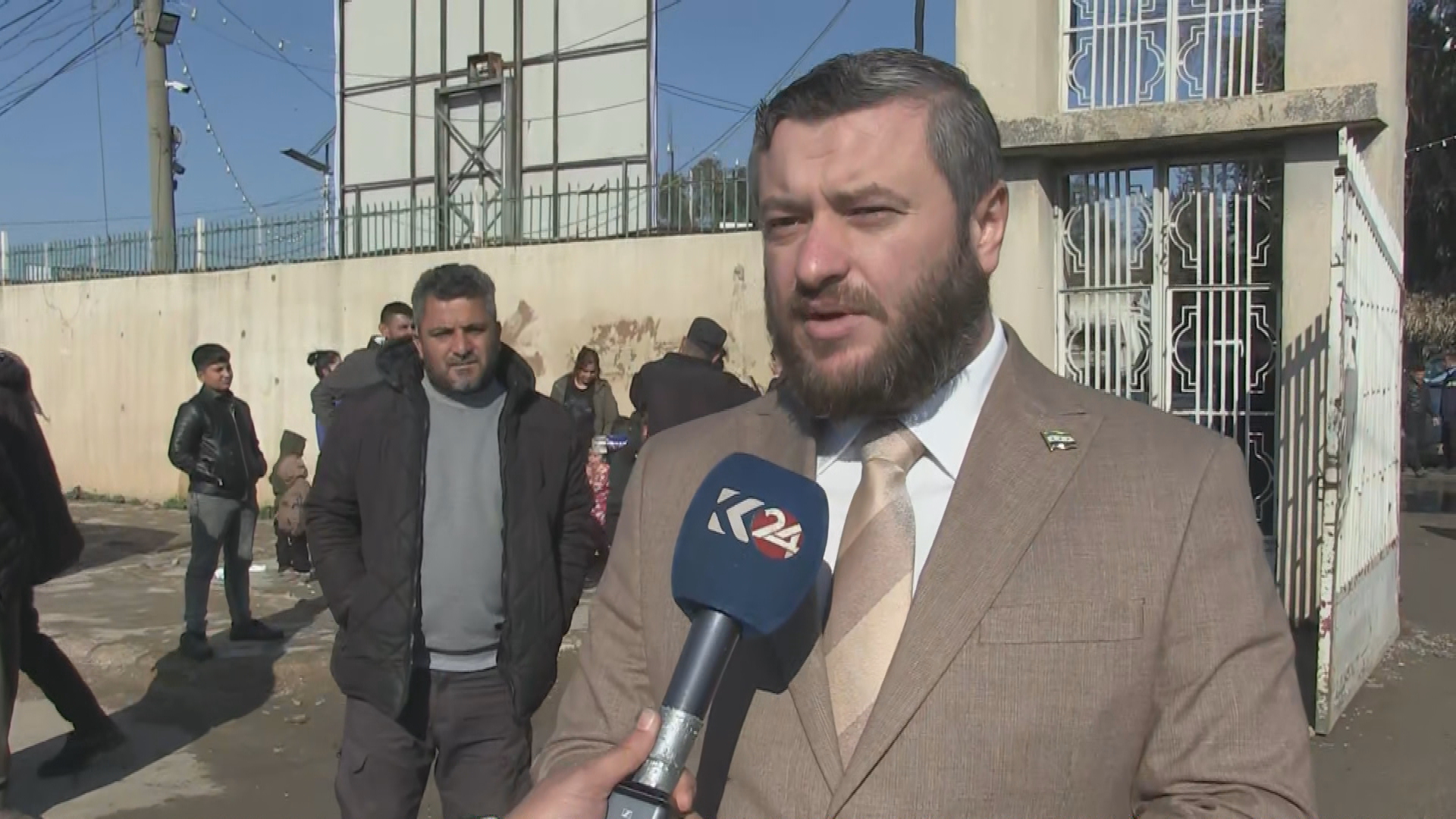
ERBIL (Kurdistan24) - Syrian authorities announced on Monday that all internally displaced persons (IDPs) from Afrin are expected to return to their homes by the Eid festival, as officials work to facilitate the return of families from Sere Kaniye and other affected areas.
Ahmad al-Hilali, spokesperson for the Syrian presidential team tasked with implementing the agreement between the Syrian Democratic Forces (SDF) and the Damascus government, told Kurdistan24 that preparations for the return of Afrin IDPs are underway, with a phased approach designed to ensure security and logistical readiness.
Speaking from the Baladi Stadium in Hasakah, al-Hilali said, “We are currently here organizing the affairs of the Afrin IDPs so they can return to their city.
Our plan is for all displaced persons to spend the upcoming Eid in their own homes; the return process will be conducted phase by phase.” He noted that approximately eight thousand families, totaling around 40,000 people currently residing in Hasakah, are included in the initial phase of the return program.
Al-Hilali also addressed the situation of those displaced from Sere Kaniye (Ras al-Ayn) and other regions affected by the conflict, stating, “Those areas are also included in our plan. Once the roads are opened, the areas are cleared of mines, and the security situation stabilizes as it was before, with God’s help, they will all return in the near future.”
The displacement of civilians from Afrin and Sere Kaniye stems from Turkish military operations and affiliated armed groups.
In early 2018, an offensive on Afrin forced hundreds of thousands of Kurdish residents to flee to Shahba and Hasakah, and in late 2019, a similar campaign in Sere Kaniye displaced thousands more families to camps in Hasakah Governorate. The prolonged absence of residents from these areas has contributed to significant demographic and security challenges.
Following the collapse of Syria’s previous regime at the end of 2024 and subsequent political and military developments, a new phase of governance has emerged in Damascus.
Current arrangements between the SDF and the Syrian government aim to coordinate the return of displaced populations while addressing obstacles such as landmines, security concerns, and the settlement of armed groups in former civilian residences.
Al-Hilali emphasized that both sides are committed to managing the process in a careful, step-by-step manner to mitigate risk to returning families.
The logistical complexities of returning IDPs include clearing urban and rural areas of explosive remnants of war, repairing infrastructure damaged during the years of conflict, and ensuring that basic services such as water, electricity, and healthcare are restored.
According to al-Hilali, the return plan prioritizes security and stability to prevent incidents that could endanger returning civilians.
The process also reflects an effort to reconcile the humanitarian needs of displaced populations with the broader political and military realities in northern Syria.
Afrin and Sere Kaniye have undergone demographic changes over the past years, including the resettlement of armed groups in previously Kurdish neighborhoods, which complicates the reintegration of returning residents.
Al-Hilali stressed that the return program is not limited to Afrin, adding that other displaced populations in Hasakah Governorate will be able to go back to their original communities once conditions are deemed safe.
“Our responsibility is to ensure that the IDPs are able to return to their cities with dignity and security, in a manner that preserves the rights and properties of the displaced,” he said.
International observers have previously raised concerns over the safety and security of displaced populations returning to former conflict zones, noting the need for comprehensive mine-clearing operations, verification of residency claims, and mechanisms to prevent new outbreaks of violence.
The Syrian government’s phased approach, as outlined by al-Hilali, seeks to address these challenges while facilitating the return of tens of thousands of people displaced by military campaigns in 2018 and 2019.
The return of IDPs to Afrin and Sere Kaniye is widely regarded as one of the most sensitive and complex post-conflict tasks in Syria.
Officials from both the Damascus government and the SDF are coordinating to ensure that the process is orderly, with phased returns and security assessments conducted before families are allowed to go back to their homes.
Preparations are ongoing in coordination with local authorities and civil society organizations to provide assistance and monitor the safe return of displaced residents. The process is expected to continue in phases until all families have returned to their homes, with the initial goal of completing the Afrin returns by the Eid festival, al-Hilali said.