HRW Says Israel Used White Phosphorus Over Residential Area in Southern Lebanon
Human Rights Watch said the verified imagery showed airburst white phosphorus munitions over a residential neighborhood in Yohmor, where civil defense teams later responded to fires in homes and a vehicle.
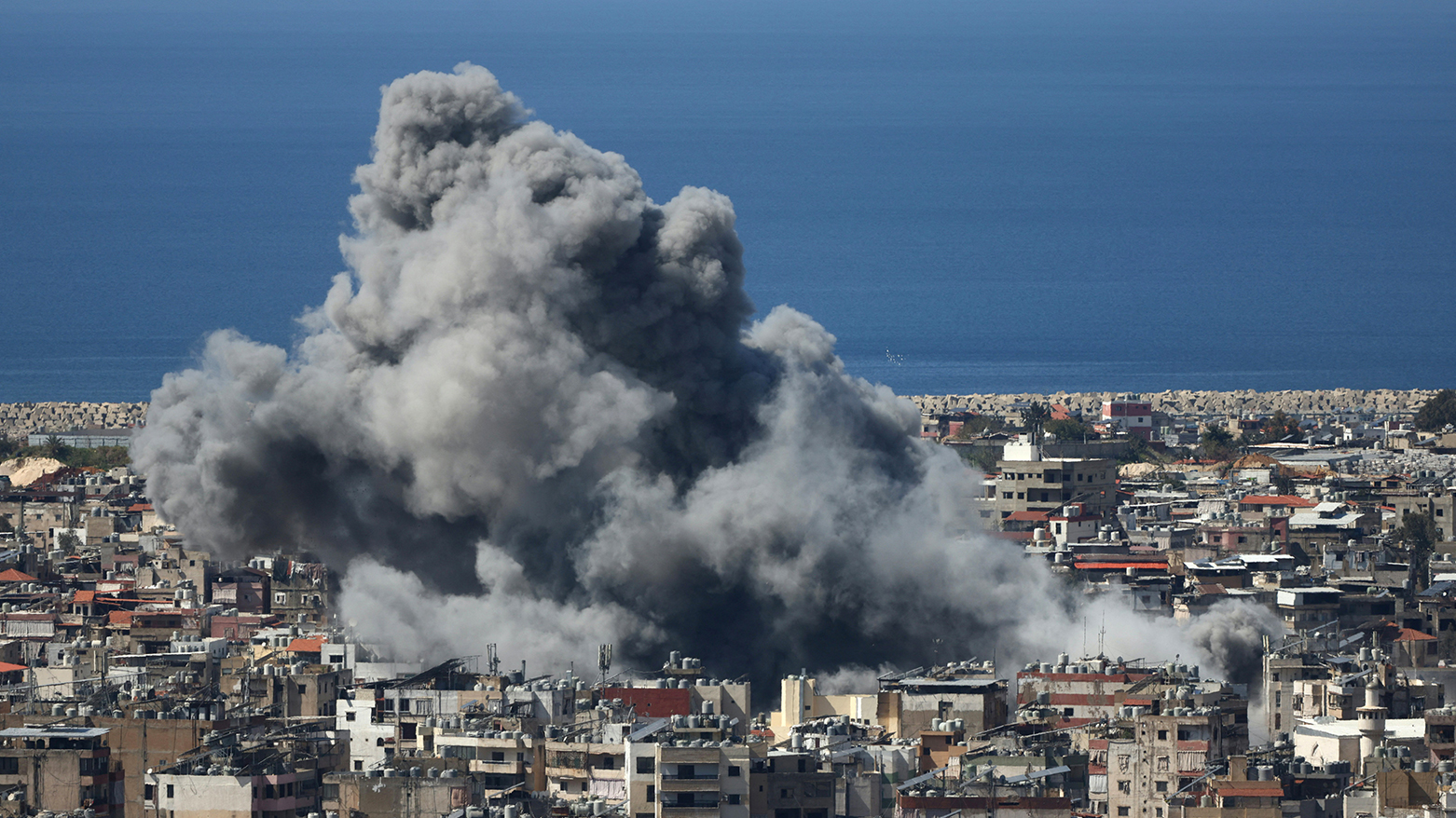
ERBIL (Kurdistan24) - Human Rights Watch (HRW) said on Monday that the Israeli military used artillery-fired white phosphorus munitions over residential areas in the southern Lebanese town of Yohmor on March 3, describing the use of the incendiary substance in populated areas as unlawful under international humanitarian law.
The rights organization said it verified and geolocated seven images showing airburst white phosphorus munitions deployed above a residential neighborhood in Yohmor, with civil defense personnel responding to fires in homes and a vehicle in the same area.
Human Rights Watch said the images showed at least two artillery-delivered white phosphorus munitions exploding in the air above the town. The group identified the distinctive smoke patterns in the images as consistent with the “knuckle” formation produced by the expelling and bursting charges of the M825-series 155mm artillery projectile, which contains white phosphorus.
According to the organization, white phosphorus is a chemical substance that ignites when exposed to oxygen and can be dispersed through artillery shells, bombs, or rockets. When used in populated areas, the substance can ignite fires in homes, farmland, and civilian infrastructure.
“The Israeli military’s unlawful use of white phosphorus over residential areas is extremely alarming and will have dire consequences for civilians,” Ramzi Kaiss, Lebanon researcher at Human Rights Watch, said in a statement.
Kaiss added that the incendiary effects of white phosphorus can cause death or severe injuries that may result in long-term suffering.
Human Rights Watch said an image posted on social media on the morning of March 3 showed the munitions being airburst over a residential neighborhood in Yohmor. The organization said it verified and geolocated the image to the town in southern Lebanon.
The group also reviewed photographs posted on social media later that day by the Civil Defense Team of the Islamic Health Committee in Yohmor, which it said showed workers extinguishing fires on residential rooftops and in a car.
According to Human Rights Watch, the images posted at 11:34 a.m. and 1:36 p.m. showed smoke emerging from the balconies of a residential building and firefighters working to put out flames on rooftops.
The Civil Defense Team attributed the fires to white phosphorus, according to the photographs reviewed by the organization.
Human Rights Watch said its analysis indicated that the fires were likely caused by burning felt wedges impregnated with white phosphorus that were dispersed by the airburst munitions.
The organization said the homes and vehicle shown in the images were located within a radius of less than 160 meters from the area where the airburst munitions were observed.
According to Human Rights Watch, white phosphorus can serve several military purposes, including creating smoke screens, marking targets, signaling, or attacking personnel and equipment.
However, the group said the use of airburst white phosphorus munitions in populated areas is considered unlawfully indiscriminate under international humanitarian law because the burning material spreads widely and can ignite fires across large areas.
The organization said that when such artillery shells burst in the air they disperse approximately 116 burning wedges impregnated with white phosphorus across an area between 125 and 250 meters in diameter, depending on the altitude and angle of the explosion.
Human Rights Watch said the wide dispersal pattern can expose civilians and civilian structures to fire and burn injuries when the substance is used above populated areas.
Earlier on March 3, Avichay Adraee, the Israeli military’s Arabic-language spokesperson, issued a warning advising residents of Yohmor and 50 other villages and towns to evacuate their homes and move at least 1,000 meters outside the villages to open land.
According to Human Rights Watch, the warning was issued at 5:27 a.m. and repeated again at 12:12 p.m. the same day.
The organization said it had not independently verified whether civilians were present in the area at the time the munitions were used or whether any injuries occurred as a result.
Human Rights Watch said it has previously documented the Israeli military’s use of white phosphorus in southern Lebanon between October 2023 and May 2024, describing the incidents as placing civilians at risk and contributing to displacement in border communities.
The organization’s report comes amid a broader escalation of hostilities between Israel and the Lebanese armed group Hezbollah.
According to Lebanon’s health ministry, cited by Human Rights Watch, at least 217 people had been killed in Lebanon since March 2 as the conflict intensified.
The escalation has also displaced hundreds of thousands of people across the country, according to the same figures.
Human Rights Watch said the Israeli military has issued displacement orders covering the entire population living south of the Litani River as well as residents of Beirut’s southern suburbs.
The rights organization said the orders affect hundreds of thousands of people and raised concerns about the scale of displacement.
Human Rights Watch said the sweeping nature of the displacement orders raises concerns about the potential risks to civilians and the possibility of forced displacement under international law.
The organization also noted that white phosphorus munitions can be used for purposes other than direct attacks, including as an obscurant to block visibility.
Human Rights Watch said alternative smoke munitions exist that can serve similar military purposes while posing fewer risks to civilians.
The organization cited the M150 smoke projectile, produced by Israeli companies, as one such alternative that has previously been used by the Israeli military to obscure the movement of its forces.
Human Rights Watch said stronger international regulations on incendiary weapons are needed to address the risks posed by weapons such as white phosphorus.
It noted that Protocol III of the Convention on Conventional Weapons is currently the only legally binding international instrument specifically addressing incendiary weapons.
According to the organization, Lebanon is a party to Protocol III, while Israel is not.
Human Rights Watch said the protocol applies to weapons primarily designed to start fires or cause burns but excludes certain multipurpose munitions that have incendiary effects, including those containing white phosphorus.
The organization said these legal distinctions have led to ongoing debates about the adequacy of international rules governing the use of such weapons.
Human Rights Watch urged Israel to prohibit the use of airburst artillery-delivered white phosphorus in populated areas and called on countries providing military assistance to Israel to take steps aimed at preventing the use of such munitions in residential areas.
The organization said Israel should halt the use of white phosphorus in populated areas to reduce risks to civilians during ongoing hostilities.
Human Rights Watch said its findings were based on verified imagery, geolocation analysis, and review of photographs and videos posted on social media from Yohmor on March 3.
The organization said the images indicated that the munitions were used over a residential area during the escalation of fighting in southern Lebanon.