Gulf, Regional States Condemn Iranian Attacks, Demand Immediate Halt
Joint ministerial meeting in Riyadh warns Tehran over escalation, backs self-defense rights
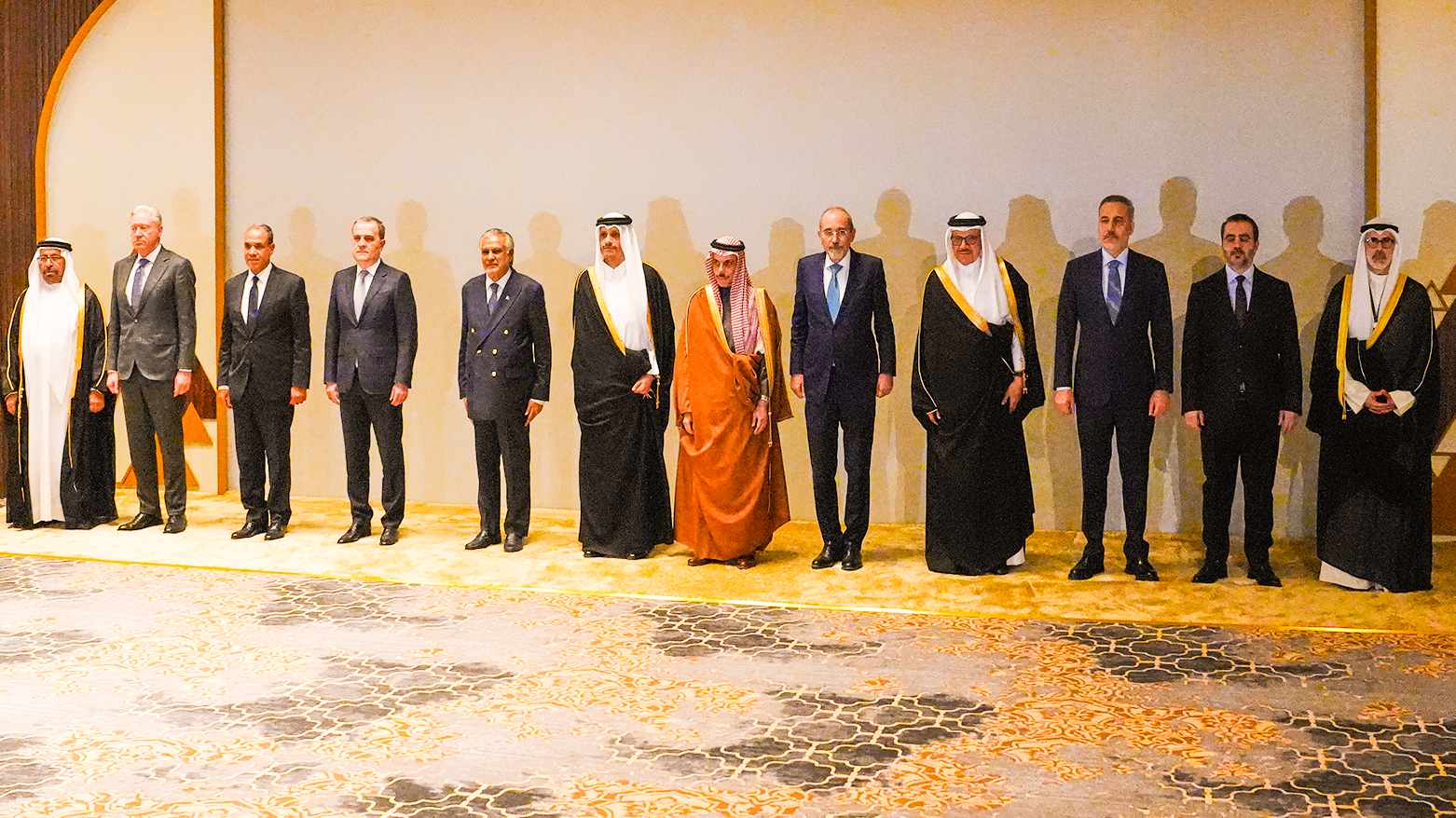
ERBIL (Kurdistan24) — A coalition of regional countries issued a strongly worded joint statement on Thursday condemning what they described as ongoing Iranian attacks, following a high-level ministerial meeting hosted in Riyadh, the capital of the Kingdom of Saudi Arabia.
The statement, published by the Kuwait Ministry of Foreign Affairs on X, summarized the outcomes of an overnight consultative meeting involving the foreign ministers of Kuwait, Azerbaijan, Bahrain, Egypt, Jordan, Lebanon, Pakistan, Qatar, Saudi Arabia, Syria, Turkey, and the United Arab Emirates.
Participants discussed what they described as “deliberate Iranian aggressions” targeting multiple countries, including Gulf Cooperation Council states, as well as Jordan, Azerbaijan, and Turkey.
The ministers condemned the use of ballistic missiles and drones in strikes that reportedly hit civilian areas and critical infrastructure such as oil facilities, desalination plants, airports, residential compounds, and diplomatic premises.
The joint statement stressed that such attacks “cannot be justified under any pretext,” reaffirming the countries’ right to self-defense in accordance with Article 51 of the United Nations Charter.
The ministers called on Iran to immediately halt its attacks and adhere to international law, humanitarian law, and principles of good neighborliness. They emphasized that de-escalation and regional stability require a return to diplomacy, warning that future relations with Tehran would depend on its respect for sovereignty and non-interference in the internal affairs of other states.
The statement also urged Iran to comply with UN Security Council Resolution 2817 (2026), including an immediate cessation of hostilities and avoidance of provocative actions against neighboring countries.
It further called on Tehran to stop supporting, financing, and arming affiliated militias across the Arab world, accusing Iran of using such groups to advance its interests at the expense of regional stability.
In a significant maritime warning, the ministers stressed the need for Iran to refrain from any actions that could disrupt international navigation in the Strait of Hormuz or threaten maritime security in the Bab al-Mandab.
The statement also addressed Lebanon, reaffirming support for its sovereignty, territorial integrity, and stability, while backing the Lebanese government’s efforts to consolidate state control over weapons.
At the same time, the ministers condemned Israeli actions in Lebanon and criticized what they described as expansionist policies in the region.
Concluding their meeting, the participating countries pledged to maintain close coordination and consultation to monitor developments and formulate unified positions. They underscored their readiness to take necessary and legitimate measures to safeguard their security, stability, and sovereignty in the face of what they termed continued Iranian aggression.