Iraqi PM Reaffirms Support for PMF, Warns Against Dragging Iraq into Regional Conflict
According to a statement from the Prime Minister’s Office, Sudani reaffirmed his full support for the PMF during his meeting with its leaders and commanders, describing it as “a fundamental component of the national security system.”
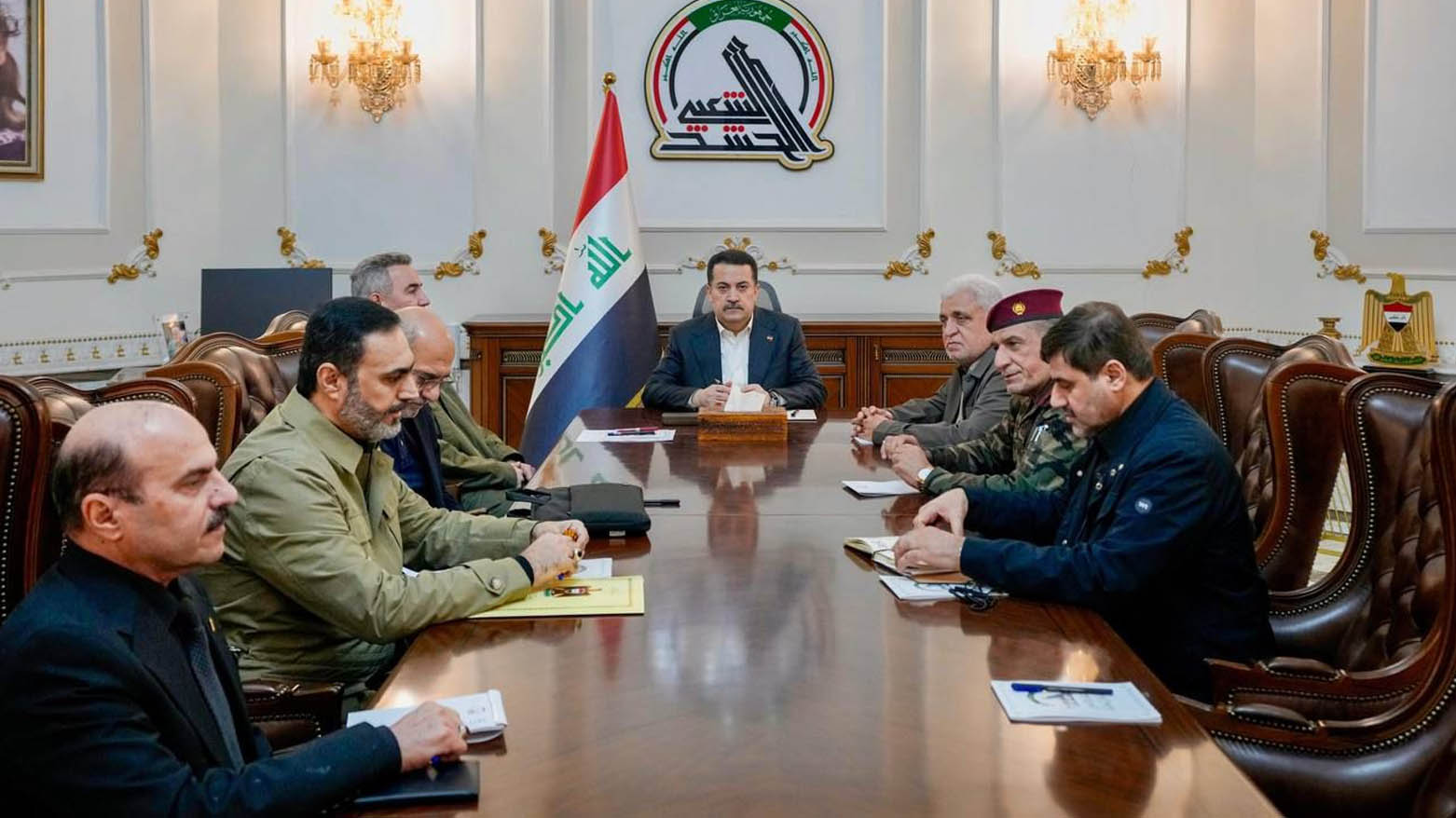
ERBIL (Kurdistan24) – On Thursday, Mohammed Shia' al-Sudani, Prime Minister and Commander-in-Chief of the Iraqi Armed Forces, visited the headquarters of the Popular Mobilization Forces (PMF) and met with Falih Al-Fayyadh, head of the organization.
According to a statement from the Prime Minister’s Office, Sudani reaffirmed his full support for the PMF during his meeting with its leaders and commanders, describing it as “a fundamental component of the national security system.”
He stressed that the PMF operates under the constitution and the law, adhering to official state directives, and dismissed claims portraying the force as illegal as “misinformation.”
Sudani also underscored that the government would not tolerate any attacks targeting PMF members or other Iraqi security personnel.
The Prime Minister highlighted the PMF’s role in defeating the Islamic State (ISIS) and preserving Iraq’s unity following the religious edict that mobilized volunteer fighters. He further announced a decision to allocate residential land to the families of fallen and wounded PMF members, describing it as a minimum legal entitlement.
Emphasizing national stability, Sudani instructed security agencies to maintain order and prevent any party from dragging Iraq into the ongoing regional conflict. He also reiterated the need to ensure full protection for diplomatic missions across the country.
Since the outbreak of the conflict involving the United States, Israel, and Iran, the PMF and other armed groups operating outside state control have repeatedly targeted U.S. diplomatic missions and military installations in Iraq and the wider region.
In response, U.S. forces have conducted multiple strikes on PMF positions and affiliated groups across several Iraqi provinces, killing several senior commanders.
The escalation follows the launch of U.S. and Israeli airstrikes against Iran on February 28, which resulted in the deaths of several high-ranking figures. Iran subsequently retaliated with missile attacks targeting Israel and U.S. military bases across the region.