Iranian Missiles Strike Dimona and Arad in Southern Israel, Injuring Over 100
Iranian missiles hit Dimona and Arad, injuring over 100, as Netanyahu vowed a broad response amid escalating military, diplomatic, and economic tensions.
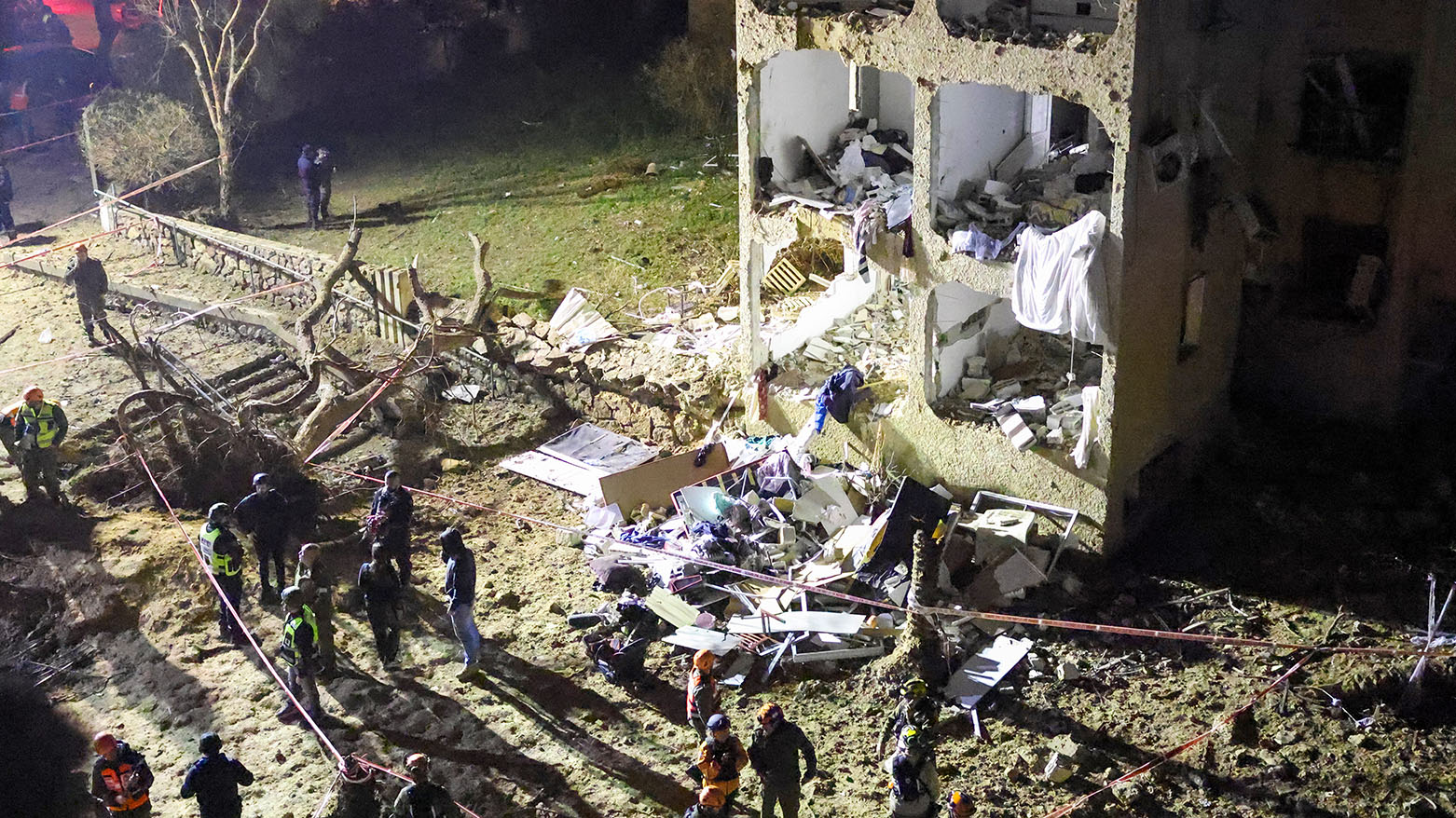
ERBIL (Kurdistan24) - Iranian missile strikes hit southern Israel late on Saturday, targeting Dimona and Arad in one of the most intense escalations since the conflict began three weeks earlier, leaving more than 100 people injured and prompting Israeli Prime Minister Benjamin Netanyahu to pledge a comprehensive response.
Medical sources in Israel reported that 75 people were injured, including ten in critical condition, after a missile struck a residential area in Arad, causing extensive destruction to buildings.
A separate missile strike targeted Dimona, near Israel’s nuclear reactor in the Negev desert, injuring 33 people. The Israeli military confirmed a direct hit on a building in the city, while footage showed large fireballs and a deep crater at the impact site, located approximately five kilometers from the nuclear facility.
In his first official reaction, Netanyahu described the night as “extremely difficult in a battle of destiny,” stressing Israel’s determination to respond “on all fronts.”
Iranian state television stated that the strike on Dimona was a direct response to an earlier attack on the Natanz nuclear facility in Isfahan province early Saturday. Tehran accused Washington and Tel Aviv of carrying out the Natanz strike targeting centrifuge systems.
The Israeli military, however, said it was “unaware of a strike,” fueling speculation that the attack may have been conducted independently by the United States.
In Washington, US Central Command announced the destruction of an underground Iranian facility used for storing cruise missiles and guidance radars, stating that the operation aimed to reduce Tehran’s capacity to threaten international navigation in the Strait of Hormuz.
On the diplomatic front, Saudi Arabia expelled Iran’s military attaché and staff, ordering them to leave the country within 24 hours in protest against what it described as “blatant Iranian aggression” and actions undermining regional security.
Economically, tensions and Iran’s partial closure of the Strait of Hormuz to vessels from “hostile countries” triggered a sharp surge in oil prices, with Brent crude surpassing $105 per barrel—an increase of 50 percent within one month.
Internationally, the International Atomic Energy Agency called for “maximum restraint” to avoid a nuclear catastrophe, while Moscow described the strike on Natanz as “irresponsible.” Meanwhile, 22 countries issued a joint statement condemning Iranian attacks on civilian infrastructure and expressing readiness to ensure safe passage through the Strait of Hormuz.
Inside Iran, uncertainty surrounded the status of the new Supreme Leader, Ayatollah Mojtaba Khamenei, who was absent from leading Eid al-Fitr prayers, amid reports suggesting he may have been injured in a recent airstrike that had previously killed his father earlier in March.
Observers indicated that the reach of Iranian missiles and attempts to target distant locations, including Diego Garcia in the Indian Ocean, signal a strategic escalation that could push the region toward a broader confrontation.
With missile exchanges intensifying, diplomatic tensions rising, and energy markets shaken, the conflict appears to be entering a more volatile phase with increasingly far-reaching consequences.