U.S.-Israel-Iran Conflict Widens Across Region With Strikes, Intercepts and Maritime Disruption
UAE and Saudi air defenses intercepted Iranian missiles and drones as regional fighting entered a fourth week, with Iranian strikes hitting Israel, maritime disruptions intensifying, and casualties rising across multiple fronts, officials said.
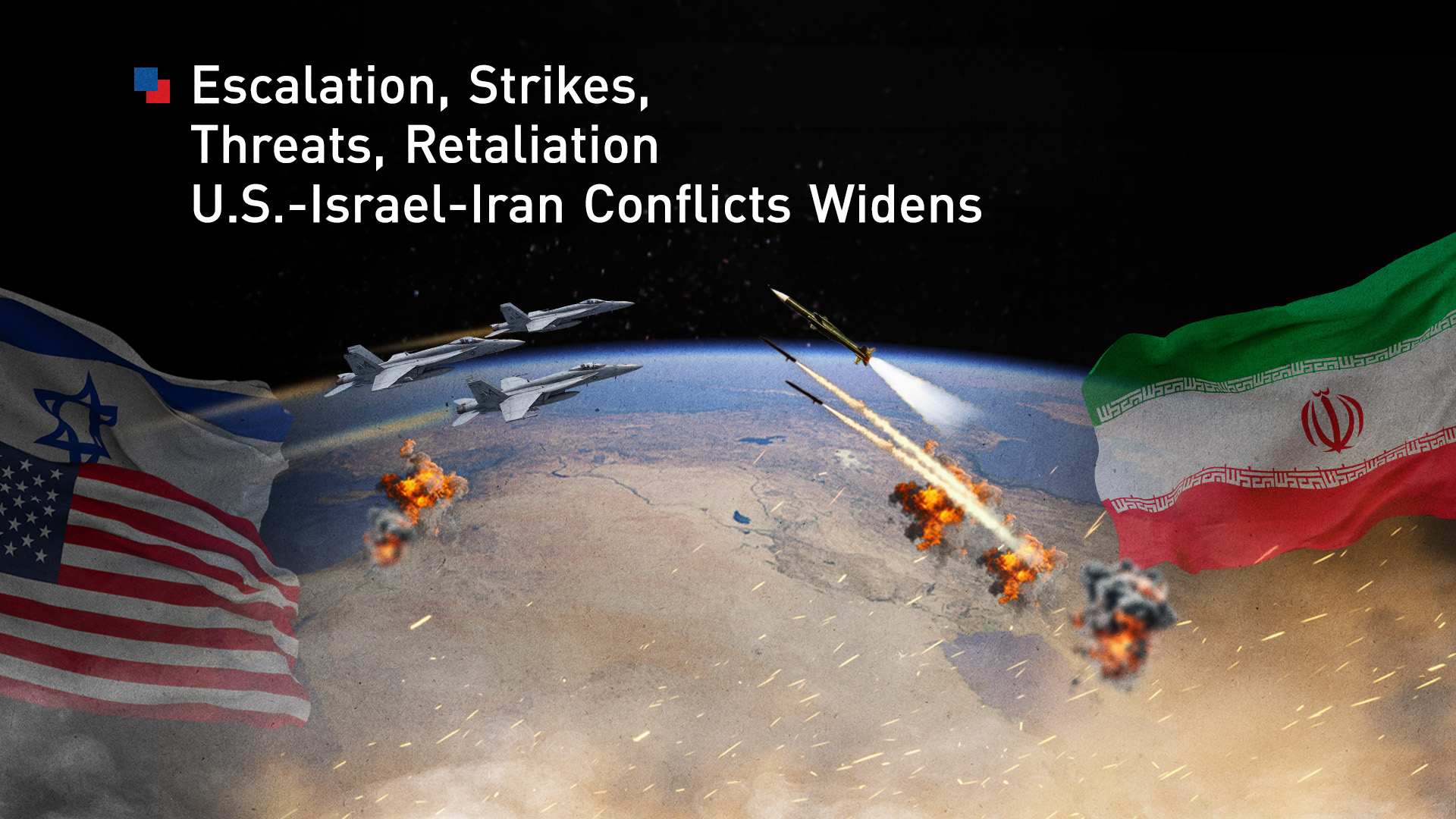
ERBIL (Kurdistan24) - Air defense systems in the United Arab Emirates and Saudi Arabia intercepted Iranian missiles and drones on early Sunday, officials said, as the conflict involving Iran, the United States, and Israel continued into its fourth week with sustained cross-border strikes, maritime disruptions, and rising casualties across the region, according to statements reported by AFP and details compiled by AP and The Wall Street Journal.
The United Arab Emirates Ministry of Defense said in a statement carried by AFP that its air defenses were “currently responding to incoming missile and drone threats from Iran,” adding that “the sounds heard are the result of the Air Defence Systems intercepting missiles and drones.”
The statement indicated that defensive systems remained actively engaged as aerial threats approached UAE territory.
Saudi Arabia’s defense ministry reported similar developments, stating, according to AP, that air defense systems tracked three ballistic missiles launched toward the capital, Riyadh.
One missile was intercepted, while two others fell in an uninhabited area, the ministry said. AP also reported that six drones targeting the kingdom’s eastern region were downed, with no immediate casualties or damage confirmed.
These developments come amid a broader escalation documented by AFP, AP, and The Wall Street Journal, including Iranian missile strikes on southern Israel late Saturday that caused injuries and significant structural damage in multiple locations.
According to AP, missiles struck the cities of Arad and Dimona, both located in Israel’s southern Negev region.
Rescue services reported that a missile strike in Arad injured nearly 70 people and damaged at least 10 apartment buildings, AP said, adding that 10 individuals were in serious condition.
AFP reported separately that 84 wounded people were transported to hospitals following the strike, citing Israel’s Magen David Adom emergency service. Emergency responders continued to search damaged buildings for additional victims.
In Dimona, a separate missile strike wounded approximately 30 people, according to AP and AFP. The city is located near Israel’s main nuclear research center.
AFP reported that the missile landed several kilometers from the facility, causing extensive damage to nearby residential buildings, including collapsed structures and debris scattered across the area.
Israeli military spokesperson Brig. Gen. Effie Defrin said air defense systems had been activated but did not intercept at least one of the incoming missiles. “Air defence systems operated but did not intercept the missile, we will investigate the incident,” he said, according to AFP and AP.
Iranian officials said the strikes were carried out in response to earlier attacks on Iranian territory, including a reported strike on the country’s nuclear enrichment facility at Natanz.
AP reported that Iranian authorities said the facility did not experience radiation leakage following the attack, a finding also supported by the International Atomic Energy Agency, which said no abnormal radiation levels were detected.
Israeli Prime Minister Benjamin Netanyahu described the developments as “a very difficult evening in the campaign for our future,” according to AP, adding that emergency services had been deployed to affected areas.
According to figures cited by AP, the death toll since the start of the conflict has exceeded 1,500 in Iran, more than 1,000 in Lebanon, 15 in Israel, and 13 U.S. military personnel. Millions of people have been displaced, particularly in Iran and Lebanon, AP reported.
The conflict has also extended into maritime zones.
AP reported that a projectile struck near a bulk carrier approximately 15 nautical miles north of Sharjah in the UAE, citing the United Kingdom Maritime Trade Operations center. The explosion caused concern but no injuries were reported among the crew.
AFP reported that the UAE joined 21 other countries in agreeing to contribute to efforts to secure the Strait of Hormuz, a critical maritime corridor through which roughly 20 percent of global oil and gas supplies typically pass.
According to AFP, the group condemned attacks on commercial vessels and energy infrastructure and described the situation as a “de facto closure” of the strait by Iranian forces.
The Wall Street Journal also reported that Iran’s actions in the Strait of Hormuz have driven oil prices above $100 per barrel, reflecting supply concerns linked to disruptions in one of the world’s most important energy transit routes.
Iran has denied restricting maritime traffic while accusing Gulf states of facilitating U.S. military operations from their territory. AFP reported that Gulf governments have repeatedly rejected these accusations, stating they would not allow their airspace or territory to be used to launch attacks against Iran.
The United States has responded with a combination of military and economic measures, according to AP and The Wall Street Journal.
President Donald Trump warned that Iran must reopen the Strait of Hormuz within 48 hours or face further military action. In a social media post cited by AP and The Wall Street Journal, Trump said the United States would “hit and obliterate” Iranian power plants if the waterway remained closed.
The Wall Street Journal reported that potential targets could include natural gas-powered electricity plants, which account for a significant portion of Iran’s energy production.
At the same time, AP reported that Trump has issued mixed messages about the direction of the conflict, stating at one point that the United States was considering winding down military operations while simultaneously authorizing additional deployments to the region.
According to AP and The Wall Street Journal, the Pentagon has deployed three additional warships and approximately 2,500 Marines to the Middle East, marking the second such deployment within a week. Officials have not confirmed whether ground forces will be used in combat operations.
AP also reported that the U.S. administration temporarily lifted sanctions on certain Iranian oil shipments already at sea.
Treasury Secretary Scott Bessent said the move would allow approximately 140 million barrels of oil to enter global markets, though analysts cited by AP said the impact on prices may be limited given ongoing disruptions in the Strait of Hormuz.
Regional diplomatic tensions have intensified alongside military developments.
AP reported that Saudi Arabia declared several Iranian diplomats “persona non grata,” ordering them to leave within 24 hours. According to AP, Egyptian President Abdel-Fattah el-Sissi and Saudi Crown Prince Mohammed bin Salman said Iranian actions against Gulf states threaten regional stability.
Arab League Secretary-General Ahmed Aboul Gheit said recent diplomatic engagements among regional leaders reflect coordinated positions, AP reported.
The conflict has also affected civilian infrastructure. AP reported that a hospital and a tourist site in Iran’s Khuzestan province were damaged in strikes, resulting in at least one fatality.
The hospital was no longer accepting patients following the damage, according to Iranian sources cited by AP.
In the occupied West Bank, AP reported that missile fragments from Iranian strikes caused casualties and property damage. Palestinian authorities said four people were killed and nine injured, with nearly 200 missile fragments identified across the territory.
International monitoring bodies have continued to track developments at sensitive sites. AP reported that the International Atomic Energy Agency confirmed no abnormal radiation levels following reported strikes near nuclear-related facilities.
The Wall Street Journal reported that Iran demonstrated extended missile capabilities by launching a long-range strike targeting Diego Garcia, a joint U.S.-U.K. military base in the Indian Ocean. The missile did not hit the base, according to officials cited in the report.
The conflict has also disrupted industrial production in the region. AP reported that Iranian drone attacks on Qatar’s Ras Laffan industrial complex caused significant damage, affecting natural gas and helium production. The disruption has implications for global supply chains, particularly industries reliant on helium.
In Israel, military officials said operations continue across multiple fronts. AP reported that Chief of Staff Lt. Gen. Eyal Zamir described the conflict as reaching a midpoint, stating that military actions would continue.
“We are at the midway point, but the direction is clear,” Zamir said, according to AP.
Israeli operations have also extended into Lebanon, where Hezbollah has been engaged in hostilities. AP reported that more than 1,000 people have been killed in Lebanon since the escalation began, with over one million displaced.
Additional international responses have emerged. AP reported that the United Kingdom confirmed a military base in Cyprus would not be used for U.S. strikes against Iran, while maintaining broader defense cooperation with Washington.
The Wall Street Journal reported that Iranian officials have warned of potential retaliatory strikes on critical infrastructure across the region if attacks on Iranian territory continue.
Humanitarian concerns have also intensified. AP reported that arrests and executions have taken place in Iran during the conflict, raising concerns among rights organizations.
As military operations continue across air, land, and maritime domains, officials from multiple countries have emphasized ongoing engagement without signaling an immediate resolution. AFP, AP, and The Wall Street Journal all report that the conflict continues to expand geographically, affecting civilian populations, infrastructure, and global markets.
UAE and Saudi officials said air defenses remained active Sunday as Iranian missile and drone activity continued across the region, according to AFP and AP.
The ongoing hostilities reflect sustained military exchanges and regional involvement as the conflict enters its fourth week.
U.S. and regional officials said air defenses intercepted Iranian threats as fighting continued across multiple fronts.