UAE Minister Warns Weaponizing Strait of Hormuz Constitutes ‘Economic Terrorism’
Dr. Sultan bin Ahmed Al Jaber, the United Arab Emirates Minister of Industry and Advanced Technology, reiterated that maintaining open access to the Strait of Hormuz is essential to global economic stability.
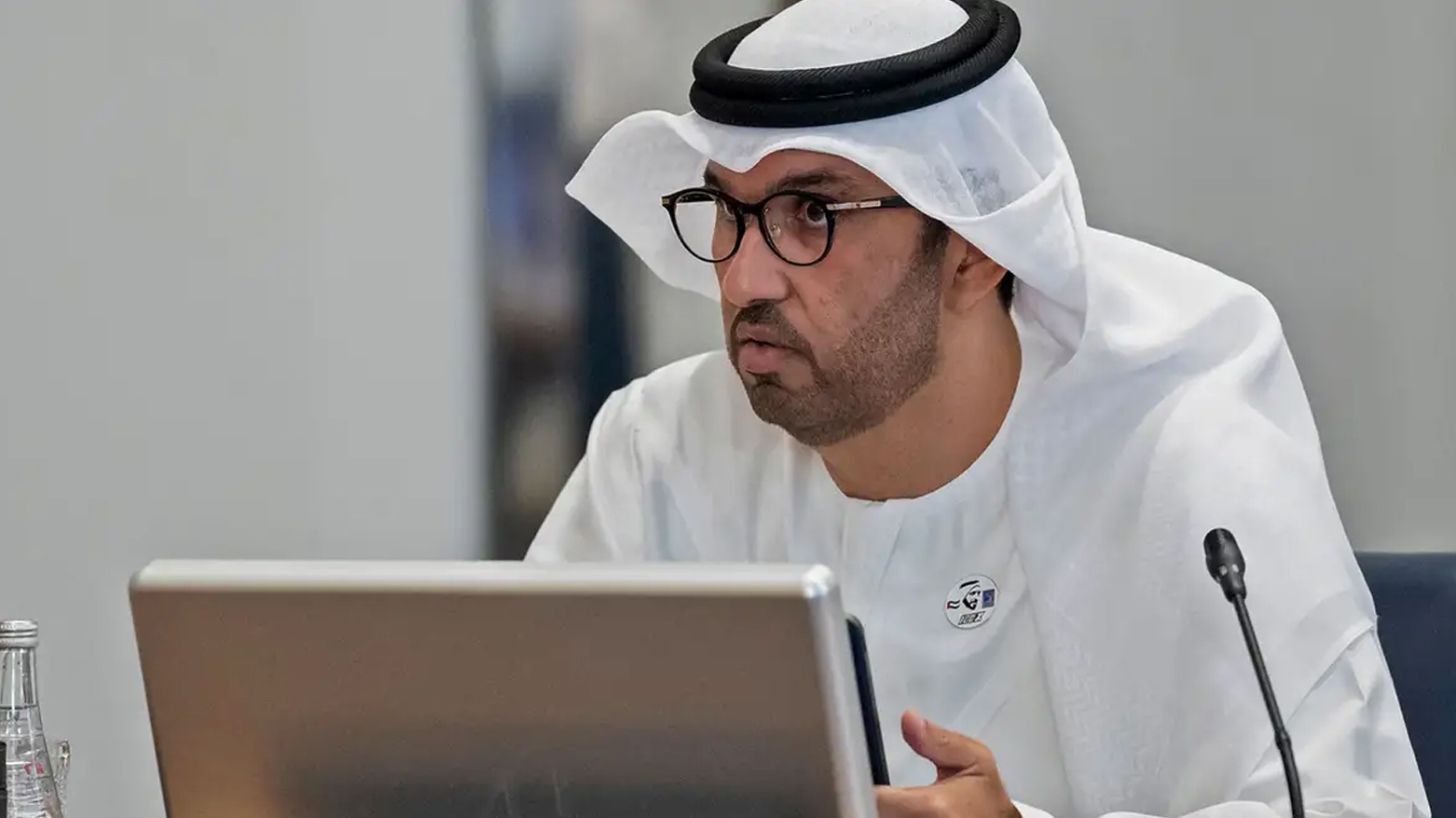
ERBIL (Kurdistan24) - Dr. Sultan bin Ahmed Al Jaber, the United Arab Emirates Minister of Industry and Advanced Technology, said Monday that weaponizing the Strait of Hormuz constitutes “economic terrorism” with global consequences, speaking at an energy conference in Houston amid ongoing regional tensions affecting the key maritime route.
Addressing participants at CERAWeek in Texas, Al Jaber said threats to the Strait of Hormuz extend beyond energy markets and carry broader economic and humanitarian implications. He stated that “weaponising the Strait of Hormuz is an act of economic terrorism with global consequences far beyond energy markets,” according to remarks carried by the Emirates News Agency (WAM).
Al Jaber emphasized the strategic importance of the waterway, describing it as a critical artery for global trade. He noted that approximately 20 million barrels of oil pass through the strait daily, representing nearly a fifth of global oil and gas flows, alongside significant shares of fertilizers, petrochemicals, and industrial metals.
“When Hormuz is squeezed, the pressure is immediately felt around the world,” he said, adding that disruptions have already contributed to rising energy prices. According to his remarks, oil prices increased by 50 percent over a three-week period, affecting global cost structures and economic activity.
He said the consequences extend to “factories, farms and families around the world,” underscoring the broader economic impact of instability in the region. Al Jaber added that energy security is directly tied to essential services, stating that “energy security is not just a slogan, it’s the difference between lights on and lights off.”
The UAE minister called for maintaining open maritime routes, asserting that the Strait of Hormuz must remain accessible. “No country should be allowed to hold Hormuz hostage, not now, not ever,” he said, stressing that the issue is rooted in security rather than supply.
Al Jaber also addressed the impact of recent attacks on energy infrastructure, stating that the Abu Dhabi National Oil Company (ADNOC) had sustained damage during the ongoing conflict. He said the company had implemented measures to ensure operational continuity and safeguard personnel, noting that efforts are underway to maintain supply to customers and stakeholders.
“Our defenses have been tested. Our resilience has been tested,” he said, adding that the UAE had taken steps over several years to strengthen infrastructure, preparedness, and partnerships.
He further highlighted the UAE’s international energy investments, stating that ADNOC, XRG, and Masdar have collectively invested more than $85 billion in energy assets in the United States, supporting multiple sectors including power generation and advanced chemicals.
Al Jaber said the current situation reflects broader challenges facing global energy systems, pointing to the need for coordinated international efforts to ensure stability. He added that the UAE has diversified energy production and expanded supply routes to mitigate disruptions.
The remarks come amid continued tensions linked to the ongoing conflict involving the United States, Israel, and Iran, which has affected maritime security and energy markets. Recent developments have included threats to the Strait of Hormuz and fluctuations in global oil prices, according to market reports.
Al Jaber concluded by calling for collaboration among global energy stakeholders, inviting participants to future discussions on energy system resilience at the ADIPEC conference scheduled for November in Abu Dhabi.