Israeli PM Says Military Operations Ongoing While U.S. Explores Iran Deal
Netanyahu stated that he spoke earlier with U.S. President Donald Trump, who sees “an opportunity to leverage the great achievements of the IDF and the U.S. military to realize the goals of the war in an agreement.”
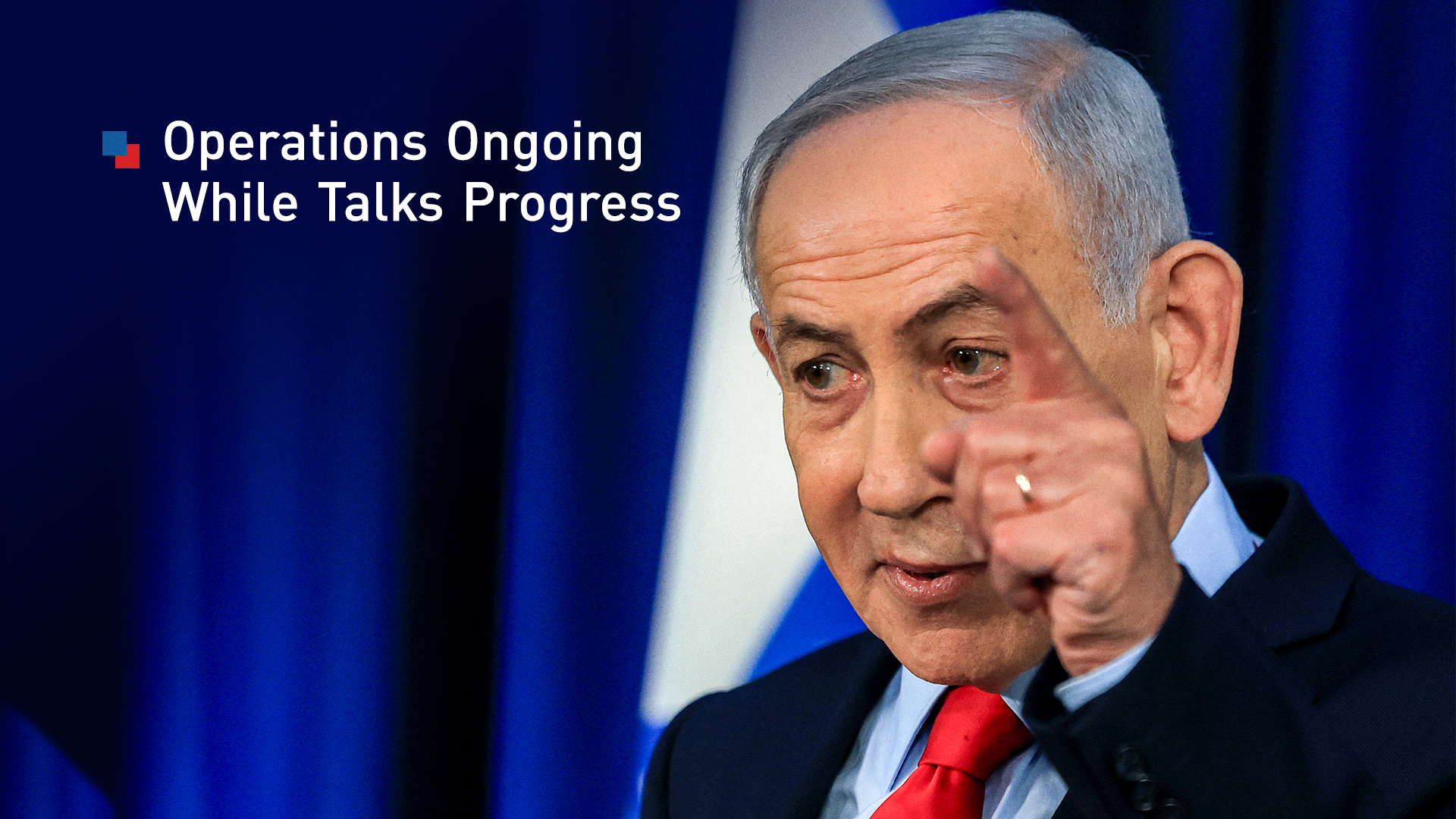
ERBIL (Kurdistan24) - Israeli Prime Minister Benjamin Netanyahu said Monday that Israel would continue its military operations targeting Iran, including strikes in Iran and Lebanon, following communications with U.S. President Donald Trump regarding ongoing efforts to manage the conflict.
Netanyahu stated that his discussion with Trump centered on leveraging the combined military efforts of the Israel Defense Forces (IDF) and U.S. forces to pursue objectives in the ongoing war while safeguarding Israel’s strategic interests.
In a statement issued Monday, Netanyahu said, “Earlier today, I spoke with our friend President Trump. President Trump believes that there is an opportunity to leverage the great achievements of the IDF and the US military to realize the goals of the war in an agreement, an agreement that will safeguard our vital interests.”
The Israeli prime minister added that military operations would continue in parallel with these discussions.
“In parallel, we continue to attack both in Iran and Lebanon. We are methodically dismantling the missile program and the nuclear program and continue to hit Hezbollah hard,” Netanyahu said.
He also referenced the elimination of two nuclear scientists in recent days and reaffirmed Israel’s commitment to protecting its strategic interests in any agreement.
Netanyahu’s remarks came amid broader developments involving U.S.-Iran communications and temporary shifts in military planning.
On Monday, President Trump participated in a roundtable on public safety at a Tennessee Air National Guard Base in Memphis, Tennessee, and announced a temporary postponement of planned U.S. military strikes on major Iranian energy and electricity targets.
Trump said the pause followed preliminary discussions with Iran over the past two days and indicated that further contacts would continue over a five-day period to assess whether a broader agreement could be reached.
Trump described the ongoing discussions as “very, very good” and said they involved unspecified Iranian interlocutors. He noted that additional communication would likely take place by telephone due to logistical constraints. “We’re doing a five-day period. We’ll see how that goes,” Trump said.
He also framed the talks within a long-standing pattern of negotiation with Iran, stating, “I know my whole life has been a negotiation, but with Iran, we’ve been negotiating for a long time, and this time they mean business. And it’s only because of the great job that our military did is the reason they mean business.”
The U.S. president emphasized that prior military operations had eliminated multiple Iranian leaders, describing the internal selection of new leadership in Tehran as a process complicated by the dangerous nature of the role. He added that Iran had agreed not to pursue nuclear weapons, while stressing that no formal agreement had yet been reached.
Trump said the temporary pause in planned strikes was intended to allow both sides to explore a possible settlement while considering the interests of regional allies, including Israel.
While Trump characterized the discussions as promising, Iranian officials maintained that no formal negotiations were taking place. Iranian Parliament Speaker Mohammad Bagher Qalibaf reiterated Monday that no talks with the United States had occurred, dismissing reports to the contrary as attempts to influence global markets.
“No type of negotiation has been conducted with the United States of America,” Qalibaf said in a statement posted on his official account, labeling reports of U.S.-Iran engagement as “fake news.”
Earlier reporting by Axios cited an Israeli official suggesting that U.S. envoys, including Steve Witkoff and Jared Kushner, had communicated with Qalibaf through intermediaries and that efforts were underway to arrange a potential meeting in Islamabad later in the week.
Iranian authorities stressed that these exchanges were procedural and did not constitute dialogue. Foreign Ministry spokesperson Esmail Baqaei said Monday that Tehran had received messages from the United States via “several friendly and allied countries” but maintained that these did not amount to formal negotiations.
Baqaei added that any military action targeting Iran’s energy infrastructure would trigger a “decisive, immediate, and effective response” from Iranian forces and reiterated Tehran’s positions on the Strait of Hormuz and conditions for ending the conflict.
The differing accounts from Washington and Tehran underscore a continuing divergence over the nature of contacts, with U.S. officials linking the temporary suspension of strikes to what Trump described as “constructive conversations” while Iranian authorities emphasized that communications were indirect and procedural.
A senior Iranian security official, cited by Tasnim News Agency, said “no negotiations with Trump are taking place” and suggested that U.S. financial and logistical considerations contributed to the decision to postpone military action.
The developments occur amid the fourth week of ongoing conflict involving the United States, Israel, and Iran. U.S. military deployments in the region have included additional naval assets and personnel, while Iran has conducted missile and drone operations targeting locations in the Gulf and southern Israel.
Trump framed the five-day pause as a window for exploring a potential agreement without additional military strikes, noting, “Hopefully, we won’t have to [attack]. And hopefully, we can make a deal that’s good for all of us, including the Middle Eastern allies that have been very good to us, including Israel.”
The temporary suspension of U.S. strikes marks the current status of military planning and high-level communications between Washington and Tehran, while Israel continues parallel operations to dismantle Iranian missile and nuclear programs and counter Hezbollah activities.
This article was updated on Monday, March 23, 2026, at 10:09pm.