New York Times: Mohammed Bin Salman has Called on Trump to Continue the War
US officials, regional actors, and new reports reveal escalating war dynamics, internal strategic Differences, and operational setbacks, including the withdrawal of USS Gerald Ford after a fire incident.
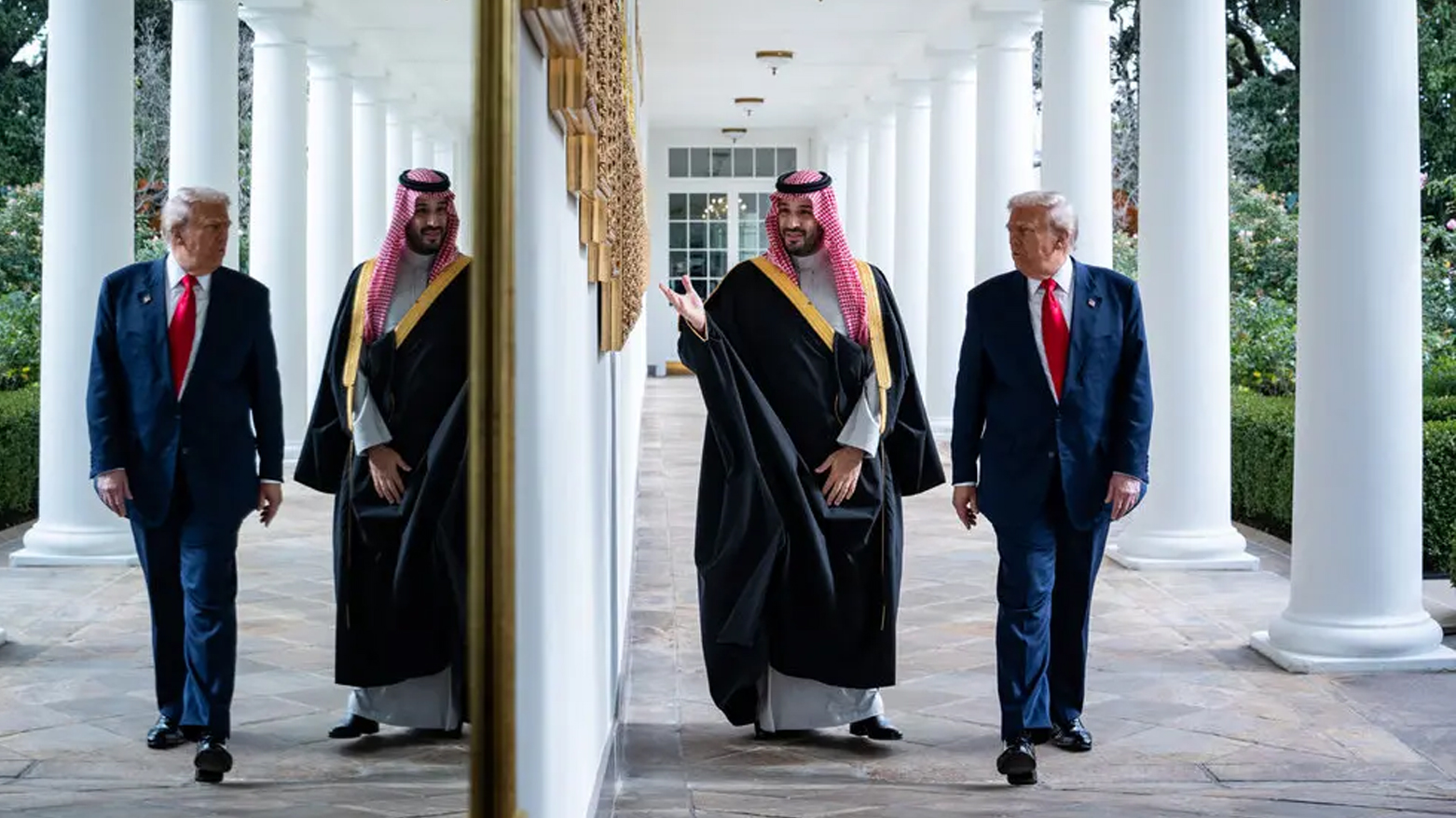
ERBIL (Kurdistan24) - A cascade of high-stakes developments unfolded across Washington and the Middle East, as strategic calculations, battlefield rhetoric, and operational disruptions converged in a moment of deep uncertainty, exposing competing visions over the trajectory of war and its consequences.
The New York Times reported that Mohammed bin Salman, Crown Prince of Saudi Arabia, in confidential discussions with US President Donald Trump, pressed for the continuation of the war until the complete dismantling of Iran’s government. According to the report, based on information obtained from US officials, bin Salman conveyed repeatedly over the past week that the conflict should not be left unfinished.
The Crown Prince reportedly believes that a wounded and angered Iran would pose a far greater threat to Gulf states than it did before the war, urging Washington and Tel Aviv to carry the confrontation through to its conclusion and eliminate Tehran’s leadership. The report further indicated that he proposed a ground operation inside Iranian territory, particularly targeting Kharg Island and the country’s energy infrastructure, aiming to strip Tehran of its financial and military capabilities.
At the same time, the report noted that Trump remains torn between de-escalation and further intensification, with concerns centered on global oil prices. Officially, however, Saudi Arabia denied these claims, stating: “Saudi Arabia has always supported peaceful solutions, and our primary concern now is protecting our people and national infrastructure from Iran’s daily attacks.” Saudi Foreign Minister Faisal bin Farhan also emphasized that Riyadh is employing all diplomatic and economic tools to halt Tehran’s attacks.
Observers cited in the report pointed to a strategic divergence between Saudi Arabia and Israel; while Israel may accept the emergence of a weakened and internally unstable Iran, Saudi Arabia views a failed state on its borders as a severe security threat.
The report added that bin Salman, currently advancing the “Vision 2030” project, is aware that prolonged conflict and the closure of the Strait of Hormuz threaten the Kingdom’s economic future. However, his primary concern remains a potential US withdrawal that could leave regional countries exposed to a retaliatory Iran.
In parallel, US Secretary of Defense Pete Hegseth declared on Tuesday, that no modern military in history has been dismantled with such speed and scale as Iran’s. He stated: “There has never been a modern military destroyed this quickly in history. Iran had ground forces, naval power, air force, and advanced defense systems, all of which were crushed by the United States and Israel.”
Hegseth added: “We negotiate through bombs. Tehran faces a choice; while we operate freely over their skies, they must decide their future.” He stressed that the Trump administration’s strategy is centered on negotiations through force, with the ultimate objective of permanently denying Iran nuclear capability.
He further noted that this war differs from experiences in Iraq and Afghanistan, emphasizing that President Trump has a clear objective and will not engage in a prolonged conflict driven by unclear goals. Reaffirming the Pentagon’s core mission, he said the primary responsibility is to ensure that Iran never acquires nuclear weapons, adding: “From the very first moment, we struck the enemy with maximum force to break them, and we have now created all conditions to ensure Iran can no longer pose a nuclear threat to the world.”
Following Hegseth’s remarks, President Trump, speaking at the same conference, said: “I think Pete doesn’t want the war to end.”
Meanwhile, Bloomberg reported that the US aircraft carrier USS Gerald Ford withdrew from the Middle East after a fire incident that injured more than 200 personnel. The carrier reached the shores of Crete after being forced to leave its operational zone.
According to the report, the fire broke out inside the vessel, causing injuries and smoke inhalation among more than 200 sailors and crew members, who were transferred to medical facilities for treatment. The incident has once again brought attention to deep technical issues affecting the most expensive warship in Washington’s arsenal.
Despite costing $13.2 billion and entering service in 2017, the USS Gerald Ford continues to face unresolved problems in key systems, including aircraft launch mechanisms, radar, and heavy weapons elevators. The US Department of Defense acknowledged that it does not yet possess sufficient data to confirm the vessel’s effectiveness in a real combat scenario.
Military experts also expressed concern that the carrier had been deployed continuously for nine months, significantly exceeding standard operational timelines. This extended deployment has placed substantial strain on technical systems and crew, potentially contributing to unexpected incidents.
As military pressure escalates, strategic divisions deepen, and operational challenges emerge, the unfolding developments underscore a volatile landscape where decisions made in closed rooms may reshape the region’s future.
Amid intensifying rhetoric, contested strategies, and mounting operational strain, the path forward remains fraught with uncertainty, as regional stability hangs in the balance.