Mahdi Omed, Director Who Elevated Kurdish Cinema, Passes Away
Kurdish cinema mourns the loss of Mahdi Omed, a pioneering director whose films, including the landmark The Tunnel, brought Kurdish stories to global audiences. He died in Erbil at 71, leaving a legacy of art, advocacy, and cultural visibility.
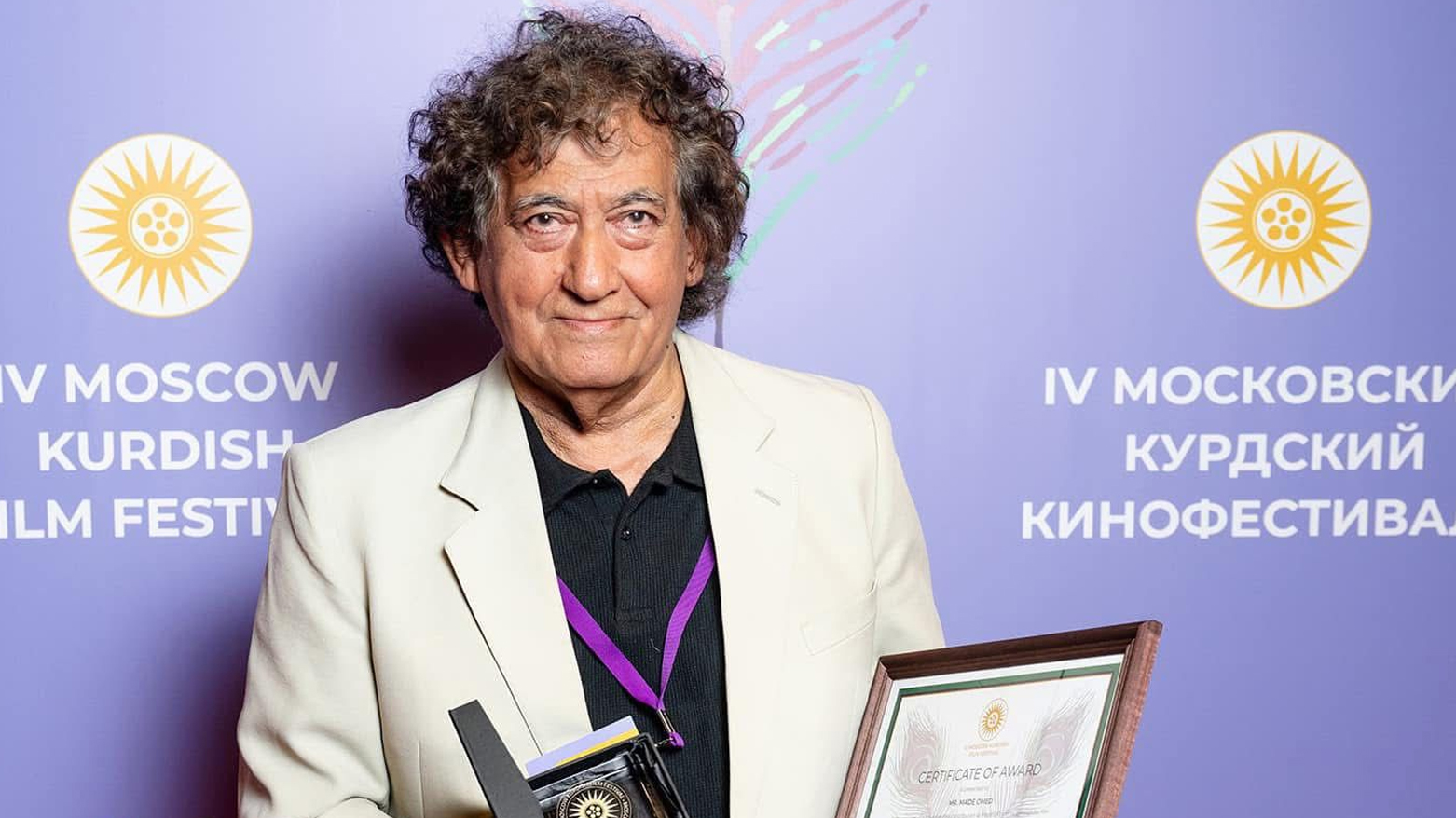
ERBIL (Kurdistan24) - The Kurdish cultural and cinematic world mourned on Saturday with the passing of Mahdi Omed, a pioneering film director whose work bridged the artistic and the political, bringing the Kurdish story to international audiences. Omed died in Erbil after a prolonged illness, ending a life dedicated to cinema as both craft and cultural mission.
For decades, Omed’s vision extended beyond the mechanics of filmmaking. He saw cinema as a vehicle for the Kurdish cause, a medium through which the beauty, struggles, and resilience of Kurdistan could be communicated to the world.
In interviews, he often emphasized that “cinema is not merely entertainment; it is the lens through which a people can tell its own story.” This philosophy guided his career, from his early works in Sweden to his influential films produced upon his return to Kurdistan in 2000.
A Life in Context
Born in 1955 in Kirkuk, Mahdi Omed hailed from Rawanduz, a town whose rugged landscapes and tumultuous history would later permeate his cinematic imagery. He spent significant years in Sweden with his family, where he developed his craft and honed a cinematic voice that combined European sensibilities with deeply rooted Kurdish narratives.
His return to Erbil marked a conscious choice to invest his talents in the homeland, asserting the importance of producing art in the context of Kurdistan’s ongoing cultural and political journey.
Omed’s work coincided with a period in which Kurdish cinema was seeking definition and recognition. While regional film industries in neighboring countries were gaining international notice, Kurdish filmmakers often faced systemic challenges, from limited funding to political restrictions.
Against this backdrop, Omed emerged as a figure of both creative innovation and cultural advocacy, shaping a cinema that was as aesthetically compelling as it was socially resonant.
The Masterpiece: The Tunnel
Among Omed’s oeuvre, the 1990 film The Tunnel stands as a landmark in Kurdish cinematic history. Critics praised the film not only for its visual composition but for its narrative courage—confronting issues of displacement, identity, and the scars of conflict in ways that resonated far beyond Kurdistan.
Its enduring legacy is a testament to Omed’s ability to fuse artistry with the weight of collective memory, creating cinema that speaks simultaneously to local audiences and the broader international community.
While The Tunnel remains his most celebrated work, Omed’s portfolio included several other productions that explored Kurdish history, folklore, and contemporary social challenges. Each film reflected a commitment to authenticity and a refusal to separate art from lived experience, positioning Omed as both storyteller and cultural custodian.
Legacy and Cultural Impact
The news of Omed’s passing has reverberated through Kurdish artistic circles, eliciting tributes that highlight not only his creative achievements but his role as a mentor and cultural advocate.
Local filmmakers, critics, and academics have underscored his contributions to defining a distinct Kurdish cinematic voice, noting that his insistence on telling stories rooted in local realities has inspired a new generation of directors.
Beyond the realm of cinema, Omed’s work contributed to the international visibility of Kurdish culture.
His films often accompanied festivals and screenings in Europe and the Middle East, where they offered audiences insight into Kurdish life and struggles, challenging stereotypes and fostering cross-cultural understanding.
The Void Left Behind
With Mehdi Omed’s passing, Kurdish cinema loses a visionary whose career bridged continents and cultures, but his films endure as a rich cultural inheritance.
As the Kurdish arts community reflects on his contributions, it is clear that his work will continue to shape cinematic discourse for years to come, inspiring filmmakers to pursue narratives that are as aesthetically ambitious as they are socially resonant.
Omed is survived by his family, and his legacy—anchored in both his masterpieces and his unwavering commitment to Kurdish cultural expression—remains an enduring testament to the power of cinema as both art and advocacy.