UK Prepares RFA Lyme Bay for Mine-Clearing Operations in Strait of Hormuz
The U.K. is retrofitting RFA Lyme Bay with autonomous mine-clearance drones to support operations in the Strait of Hormuz.
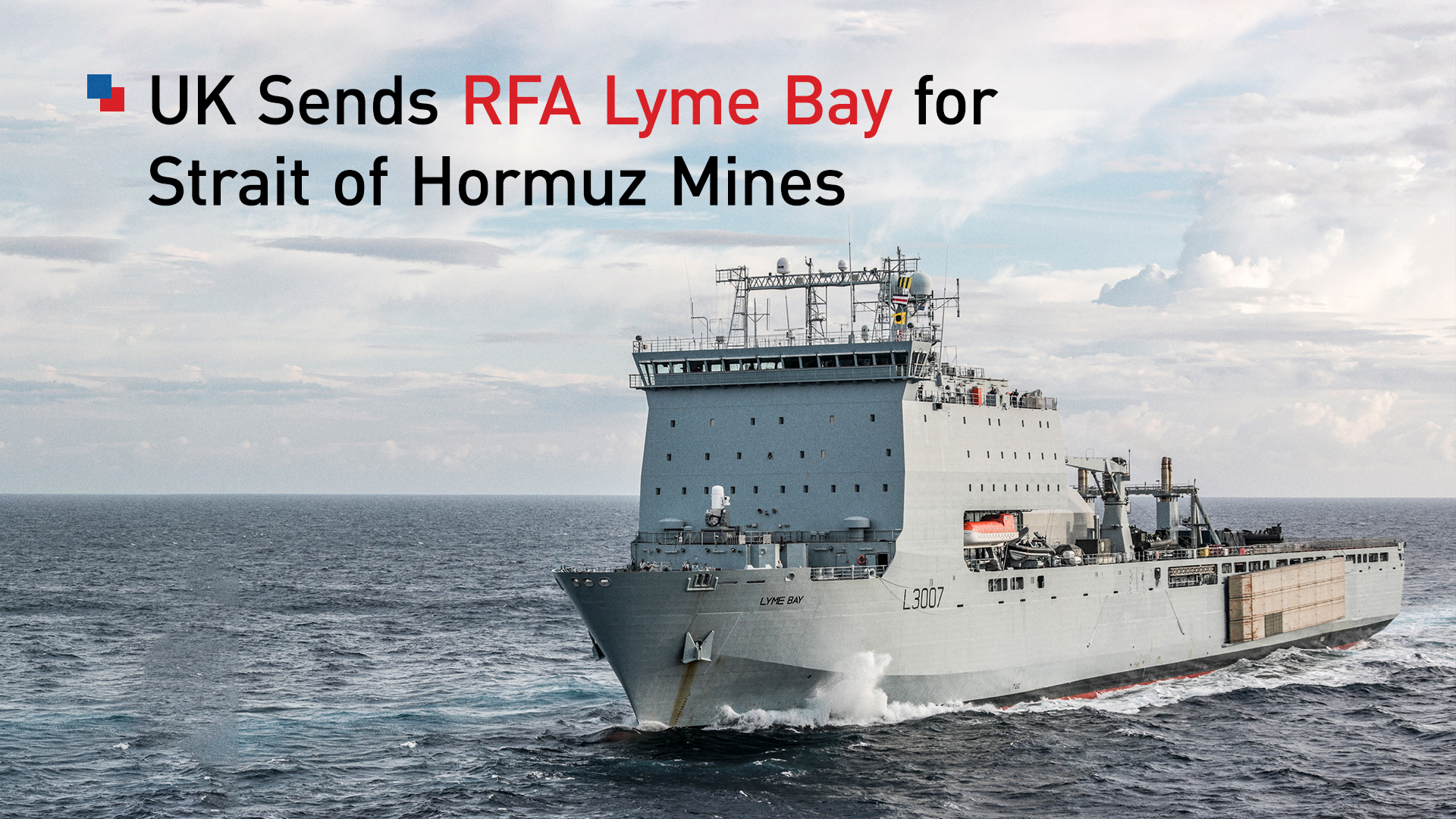
ERBIL (Kurdistan24) - The United Kingdom is preparing to deploy the Royal Fleet Auxiliary ship RFA Lyme Bay to the Strait of Hormuz, outfitting the vessel with autonomous mine-hunting drones to assist in clearing mines that have blocked the critical waterway, The Times and The Sunday Times reported Saturday.
The 580-foot amphibious landing ship has been undergoing routine maintenance in Gibraltar and will serve as a mothership for specialist mine-clearance technology, officials said.
Defence Secretary John Healey has reportedly authorized the development of plans for the vessel to move into the Persian Gulf, though no formal decision has yet been made, a defence source told The Sunday Times. The ship will be retrofitted with multiple autonomous systems, including underwater drones and mine-hunting boats, which operate under a plug-and-play command and control configuration, enabling rapid deployment.
The RFA Lyme Bay, a Bay-class ship capable of accommodating 350 to 500 personnel, is normally equipped with two 30mm rapid-fire cannons, two Phalanx anti-ship guns, four heavy machine guns, and six general-purpose machine guns. The vessel also contains a Role 2 medical facility, including a ward with 12 beds, operating theatre, dental surgery, X-ray capability, and a medical laboratory, The Times reported.
The preparation of Lyme Bay follows the arrival of approximately 3,500 U.S. Marines and sailors aboard the USS Tripoli to the Middle East, bringing transport and strike aircraft, amphibious assault assets, and tactical units, according to a statement by U.S. Central Command. The Strait of Hormuz is a strategic chokepoint, responsible for roughly a fifth of global oil shipments prior to the conflict with Iran. The waterway has been closed to commercial shipping since March 2, when the Islamic Revolutionary Guard Corps (IRGC) asserted “complete control” of the passage, The Sunday Times reported.
Iranian forces have threatened to attack vessels attempting transit, and Lloyd’s List, a maritime intelligence company, reported that at least 16 ships have been targeted since the start of hostilities, with three fatalities confirmed. American intelligence assessments indicate that at least a dozen mines, including Maham 3 and Maham 7 limpet devices, are present in the area, along with concerns over ten Ghadir-class midget submarines, which could further impede commercial navigation.
The Royal Navy’s Mine and Threat Exploitation Group (MTXG) is expected to operate the autonomous vehicles on Lyme Bay, The Sunday Times reported. MTXG capabilities include the SeaCat autonomous underwater vehicle for surveying and monitoring, the Remus family of lightweight drones for coastal operation up to 100 meters deep, and the Defender remotely operated vehicle for locating and neutralizing seabed ordnance beyond conventional diving limits.
Other regional developments highlighted by the sources include an Iranian strike on Prince Sultan Air Base in Saudi Arabia that wounded at least 12 U.S. personnel, two of them seriously, and the interception of two rockets fired by Houthi militias toward Israel. Israel also conducted an airstrike on a car in southern Lebanon that killed three journalists, whom the Israeli military identified as members of Hezbollah.
In response to the blockade, global fuel prices have surged, with nearly 2,000 vessels trapped in the Persian Gulf, according to the International Maritime Organisation. Brent crude has risen to approximately £85 per barrel, compared with £50 prior to the conflict, while retail fuel in the U.K. has increased to 152p per litre for unleaded petrol and 180p per litre for diesel. British ministers are reportedly considering household energy bill support if disruptions persist, The Sunday Times reported.
HMS Dragon, a Type-45 destroyer, recently arrived in Cyprus after completing training and maintenance, indicating continued U.K. naval activity in the region. Officials said discussions are ongoing between U.K. and U.S. authorities regarding coordinated efforts to reopen the Strait of Hormuz, including talks at the G7 meeting in France between Foreign Secretary Yvette Cooper and U.S. Secretary of State Marco Rubio.
The preparation of RFA Lyme Bay and associated drone systems represents a precautionary step to restore the flow of merchant shipping through the Strait of Hormuz amid ongoing Iranian naval control.