Trump Open to Allies Sharing Costs of Iran Campaign, White House Press Secretary Says
Trump administration signals allies may help fund Iran campaign, as U.S. strikes expand and diplomacy continues alongside military operations.
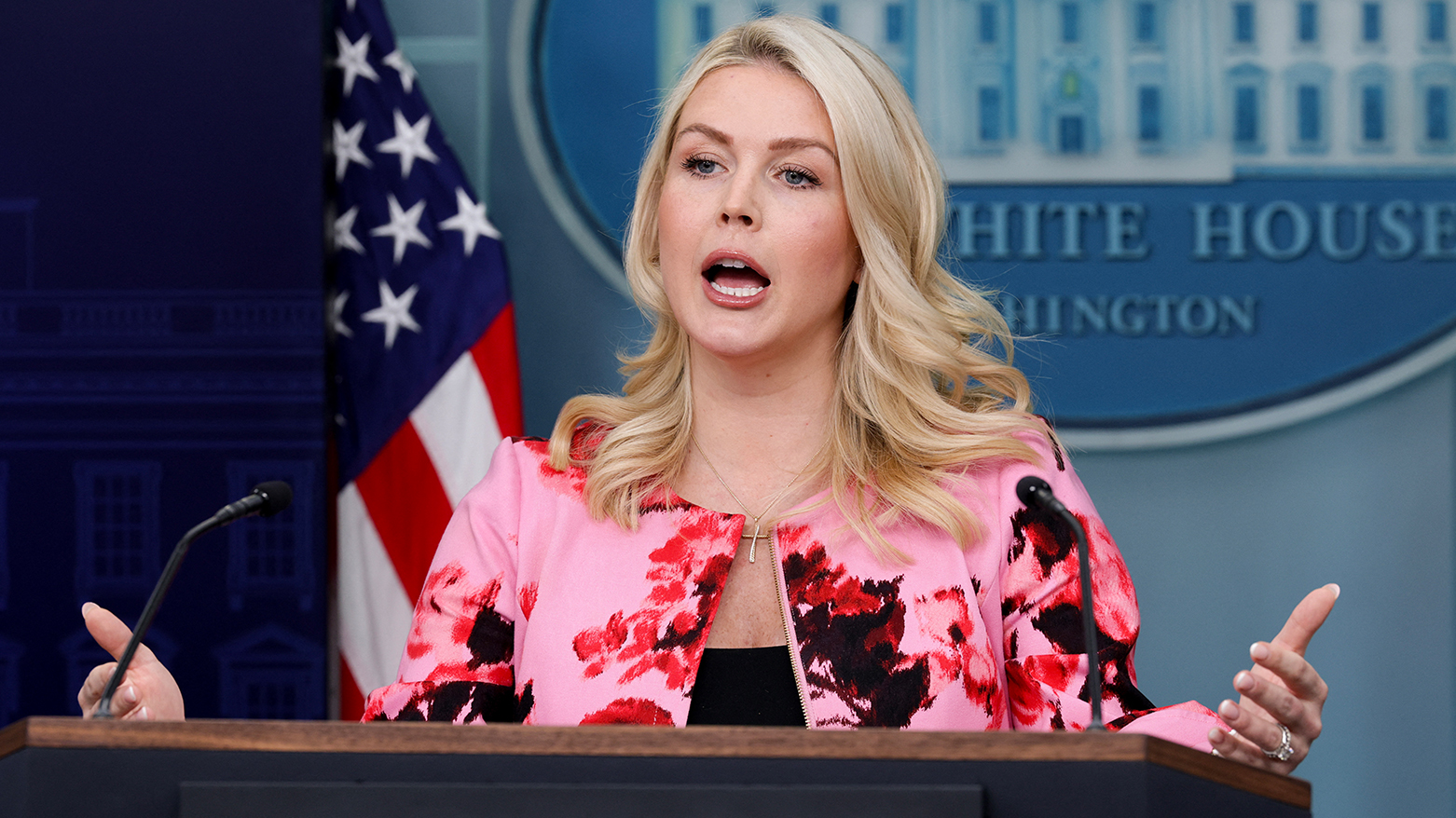
ERBIL (Kurdistan24) - The White House Press Secretary Karoline Leavitt said Monday that U.S. President Donald Trump may seek financial contributions from allied countries to support the cost of ongoing military operations against Iran, stating, “I think it's something the president would be quite interested in calling them to do. I won't get ahead of him on that. But certainly, it's an idea that I know that he has and something that I think you'll hear more from him on.”
Leavitt made the remarks during a White House press briefing when asked whether Arab states could help finance the war, referencing past conflicts in which regional partners contributed to operational costs. She did not provide details on any formal mechanism or timeline but indicated the matter remains under consideration by the administration.
The comments came as Leavitt outlined the current status of what the administration calls Operation Epic Fury, a U.S.-led military campaign targeting Iranian military infrastructure and capabilities. She said the operation is “moving ahead successfully and according to plan,” with U.S. forces increasing their operational advantage over what she described as the Iranian regime.
According to Leavitt, more than 11,000 targets have been struck since the campaign began. “Each strike further crippling the regime's offensive and defensive capabilities and creating more leverage for the United States and our allies,” she said during the briefing.
She added that Iranian ballistic missile and drone attacks have decreased by approximately 90 percent compared to the beginning of the operation. The reduction, she said, reflects sustained pressure on Iran’s weapons systems and command structures.
Leavitt also provided details on the maritime dimension of the campaign, stating that more than 150 Iranian naval vessels have been destroyed, including what she described as 92 percent of the country’s largest ships. “The Iranian navy has no vessels operating in major regional waterways and no ability to project naval power,” she said, adding that it has been assessed as “combat ineffective.”
In addition to naval operations, Leavitt said U.S. forces have targeted Iran’s defense industrial base, with nearly 70 percent of missile, drone, and naval production facilities and shipyards either damaged or destroyed. She said these actions have significantly reduced Iran’s ability to manufacture weapons and sustain military capabilities.
The press secretary further stated that U.S. and Israeli forces have established air dominance over Iran, completing more than 11,000 combat flights. She described the trend as one of increasing operational intensity, with more frequent and targeted strikes being conducted as the campaign progresses.
“The trend remains clear,” Leavitt said. “The United States is conducting more intense targeted strikes with devastating combat power with each passing day to destroy the threat posed by the Iranian terrorist regime.”
Leavitt reiterated that the objectives of Operation Epic Fury include destroying Iran’s navy, dismantling its ballistic missile and drone capabilities, weakening allied armed groups, and preventing Iran from obtaining a nuclear weapon.
She said the operation is proceeding within an estimated timeline of four to six weeks, noting that it had reached day 30 at the time of the briefing. “You do the math on how much longer we – the Pentagon needs to fully achieve the objectives,” she said, referring to the timeframe outlined by the administration.
Alongside military operations, Leavitt said diplomatic engagement with Iranian representatives is ongoing. She indicated that talks are taking place through both direct and indirect channels, although she declined to provide details about participants or specific proposals.
“Despite all of the public posturing you hear from the regime and false reporting, talks are continuing and going well,” she said, adding that communications conveyed privately differ from public statements.
Leavitt said that Iranian interlocutors have appeared “more reasonable” in private discussions compared to previous leadership figures, while emphasizing that any commitments made would be subject to verification. “Anything that they say to us privately will be tested and we will ensure that they are being held accountable to their word,” she said.
She also confirmed that President Trump had authorized a 10-day pause on planned strikes targeting Iranian energy infrastructure, including power plants, to allow time for negotiations. She described the pause as an opportunity for Iran to reach an agreement with the United States.
“This remains a truly once-in-a-generation opportunity for the regime to make a good deal with the United States,” Leavitt said, adding that failure to reach an agreement would result in continued military pressure.
Leavitt stated that the overarching objective of the campaign is to ensure that Iran no longer has the capability to threaten the United States or its allies. “One way or another, Iran will no longer have the credible ability to threaten the United States or our allies,” she said.
Addressing questions about rising fuel prices, Leavitt acknowledged that diesel costs had increased, citing an average of $5.38 per gallon. She said the administration is monitoring what she described as short-term fluctuations and has implemented measures aimed at stabilizing global energy markets.
“These are short-term actions and short-term price fluctuations for the long-term benefit of ending the threat that Iran poses,” she said. She added that steps taken include releasing oil and refined products, issuing a 60-day Jones Act waiver, and allowing certain purchases of sanctioned oil to increase supply.
Leavitt also addressed maritime traffic through the Strait of Hormuz, rejecting claims that Iran is selectively allowing vessels to pass or imposing tolls. She said recent tanker movements were the result of diplomatic engagement between Washington and Tehran.
“You wouldn't have seen those tankers if not for the president's diplomacy and his team engaging on this matter,” she said, adding that the administration expects continued compliance.
On the issue of troop deployments, Leavitt said U.S. forces remain positioned in the Middle East as part of standard military planning. She emphasized that such deployments are intended to provide “maximum optionality” to the president and do not necessarily indicate a decision to escalate operations.
“It does not mean the President has made any additional decisions,” she said, adding that the Pentagon is responsible for ensuring readiness across different operational scenarios.
Leavitt also confirmed that the administration has provided briefings to members of Congress regarding the operation, including notifications prior to its launch and ongoing updates as requested.
When asked about the possibility of ground operations, she declined to provide specifics, stating that the president would not disclose operational decisions publicly. She added that the administration would act within legal frameworks and maintain communication with Congress.
Leavitt addressed questions regarding reported discussions of budgetary trade-offs, including potential cuts to domestic programs to fund military spending. She said she had not discussed such proposals with the president and was not aware of them being considered in high-level meetings.
On sanctions policy, Leavitt said the administration has not made formal changes, including in relation to Cuba. She confirmed that a recent decision to allow a Russian oil tanker to deliver fuel to Cuba was made on humanitarian grounds and evaluated on a case-by-case basis.
“These decisions are being made on a case-by-case basis,” she said, adding that broader sanctions remain in place.
Leavitt also commented on the status of Iranian leadership, describing it as “very fragmented,” while noting that ongoing diplomatic efforts include assessing who holds authority within the system.
She said that U.S. officials are working to determine which representatives can implement any potential agreement reached through negotiations.
Throughout the briefing, Leavitt emphasized that the administration is pursuing both military and diplomatic tracks simultaneously, with the stated goal of achieving the objectives of Operation Epic Fury while leaving open the possibility of a negotiated resolution.
“The President is focused on achieving the objectives of Operation Epic Fury,” she said, adding that diplomacy remains a priority if an agreement can be reached.
The White House indicated that the possibility of requesting financial contributions from allied countries remains under consideration as part of the broader conduct of the operation.