Turkish Oil Tanker Ocean Thunder Exits Strait of Hormuz Safely, Ministry Confirms
Turkish authorities confirmed that the Ocean Thunder’s safe transit represents the latest successful navigation through the strait amid the ongoing hostilities.
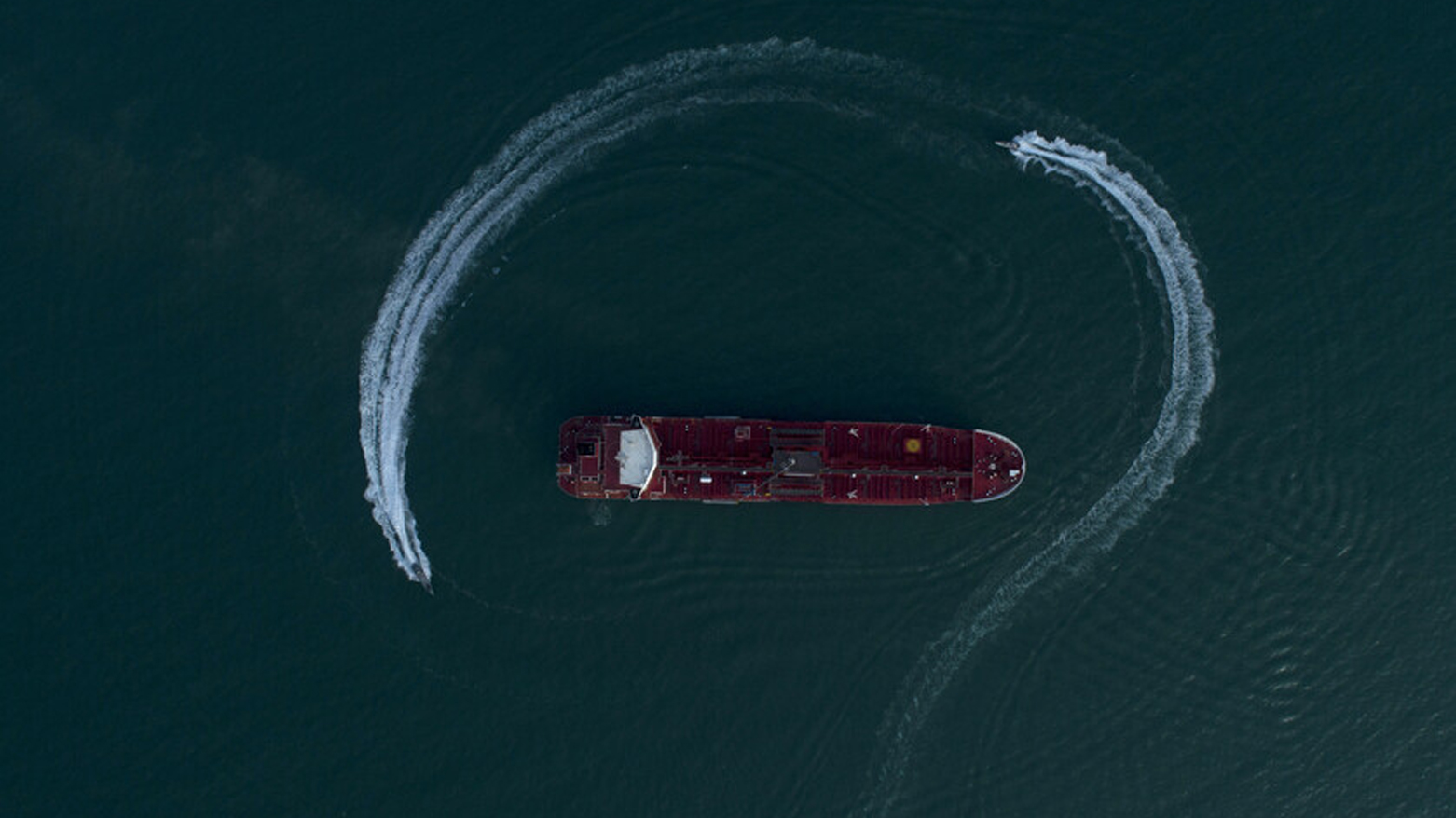
ERBIL (Kurdistan24) - Abdulkadir Uraloğlu, Minister of Transport and Infrastructure of the Republic of Türkiye, in a post on X on Monday, reported that the Turkish-owned vessel Ocean Thunder, transporting crude oil from Iraq to Malaysia, safely passed through the Strait of Hormuz and exited the Gulf overnight. The ministry said this completes the departure of three vessels that had been waiting in the Gulf since the beginning of the ongoing conflict in the region.
Uraloğlu noted that the total number of Turkish-owned vessels near the Strait of Hormuz has decreased to 12, with eight vessels still requesting exit. The ministry confirmed ongoing efforts to ensure the safe transfer of these eight vessels and the 156 personnel aboard them, in coordination with Türkiye’s Ministry of Foreign Affairs and other relevant institutions. “As the Ministry of Transport and Infrastructure, we will continue to closely monitor our Turkish-owned vessels and Turkish seafarers in the region,” Uraloğlu wrote.
The Strait of Hormuz, a critical maritime passage connecting the Persian Gulf to the Gulf of Oman, has been effectively closed since February 28 following the outbreak of the U.S.-Israel-Iran war. The closure has disrupted global energy markets, as roughly one-fifth of worldwide oil passes through the waterway, officials noted.
Iran’s Revolutionary Guards said Sunday they are finalizing preparations to enforce new operating conditions in the strait. In a post on X, the Guards’ naval force stated that operational plans are being completed for a “new Persian Gulf order” and warned that conditions will not return to their previous status, particularly for U.S. and Israeli vessels. The statement followed renewed threats from U.S. President Donald Trump to strike Iranian power plants and bridges if the shipping route is not reopened.
U.S. President Trump on Sunday issued a post on Truth Social warning that Tuesday would be “Power Plant Day, and Bridge Day, all wrapped up in one, in Iran,” calling on Tehran to reopen the Strait of Hormuz. The post underscored Washington’s concerns over Iran’s control of the strategic waterway and marked one of the most direct public warnings by a U.S. leader in recent years.
In parallel diplomatic developments, Iran and the United States received a draft proposal late Sunday from Egyptian, Pakistani, and Turkish mediators calling for a 45-day ceasefire and the reopening of the Strait of Hormuz. Two Mideast officials, speaking on condition of anonymity, said the proposal was sent to Iranian Foreign Minister Abbas Araghchi and U.S. Mideast envoy Steve Witkoff. Both Iran and the U.S. have yet to respond to the proposal. Mediators described the 45-day period as intended to provide sufficient time for negotiations toward a permanent ceasefire.
The regional conflict has escalated in recent days. Iranian state media reported that Maj. Gen. Majid Khademi, head of intelligence for Iran’s paramilitary Revolutionary Guard, was killed Monday in an attack targeting him, which the Guard blamed on the United States and Israel. The Israeli military later confirmed the airstrike that killed Khademi took place in Tehran. Defense Minister Israel Katz said the strikes had severely damaged Iran’s steel and petrochemical industries. “We will continue to crush the Iranian national infrastructure and lead to the erosion and collapse of the terrorist regime, and its capabilities to promote terror and fire at the state of Israel,” Katz said.
Multiple airstrikes targeted residential areas around Tehran early Monday, including a building in Eslamshar where at least 15 people were killed. In addition, an airstrike struck an information and communication technology building at Tehran’s Sharif University of Technology, disrupting online learning. Mohammed Vesal, an economics professor at the university, told The Associated Press that “all web services of the university are down now because of this violent attack on our infrastructure.”
Iranian forces also launched missile strikes targeting central Israel, including Petah Tikva and Tel Aviv. In Petah Tikva, a woman sustained serious chest injuries from shrapnel and was evacuated to Beilinson Hospital, while firefighters continued clearing rubble and checking for casualties. In Tel Aviv, a man was slightly injured by glass shrapnel and taken to Ichilov Hospital. Northern Israel experienced additional missile attacks in Haifa, where four people, including two children, were slightly injured and residential buildings and a factory were damaged.
Meanwhile, in the United Arab Emirates, a Ghanaian man sustained shrapnel injuries in Abu Dhabi’s Musaffah neighborhood following the interception of an Iranian missile. The area is near Al Dhafra Air Base, a site housing U.S. forces that has been repeatedly targeted during the conflict.
The war has also affected civilian and academic institutions. Reports noted that Iran has executed Ali Fahim, convicted over January protests in the country, in a case Amnesty International described as involving torture and forced confessions.
With tensions continuing in the Strait of Hormuz, Uraloğlu emphasized that Türkiye is maintaining real-time monitoring of Turkish-owned vessels and the safety of seafarers in coordination with national authorities. Officials said efforts to facilitate safe passage for the remaining eight vessels and their crews are ongoing, reflecting Türkiye’s priority on maritime security amid the regional conflict.