Pakistan Urges U.S., Iran to Engage Constructively as Talks Begin in Islamabad
In Islamabad, JD Vance and Mohammad Baqer Qalibaf meet under heavy guard, as Pakistan urges “constructive” talks—fragile ceasefire holding, mistrust lingering, and the shape of peace still uncertain.
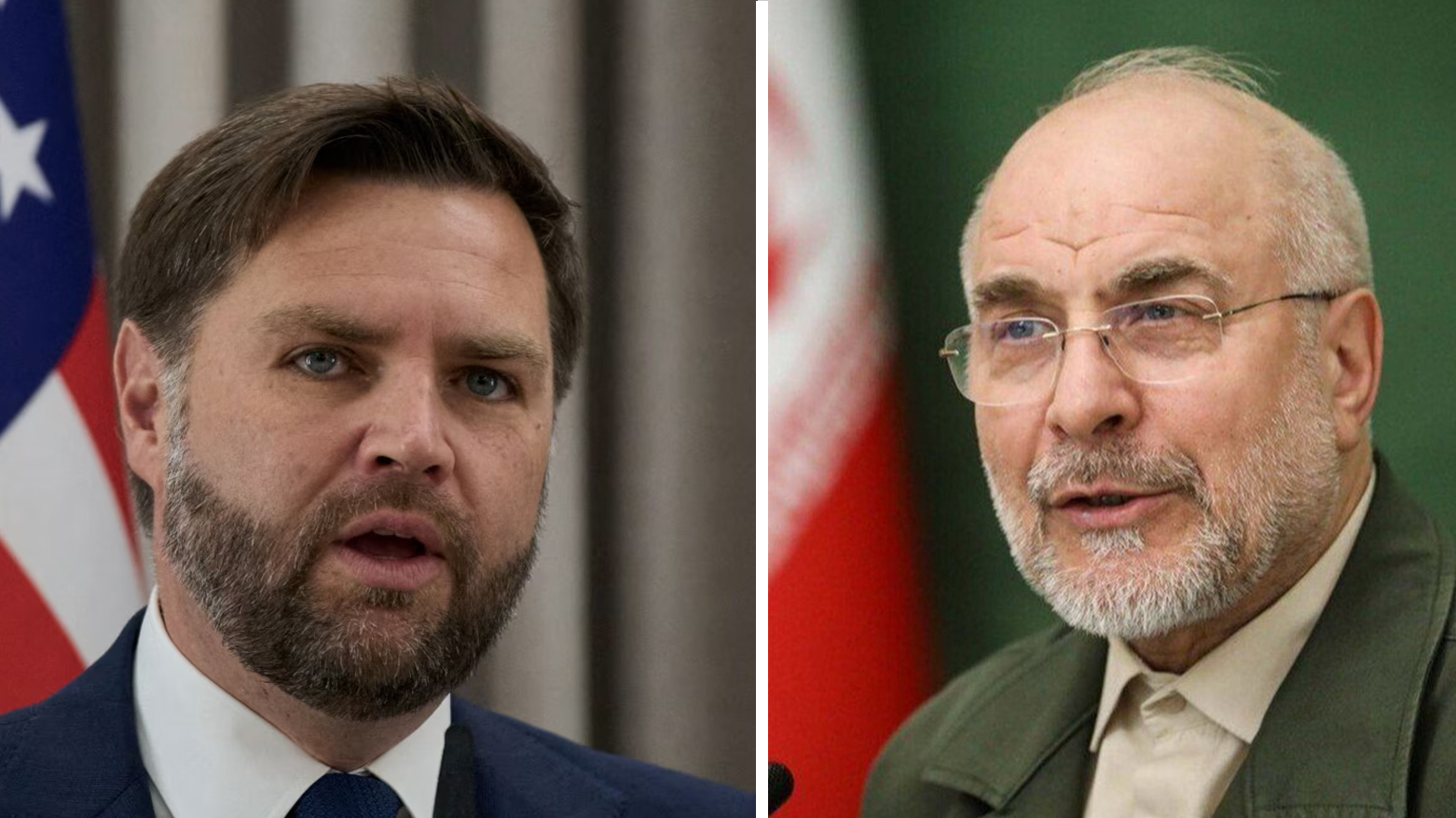
ERBIL (Kurdistan24) - Pakistan said on Saturday it hoped the United States and Iran would “engage constructively” as delegations from both countries arrived in Islamabad for talks aimed at reinforcing a fragile ceasefire and ending more than a month of war in the Middle East, according to a foreign ministry statement cited by Agence France-Presse.
Foreign Minister Ishaq Dar said Pakistan wanted to continue facilitating the parties toward a “lasting and durable solution to the conflict.”
Tahir Andrabi, the spokesman for Pakistan’s Ministry of Foreign Affairs, told Kurdistan24 that Islamabad was optimistic the negotiations could still yield results, even as officials acknowledged that no outcome could be predicted in advance.
“This round of negotiations is different, and we cannot predict whether it will lead to an agreement or not, but we are optimistic the meeting will produce a positive outcome,” he said.
Andrabi added that Pakistan would be ready to host further rounds if needed, saying, “We are prepared to host any additional rounds of negotiations, but for now, it is unclear whether there will be another session.”
Delegations arrive in Islamabad
The United States sent a delegation led by Vice President JD Vance, who arrived in Pakistan for the talks with Iranian officials, the Associated Press reported. The American team is expected to discuss ways to shore up the ceasefire and move toward a permanent end to the fighting, which has continued for more than a month.
Pakistan’s foreign ministry said Dar, Army Chief Field Marshal Asim Munir and Interior Minister Mohsin Naqvi received the U.S. delegation on Saturday.
Dar, according to the ministry statement, praised what he described as the U.S. commitment to lasting regional and global peace and stability. He repeated Pakistan’s view that the parties should engage constructively and said Islamabad remained ready to keep facilitating efforts toward what he called a lasting and durable resolution.
The Iranian delegation arrived in Islamabad early Saturday, led by Parliament Speaker Mohammad Baqer Qalibaf, according to AP.
Before the talks, Qalibaf said on X that discussions would proceed only if there was an Israeli ceasefire in Lebanon and the release of blocked Iranian assets. The AP said the talks were the first such meeting since the war began more than a month ago.
Hours before the delegations met, President Donald Trump wished Vance good luck.
“We’ll find out what’s going on. They’re militarily defeated,” Trump said, according to the AP. The American president has framed the negotiations as part of a broader push to end the conflict after weeks of escalation.
Ceasefire under pressure
The ceasefire brokered by Pakistan still faces several hurdles, according to AP.
The report said Israel and Hezbollah militants had continued exchanging fire along the border of southern Lebanon, adding pressure to the diplomatic effort in Islamabad. Iran has also set conditions before negotiations begin, narrowing the space for an immediate breakthrough.
AFP reported that the two sides were meeting in the Pakistani capital to try to end more than a month of war in the Middle East as the fragile ceasefire holds despite deep mutual mistrust.
The ceasefire is set to expire on April 22 unless the talks produce an agreement, according to the background material provided.
The AP account said the streets of Islamabad were unusually quiet on Saturday as security forces sealed roads ahead of the meetings. Pakistani authorities urged residents to stay inside, and the capital appeared subdued, with the usual bustle replaced by heavy security and restricted movement.
Pakistan also set up a state-of-the-art media center to handle coverage of the talks.
Information Minister Attaullah Tarar said the facility at the Jinnah Convention Center was designed to support Pakistani and foreign journalists, offering high-speed internet, workstations and shuttle transport. Pakistan announced visa-on-arrival for journalists and official delegations from the United States and Iran.
A tightly managed venue
The talks were being hosted at the Islamabad branch of the Serena Hotel, which the Pakistani government fully reserved for the delegations, according to the Kurdistan24 report. Other guests were evacuated so the hotel could function as a dedicated diplomatic site.
The report said the five-star property has 334 rooms and 53 suites and that Pakistani forces imposed a strict security cordon around the area, sealing a three-kilometer perimeter and stepping up surveillance.
The direct negotiations mark a change in format from earlier contacts.
The Kurdistan24 report said this round is being conducted face to face between the two sides, with a large delegation from Iran and a U.S. team that includes senior political and diplomatic figures. The Iranian side was described as a 70-member delegation, including 26 negotiators and 23 media personnel.
It was led by Qalibaf and included Foreign Minister Abbas Araghchi, his deputies, Ali Akbar Ahmadian, secretary of the Supreme National Security Council, and Abdolnaser Hemmati, governor of the Central Bank of Iran.
The U.S. delegation, according to the same report, included Vance, Steve Witkoff, Trump’s special envoy, and Jared Kushner, a former White House adviser.
The report said the delegation had arrived after weeks of war, threats and the announcement of a ceasefire, and that Pakistan remained ready to host additional rounds of negotiations if required.
A long history of rupture
The talks come against the backdrop of more than four decades of hostility between Washington and Tehran.
AFP noted that relations deteriorated sharply after the 1979 Islamic Revolution and the takeover of the U.S. embassy in Tehran, where student activists held 52 Americans hostage for 444 days. Washington broke off diplomatic relations in 1980 and imposed restrictions on commerce and travel.
The AFP chronology also traced later milestones in the rupture. It noted that President Bill Clinton announced a complete ban on trade and investment with Iran in 1995, citing support for terrorism and backing for groups including Hezbollah, Hamas and Palestinian Islamic Jihad.
In 2002, President George W. Bush described Iran, Iraq and North Korea as an “axis of evil.”
The historical record in the background material also pointed to the 2015 nuclear agreement reached in Vienna between Iran and six world powers — China, France, Germany, Russia, the United Kingdom and the United States — which offered sanctions relief in exchange for limits on Tehran’s nuclear program.
AFP said President Donald Trump withdrew from the pact in 2018 and restored sanctions, while Iran later stepped back from some of its commitments. The material added that diplomatic efforts failed to produce a new agreement and that UN sanctions were reimposed on September 28, 2025, before the accord lapsed in October.
The dossier further recalled the January 2020 killing of Iranian military commander Qasem Soleimani in Baghdad and the retaliatory Iranian missile strikes on bases in Iraq hosting American forces.
It also cited the 12-day war between Israel and Iran in June 2025, when the United States struck three major Iranian nuclear sites, and the later escalation in February 2026, when the U.S. and Israel launched coordinated strikes that killed Supreme Leader Ayatollah Ali Khamenei and hit Iranian military and nuclear infrastructure.
Iran responded with missile attacks on Gulf states hosting U.S. forces and effectively closed the Strait of Hormuz, through which a fifth of the world’s crude flows, the material said.
Talks framed by uncertainty
Even with delegations present in Islamabad, both sides entered the talks with conditions and skepticism. Iran’s demands, as reported by AP, tied progress to developments in Lebanon and the release of frozen assets.
The American side, meanwhile, approached the meeting after Trump’s public warning that Iran was militarily defeated.
Still, Pakistan presented itself as a host and intermediary rather than a participant in the dispute. Dar’s comments, echoed by the foreign ministry and by Pakistan’s spokesman, emphasized facilitation, constructive engagement and a durable resolution.
The same message ran through the AP and AFP reporting: the parties were in one room, but their positions remained far apart.
The Islamabad talks were described by the reports as the first direct meeting since the war began more than a month ago. For Pakistan, the immediate objective was not a final settlement but an exchange that could keep the ceasefire alive and prevent a return to open escalation.