What Unfolded as Journalist Shelly Kittleson Made Her Way Through Baghdad Airport?
As Shelly Kittleson was being escorted out of Baghdad Airport after captivity, a drone dropped within meters of her U.S. diplomatic convoy—an incident unfolding in a facility already under repeated attack amid Iraq’s militia tensions.
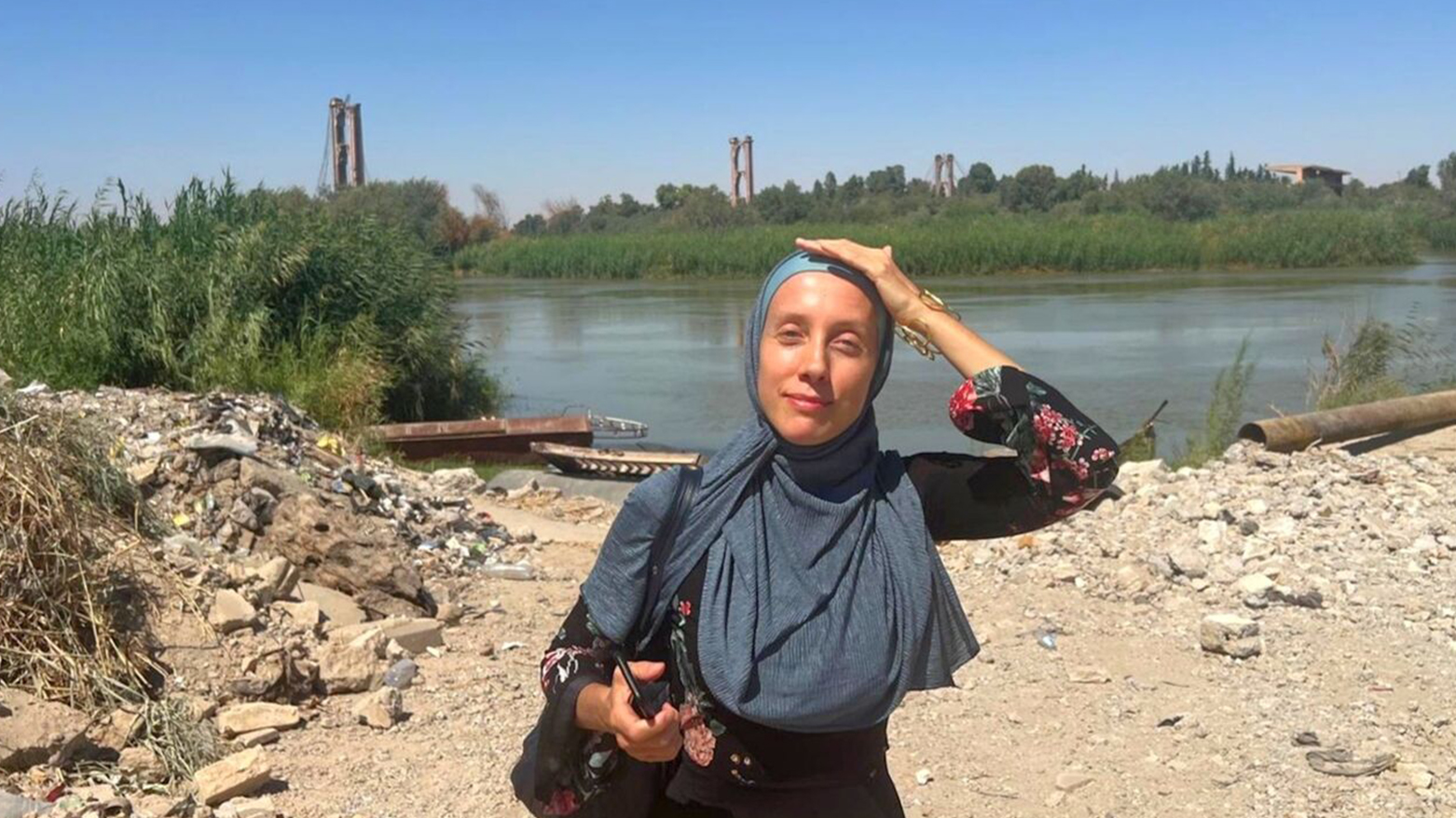
ERBIL (Kurdistan24) - As journalist Shelly Kittleson was leaving Baghdad International Airport after her release from captivity, a drone fell near a U.S. diplomatic team escorting her, a senior Iraqi security official told Agence France-Presse (AFP), in an incident that underscored continuing attacks on U.S. personnel and facilities inside the airport complex amid broader tensions involving Iran-aligned armed groups in Iraq.
The incident occurred prior to the commencement of U.S.–Iran talks in Islamabad, which were beginning as part of separate diplomatic efforts on the same day.
The Iraqi official said the drone landed within the grounds of the airport’s diplomatic support zone while the U.S. team was accompanying Kittleson following her release by Kataeb Hezbollah, a powerful armed group in Iraq.
According to the official, the incident took place last Wednesday, when the diplomatic support centre at Baghdad International Airport was targeted by three drones. One of the drones, the official said, fell at least 50 meters from the convoy escorting the journalist.
The account adds detail to a statement issued earlier by the U.S. State Department, which said it had summoned Iraq’s ambassador in Washington to express “strong condemnation” of what it described as attacks by Iran-aligned groups against U.S. interests, including the April 8 ambush of U.S. diplomats in Baghdad.
The State Department said the attacks targeted diplomatic personnel and facilities and accused armed groups operating from Iraqi territory of escalating violence against U.S. interests.
The Iraqi security official did not specify which group was responsible for the drone launches near the airport on Wednesday.
The official said the attack disrupted Kittleson’s departure, although she was able to leave Iraq hours later once conditions allowed. No injuries among the diplomatic team or the journalist were reported in connection with the incident, according to the same source.
Kittleson, a U.S. journalist, had been released one day earlier by Kataeb Hezbollah after being held for a week in Baghdad following her abduction.
In a statement at the time of her release, a security official within the group said the decision was taken “in recognition of the national stances of the outgoing prime minister,” and that she was required to leave Iraq immediately.
Her release came amid heightened security tensions in Baghdad and across Iraq, where U.S. facilities have repeatedly come under drone and rocket fire since the outbreak of wider regional hostilities on February 28.
According to earlier reporting cited by AFP, the U.S. embassy in Baghdad and associated diplomatic infrastructure at the airport have been targeted multiple times in recent weeks, with most incoming projectiles intercepted.
Pro-Iranian armed groups operating in Iraq have claimed responsibility for frequent attacks on what they describe as “enemy bases” across the country and in the wider region.
However, these groups had announced a suspension of operations on Wednesday following the declaration of a temporary ceasefire between the United States and Iran, according to AFP. Hours after that announcement, the U.S. embassy reported renewed drone activity near its airport facility.
The Iraqi official said the drone incident involving Kittleson’s escort occurred during this same period of heightened volatility.
According to the official, one of the three drones launched toward the airport’s diplomatic support centre landed near the convoy accompanying the journalist, while others struck or approached the wider airport perimeter.
The U.S. State Department readout, issued on April 9, provided further context for Washington’s concerns. Deputy Secretary of State Christopher Landau summoned Iraq’s ambassador to Washington to convey what the department described as “strong condemnation” of “egregious terrorist attacks” carried out by Iran-aligned militia groups from Iraqi territory.
The statement referenced what it called hundreds of attacks in recent weeks against U.S. citizens, diplomatic facilities, commercial interests, and regional partners.
"These attacks come after hundreds in recent weeks against U.S. citizens, diplomatic facilities, and commercial interests, as well as Iraq’s neighbors and Iraqi institutions and civilians, including in the Iraqi Kurdistan Region," the statement read.
The State Department also said that while it acknowledged efforts by Iraqi security forces, it believed elements associated with the Iraqi government were failing to prevent militia operations. It further said Washington expected immediate steps from Baghdad to dismantle Iran-aligned armed groups operating in the country.
The incident near Baghdad airport highlights the persistent vulnerability of diplomatic movements in Iraq, particularly within and around the airport’s secured zone, which has been a frequent target of drone and rocket attacks in recent months.
The diplomatic support centre, where the incident occurred, operates within a heavily fortified area of the airport that has been repeatedly struck since the escalation of regional conflict.
Kittleson’s abduction and subsequent release have further intensified attention on the security risks facing journalists operating in Iraq. She was kidnapped in Baghdad a week before her release by Kataeb Hezbollah, a group designated by Washington as part of Iraq’s network of Iran-aligned armed factions.
Her disappearance prompted a search effort by Iraqi security forces and coordination with U.S. authorities, according to earlier reporting.
Her release was confirmed by the group on Tuesday, which said she was to leave the country immediately. The circumstances of her detention have not been independently verified, but Iraqi officials and U.S. sources have previously indicated that she was believed to have been held in an area south of Baghdad under militia control.
The drone incident also comes against the backdrop of broader military and political tensions involving U.S. forces in Iraq and Iran-aligned armed groups, which have increased their activity since late February. While some groups announced a temporary halt to operations, the continued appearance of drones near sensitive installations has raised questions about the durability of such pauses.
The U.S. embassy in Baghdad has remained under heightened security, and Iraqi authorities continue to investigate repeated attacks on diplomatic facilities at the airport. No group has claimed responsibility for the most recent drone incident described by the Iraqi official.
According to the official, the drone fell close enough to the escorting diplomatic team to disrupt movement but did not cause injuries or significant damage. The official did not provide further technical details on the origin or type of drones used in the attack.
As of Saturday, neither Iraqi nor U.S. authorities had issued additional public statements on the incident involving Kittleson’s departure from Baghdad International Airport. Security measures around the airport remain in place amid ongoing investigations and heightened alert levels.