Iraqi Presidential Vote Falters Amid Disputed Quorum and Major Factional Boycotts
The Kurdistan Democratic Party challenges the legality of the parliamentary session, exposing deep institutional fractures over the selection of Iraq's next President.
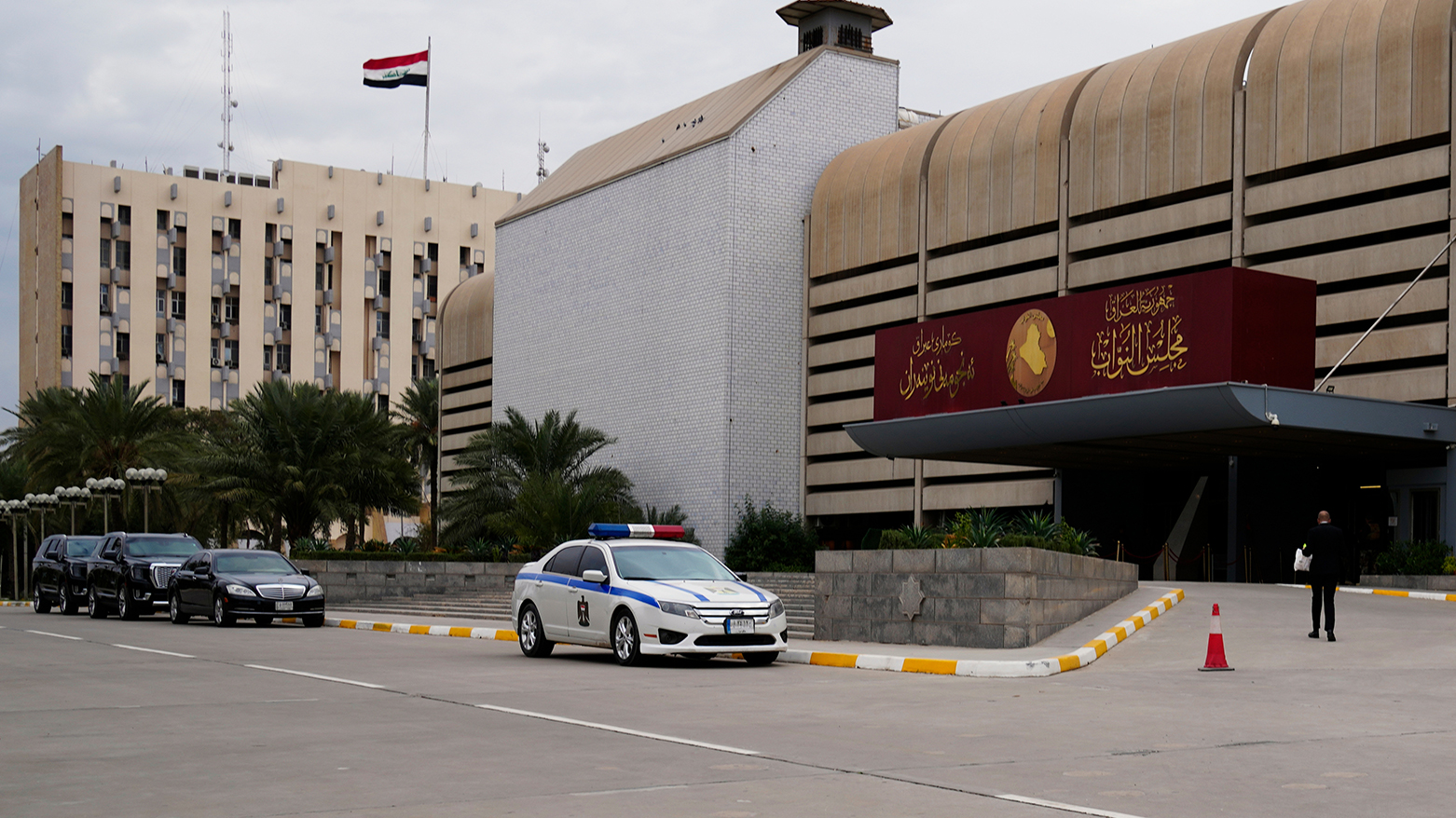
ERBIL (Kurdistan24) - An attempt by the Iraqi Parliament to elect a new president on Saturday descended into procedural deadlock after a disputed headcount and a coordinated boycott by major political factions threatened to derail the constitutional process. While the parliamentary media office announced the attendance of 223 lawmakers, representatives from the Kurdistan Democratic Party (KDP) inside the chamber contested the figures, claiming the legal quorum had not been met and signaling a looming legal battle before the Federal Supreme Court.
The political gridlock underscores the enduring structural tensions within Iraq’s post-2003 power-sharing architecture. By established political custom, the presidency is an entitlement reserved for a Kurdish candidate. However, the inability of the KDP and the Patriotic Union of Kurdistan (PUK) to reach a unified position prior to the session has left the constitutional mandate vulnerable to the influence of competing Shiite and Sunni blocs. The resulting impasse not only delays the formation of a new government but also highlights the fragile nature of national consensus in a deeply fragmented legislature containing more than fifty distinct political entities.
The parliamentary session opened at approximately 2:00 p.m. under a cloud of procedural ambiguity. Official statements from the legislature’s media office indicated that 223 parliamentarians were present, surpassing the two-thirds threshold of 220 votes required to elect a president in the first round under Article 70 of the Iraqi Constitution.
That official narrative was immediately challenged from the parliament floor. Ikhlas Al-Dulaimi, a lawmaker from the KDP faction, stated that she conducted a physical headcount inside the chamber, recording the attendance on her mobile phone. According to Al-Dulaimi, only 185 parliamentarians were present.
“I conveyed my objection to the Speaker of the Parliament, but he insisted on proceeding with the session,” Al-Dulaimi said. She noted that advancing the presidential vote under an incomplete quorum remains unconstitutional, warning that her faction is prepared to file a formal complaint with the Federal Court if the presidency board continues to push the proceedings forward.
The competing headcounts—one broadcast by official state channels, the other captured on a lawmaker’s mobile phone—reflect a broader tension between institutional rhetoric and the operational reality of Iraqi politics. Behind the procedural disputes lies a fractured diplomatic effort. Hours before the session began, delegations from the KDP and the PUK convened at the residence of Iraqi Foreign Minister Fuad Hussein in an attempt to finalize a joint presidential candidate. The talks concluded without an agreement, prompting the KDP to boycott the afternoon session. Nouri al-Maliki’s State of Law Coalition, which holds 29 seats, also withheld its participation, further eroding the assembly's legitimacy.
Amid the backroom negotiations, the field of potential leaders shifted abruptly. Incumbent President Dr. Latif Rashid and parliamentarian Aso Fereydoun both formally withdrew their independent candidacies on Saturday. The withdrawals effectively cleared the slate, though the absence of a unified Kurdish alternative left the parliament without a viable path forward.
For the KDP, the rush to convene the session represents an unacceptable circumvention of established political rights. Dr. Ashwaq Jaf, a KDP member of the Iraqi Parliament, characterized the push to elect a president as a violation of internal parliamentary bylaws, noting that the session was scheduled without the requisite consent of the second deputy speaker.
“The presidential candidate must be finalized by a Kurdistani will and within the Kurdish house, rather than non-Kurdistani parties interfering and deciding who the Kurdish candidate should be,” Dr. Jaf stated. She stressed that Kurdish factions must be afforded the same diplomatic space to designate their candidate as the Shiite and Sunni blocs utilize for their respective entitlements.
The struggle over the presidency is inextricably linked to the broader battle for the executive branch. Once elected, the new president has fifteen days to task the candidate of the largest parliamentary bloc with forming a government. Dr. Jaf warned that rushing the presidential vote to facilitate the nomination of Mohammed Shia' Al-Sudani for prime minister—a candidacy she noted has already faced internal Shiite dissatisfaction and international reservations—will ultimately deepen Iraq’s institutional crises and harm the country's economic trajectory.
Dr. Abdullah Aliyawayi, an advisor to the Iraqi Prime Minister and a candidate for the presidency, echoed this assessment. He indicated that given the depth of factional disagreements and the stated reservations of the international community, finalizing a president in the current environment is highly unlikely.
“If this process is postponed this time, it will be very difficult to put the issue of electing the President back onto the parliament's agenda again, unless a prior political agreement has emerged among the parties,” Aliyawayi noted.
The parliament now remains suspended in a state of political and legal uncertainty. With the KDP and PUK expected to hold further meetings in the coming days, the immediate future of the Iraqi government rests on whether the Kurdish political establishment can consolidate a unified diplomatic position before the institutional machinery forces a contested, and potentially unconstitutional, outcome.