PUK’s Nizar Amedi Elected President of Iraq After Securing Parliamentary Majority
Kurdish politician pledges sovereignty, unity, and “Iraq First” approach in inaugural address
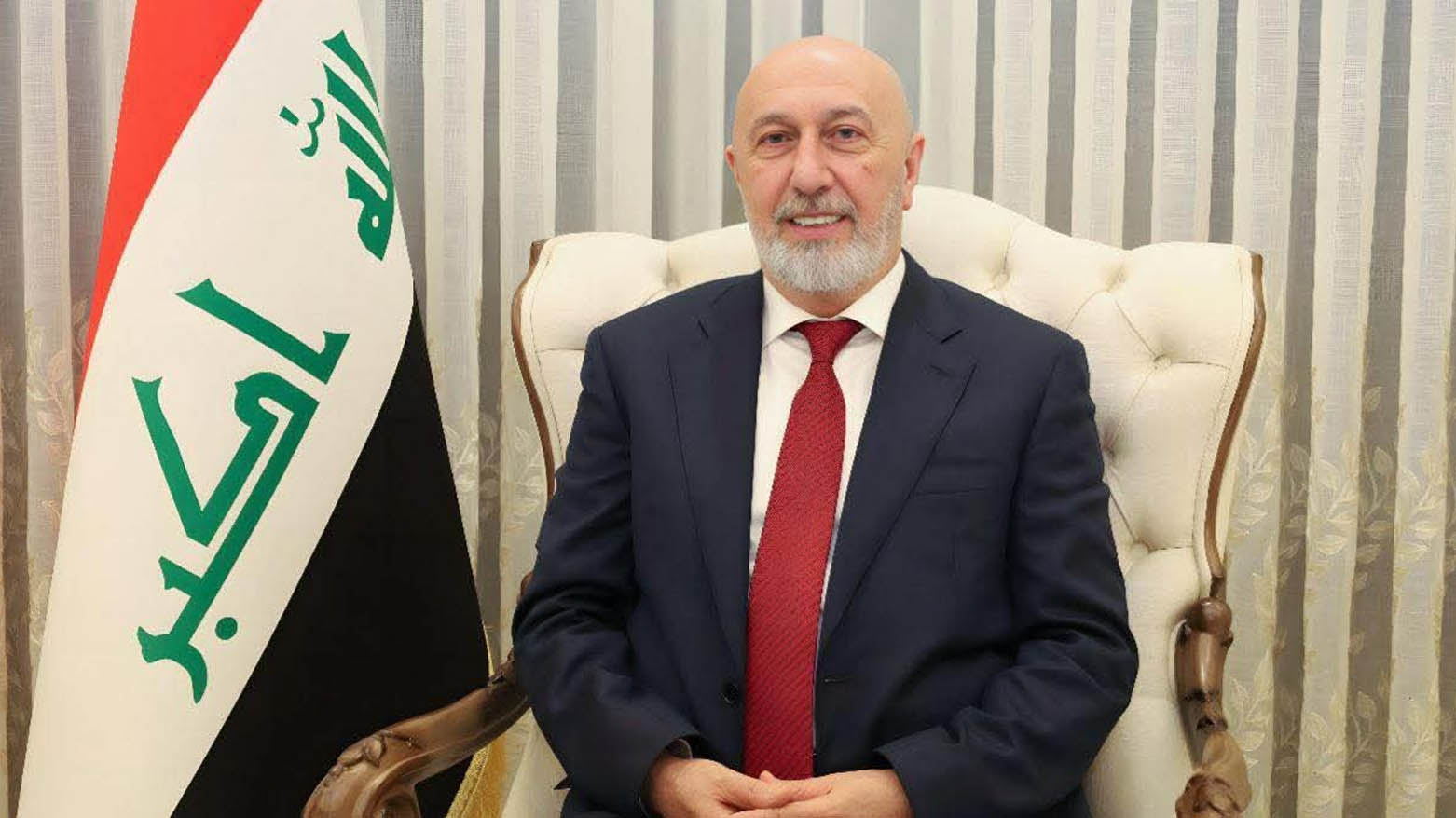
ERBIL (Kurdistan24) — Nizar Amedi, a candidate from the Patriotic Union of Kurdistan (PUK), was elected President of Iraq on Saturday after securing a decisive 227 votes in the second round of parliamentary voting.
The vote, held on Saturday, saw Amedi defeat his rival Muthanna Amin, who garnered just 15 votes in the runoff. The session marked the culmination of two rounds of voting in Iraq’s parliament, where lawmakers ultimately delivered a clear majority in favor of the PUK candidate.
Amedi, whose full name is Nizar Mohammed Saeed Mohammed, was born in 1968 in the Amedi district of Duhok province. He is married with four children and holds a bachelor’s degree in mechanical engineering from the University of Mosul. A long-standing member of the PUK’s political bureau, Amedi has held several senior roles over the past decades.
Between 1993 and 2003, he worked in the office of the late former Iraqi President Jalal Talabani. He later served as a senior advisor to three Iraqi presidents from 2005 to 2022, before being appointed Iraq’s Minister of Environment from 2022 to 2024.
In his first address delivered inside parliament following his election, Amedi strongly condemned violations and attacks on Iraqi territory, emphasizing that safeguarding national sovereignty would be among his top priorities.
He reiterated his commitment to the principle of “Iraq First,” stressing that protecting the country’s supreme national interests would guide his presidency.
“I fully understand the scale of the challenges facing our country,” Amedi said, highlighting the complex political and security landscape Iraq continues to navigate.
The newly elected president underscored the importance of coordination among all branches of government, pledging to work closely with the executive, legislative, and judicial authorities to overcome ongoing crises.
He also firmly denounced attacks and infringements on Iraq’s sovereignty, stating that he would act as a defender of the nation’s interests and remain committed to protecting its territorial integrity.
Amedi expressed support for both domestic and international efforts aimed at ending conflict and instability in the region, signaling Iraq’s continued engagement in broader diplomatic initiatives.
Reflecting on Iraq’s recent history, he acknowledged that the country has faced multiple complex challenges across various sectors, but reaffirmed that his presidency would be grounded in serving Iraq and advancing its national interests.
The election of Amedi comes as Iraq’s parliament convened earlier on Saturday to choose a new president, with lawmakers ultimately delivering a clear mandate in the second round of voting, confirming his position as the country’s head of state.
Political tensions surrounding the presidential vote were further underscored by reactions from key Kurdish blocs in parliament. The Kurdistan Democratic Party (KDP) Parliamentary Faction in the Iraqi Council of Representatives issued a sharply worded statement late Friday criticizing the process leading up to the presidential election session.
The statement warned that proceeding with attempts to convene the session to elect the President of the Republic without returning to the principles of consensus and partnership represents, in its view, a “blatant disregard” for the spirit of national partnership and a “dangerous retreat” from the constitutional understandings underpinning Iraq’s political system.
The KDP faction further stressed that the presidency and the nomination of the prime minister should be treated as an “inseparable national package,” insisting that both positions must be agreed upon through comprehensive dialogue and genuine political consensus rather than unilateral moves or the exclusion of key political partners.
Based on this position, the faction confirmed it had decided to boycott the parliamentary session, warning that any step taken without broad agreement would further complicate the political landscape and push the country toward an uncertain and potentially unstable future.