European Airports Warn of Jet Fuel Shortages Amid Hormuz Disruptions
European airports face the risk of jet fuel shortages within weeks if transit through the Strait of Hormuz is not restored, according to industry warnings.
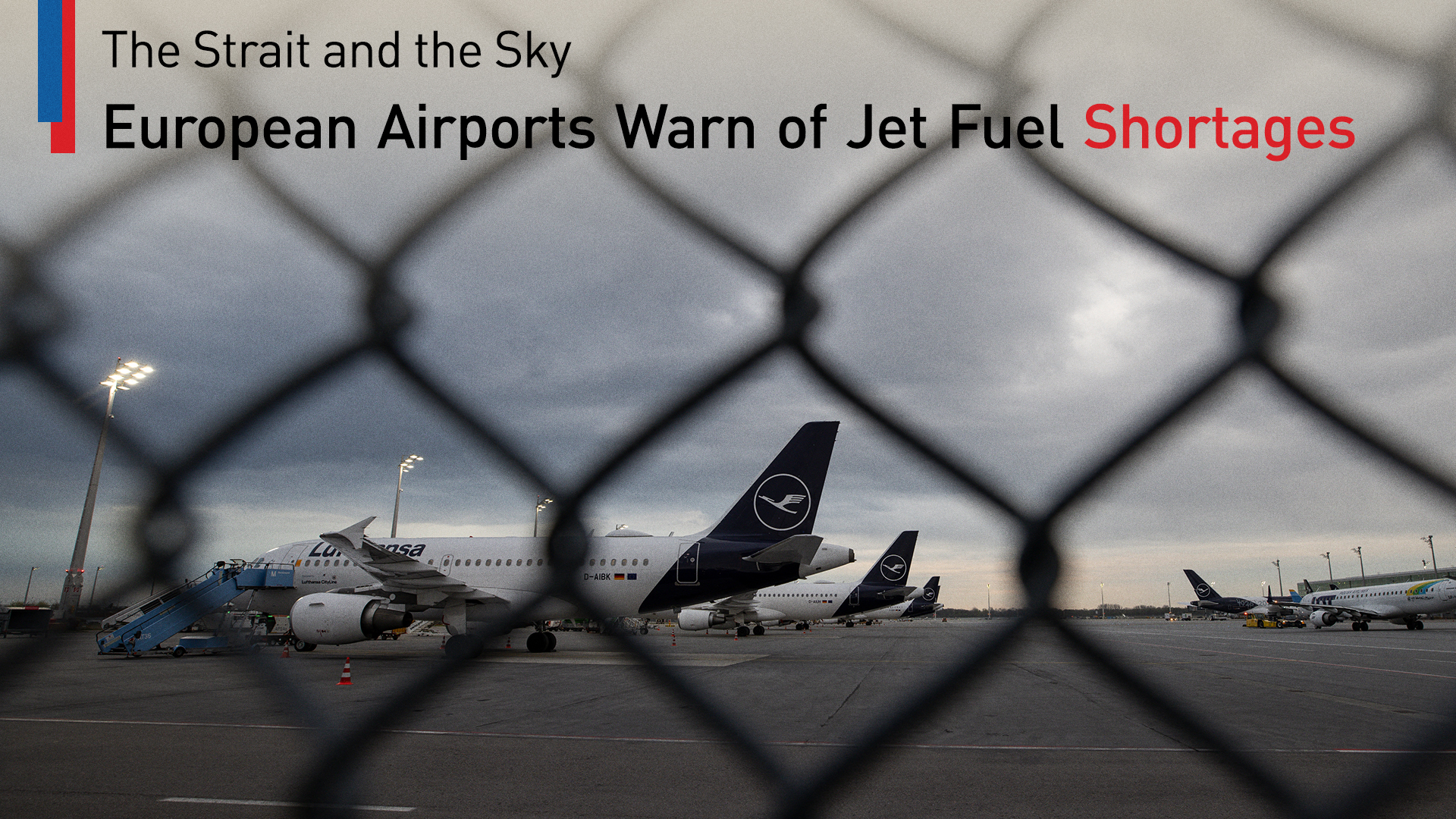
ERBIL (Kurdistan24) - European airports could face jet fuel shortages within three weeks if traffic through the Strait of Hormuz is not restored, an industry group has warned, citing declining reserves and ongoing disruptions linked to regional military activity.
ACI Europe, which represents airports across the European Union, said in a letter to EU Transport Commissioner Apostolos Tzitzikostas that fuel availability is becoming a growing concern, according to reporting by the Financial Times. The group warned that without a stable resumption of transit through the Strait of Hormuz, “systemic” shortages could emerge across the region.
The warning comes as global energy supply chains continue to be affected by disruptions in the waterway, a critical route for oil and refined products. The Financial Times reported that approximately 40 percent of the world’s jet fuel supply transits through the Strait of Hormuz, making it a key artery for aviation fuel distribution.
In its communication, ACI Europe said that jet fuel reserves across European airports are running low, while suppliers are unable to guarantee deliveries beyond the coming weeks. “If the passage through the Strait of Hormuz does not resume in any significant and stable way within the next three weeks, systemic jet fuel shortage is set to become a reality for the EU,” the letter stated, as cited by the Financial Times.
The group also highlighted the timing of the potential shortage, noting that the approach of the peak summer travel season is intensifying concerns. According to the Financial Times, ACI Europe said air travel plays a central role in supporting the tourism sector, which is critical to many European economies.
Although shortages have not yet become widespread across Europe, the Financial Times reported that fuel prices have already increased significantly, placing pressure on airlines and airport operations. Benchmark jet fuel prices in north-west Europe rose to $1,573 per tonne, compared to about $750 per tonne prior to the current conflict, according to price reporting agency Argus Media, as cited in the report.
Airlines have begun adjusting operations in response to the rising costs. The Financial Times reported that Delta Air Lines plans to reduce capacity by 3.5 percent, including cuts to some midweek and overnight flights, in an effort to offset higher fuel expenses. The airline expects an additional $2 billion in fuel costs between April and June.
Other carriers have taken similar steps. Air New Zealand has reduced some flights due to increased fuel prices, while Poland’s LOT airline is cutting less popular routes and expects to raise ticket prices, according to the Financial Times.
The report also noted that four Italian airports introduced temporary restrictions on jet fuel supplies last weekend following disruptions at a key supplier. While those shortages were not directly linked to the Strait of Hormuz, they underscored the broader vulnerability of fuel supply chains.
ACI Europe called for coordinated monitoring of fuel availability across the European Union. The organization said there is currently no comprehensive EU-wide system to track production and supply levels, which it described as a gap in the region’s preparedness. The Financial Times reported that the group urged EU authorities to implement monitoring mechanisms to help coordinate responses to potential shortages.
“A supply crunch would severely disrupt airport operations and air connectivity, with the risk of harsh economic impacts for the communities affected and for Europe in case of a systemic shortage of jet fuel,” the letter said, as cited in the Financial Times.
The concerns raised by European airports are linked to broader disruptions in the Strait of Hormuz, where tensions have affected shipping and energy flows. According to earlier reporting, the waterway has experienced interruptions due to military activity, contributing to volatility in global energy markets.
Despite a recently announced two-week ceasefire in the conflict involving Iran, global oil prices have remained elevated, reflecting ongoing uncertainty about the stability of supply routes. The Financial Times reported that suppliers have not provided assurances that deliveries can be maintained into May.
The situation has already prompted responses in other regions. The Financial Times reported that some Asian countries, including Vietnam, have begun rationing jet fuel due to supply constraints. While Europe has not yet implemented such measures on a wide scale, industry officials indicated that the risk is increasing.
Airlines operating in Europe have said they expect to have sufficient fuel for several weeks, but have acknowledged that supply beyond that timeframe is uncertain. The Financial Times cited industry statements indicating that deliveries cannot be guaranteed if disruptions in the Strait of Hormuz persist.
The reliance on the strait for energy supplies has made it a focal point for global markets. As one of the world’s most important shipping lanes, it plays a central role in the transport of oil and refined products from the Middle East to international markets.
ACI Europe’s warning reflects concerns that prolonged instability could have cascading effects across the aviation sector. The organization emphasized that fuel shortages would not only affect airlines but could also disrupt airport operations and reduce connectivity.
The Financial Times reported that airlines have already begun reducing services on routes that have become less profitable due to higher fuel costs. These adjustments are expected to continue if fuel prices remain elevated or if supply constraints worsen.
The potential impact extends beyond the aviation industry. According to the Financial Times, reduced air connectivity could have broader economic consequences, particularly for regions that rely heavily on tourism and international travel.
The letter from ACI Europe also highlighted the need for proactive measures at the EU level. The group said coordinated monitoring and assessment of fuel supplies would help mitigate the risks associated with potential shortages.
As the situation develops, industry stakeholders are closely monitoring supply levels and pricing trends. The Financial Times reported that, for now, European airports have avoided widespread shortages, but warned that the window for maintaining stable supplies may be limited.
The warning from ACI Europe underscores the dependence of global aviation on stable energy supply routes and highlights the potential consequences of continued disruptions in the Strait of Hormuz.