Öcalan Says Türkiye Is 'Closer to Freedom and Democracy' in Eid Message
Abdullah Öcalan said Türkiye is "closer to freedom and democracy than ever before" in an Eid message from prison, urging Ankara to establish a legal framework for the peace process as tensions grow over democracy and opposition crackdowns.
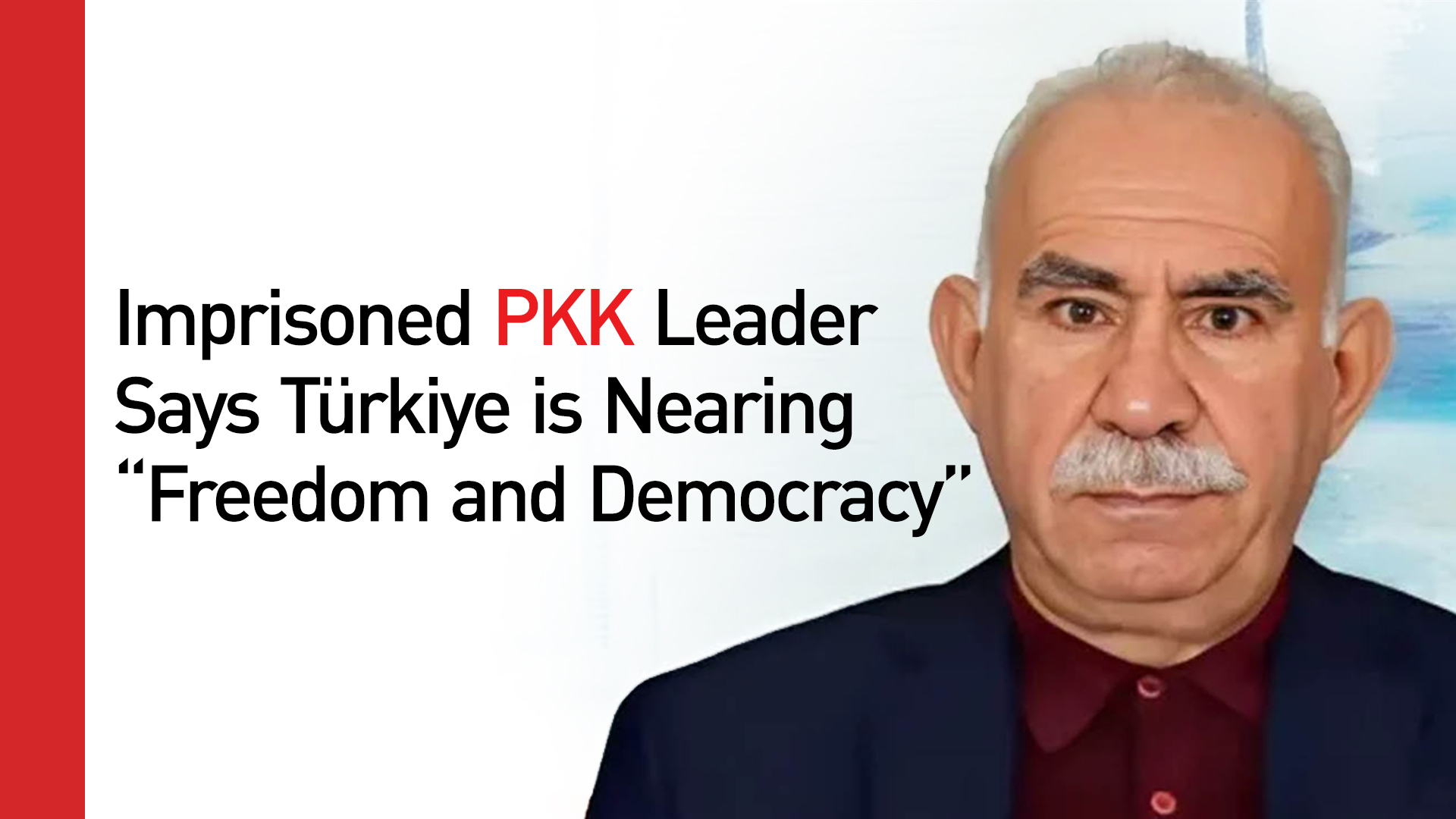
ERBIL (Kurdistan24) - Abdullah Öcalan, the imprisoned founder of the Kurdistan Workers' Party (PKK), has issued a high-stakes message on the occasion of Eid al-Adha, asserting that the movement for Kurdish rights and democratic reform in Türkiye has reached a decisive historical threshold.
The message was relayed by Ömer Öcalan, a Member of Parliament for the Peoples' Equality and Democracy Party (DEM Party) and the nephew of the jailed leader, following a rare visit to İmralı Island Prison.
In a statement published on the social media platform X, the MP quoted his uncle as saying, "We are closer to freedom and democracy than ever before."
While ostensibly a holiday greeting, the communication serves as a pivotal political signal at a moment when Türkiye's peace process stands at a fragile juncture, caught between the hope for a negotiated settlement and a deepening domestic crackdown on the political opposition.
Eid Message Revives Political Debate
The visit to İmralı on Thursday, marks a significant shift in the administration of Öcalan's long-term imprisonment, which has been characterized by prolonged periods of isolation and restricted access for family and legal counsel.
The release of a direct message through a sitting MP has generated immediate ripples across regional media, reviving a national debate over the future of the Kurdish question.
According to senior DEM Party official Pervin Buldan, who shared further details at the party's provincial office in Van, the meeting lasted approximately three hours.
Buldan noted that Öcalan provided a comprehensive assessment of the current political landscape, emphasizing that the current phase must serve as a "significant step toward freedom."
The jailed leader reportedly expressed his best wishes to the public for the Eid holiday while tying the celebration to the broader aspirations of the Kurdish people for democratic recognition.
Push for Legal Framework
Central to Öcalan's message is an insistence on moving beyond informal back-channel negotiations toward a formalized legal and constitutional structure.
Pervin Buldan revealed that during the İmralı meeting, Öcalan proposed a "foundational" framework law consisting of seven to eight specific constitutional articles.
This draft legislation is intended to function as the "driving engine" of democracy.
Buldan explained that the proposed framework would be implemented as a "one-time measure" to solidify the peace process.
DEM Party officials are now pushing for these legal reforms to be finalized before the Turkish parliament enters its summer recess.
The urgency of this demand is a recurring theme in Öcalan's communications.
As reported by Agence France-Presse (AFP), the jailed leader has warned that there is "no time to lose," asserting that remaining in a state of "hope and expectation" without a legal foundation creates unnecessary institutional risk.
He urged all political actors, including the Turkish Parliament, to assume "historical responsibility" rather than allowing negotiations to languish in a state of political limbo.
Peace Process at a Fragile Juncture
The latest developments arrive as the peace initiative enters a complex new phase.
The process began in late 2024 when Devlet Bahçeli, leader of the nationalist MHP, made an unexpected call for the PKK to disarm.
This led to the formal renunciation of the group's four-decade-long armed struggle, a conflict that has claimed at least 50,000 lives.
Furthering this transition, the organization announced on May 5, 2026, that it had changed its name and completed its organizational transition into the "Apoist Movement."
The leadership of this newly formed political entity has stated it is now awaiting reciprocal legislative actions from authorities in Ankara to provide a legal basis for its political activities.
However, Kurdistan24 reporting indicates that the peace process is currently facing a "temporary stalemate."
While the armed conflict has ceased, both sides remain at odds over the specifics of the legal framework and the scope of regional security demands.
Democratization and Regional Pressures
Öcalan's critique of the domestic political climate was bolstered by recent events in Ankara.
Just as the DEM delegation was preparing to visit İmralı, Turkish riot police used tear gas to force their way into the headquarters of the main opposition Republican People's Party (CHP).
This followed a controversial court order that dismissed the party's leadership.
According to DEM lawmakers, Öcalan specifically addressed these skirmishes, asking, "Is breaking into the headquarters of a political party by smashing the door with a sledgehammer something that should happen in a democracy?"
He characterized the state's actions against the CHP as a clear indicator of the "absence of a properly functioning democracy" and warned that treating democracy as a "luxury" would have grave consequences for the republic.
The context of this message is tied to what Human Rights Watch (HRW) has described as "abusive tactics" by President Recep Tayyip Erdoğan's government to dismantle the opposition.
AFP's Volkan Nakiboğlu and Hazel Ward reported that an Ankara court recently annulled the leadership election of Özgür Özel, naming former chair Kemal Kılıçdaroğlu as interim leader, a move widely seen as a politically motivated attempt to hobble the CHP.
Furthermore, Öcalan situated the internal struggle within a volatile regional context.
He observed that Middle Eastern powers, specifically Iran and Israel, are adopting increasingly hardline positions.
He warned that the rise of nationalism and discrimination in the region is "harmful" and argued that a successful peace process in Türkiye is essential to preventing dangerous regional developments and ending bloodshed.
A Crossroads for Reform
As the Eid holiday concludes, the political trajectory of the peace process remains one of the most volatile variables in Türkiye's future.
The message from İmralı suggests that while Öcalan remains ready for negotiation, the window for a settlement may be narrowing as domestic political tensions escalate toward a state of emergency.
The ball now rests with the Turkish Parliament and the government in Ankara.
Whether they will take the "legal steps" Öcalan has demanded or if the process will continue to languish under the weight of judicial interventions and regional instability remains to be seen.
For now, the Kurdish leadership maintains that while freedom and democracy may be "closer than ever," the path to achieving them requires a fundamental transformation of the Turkish state's legal character.