PM Barzani Extends Akitu Greetings, Reaffirms Kurdistan’s Tradition of Coexistence
Message highlights cultural heritage of Assyrian communities and broader policy of religious harmony in the Region
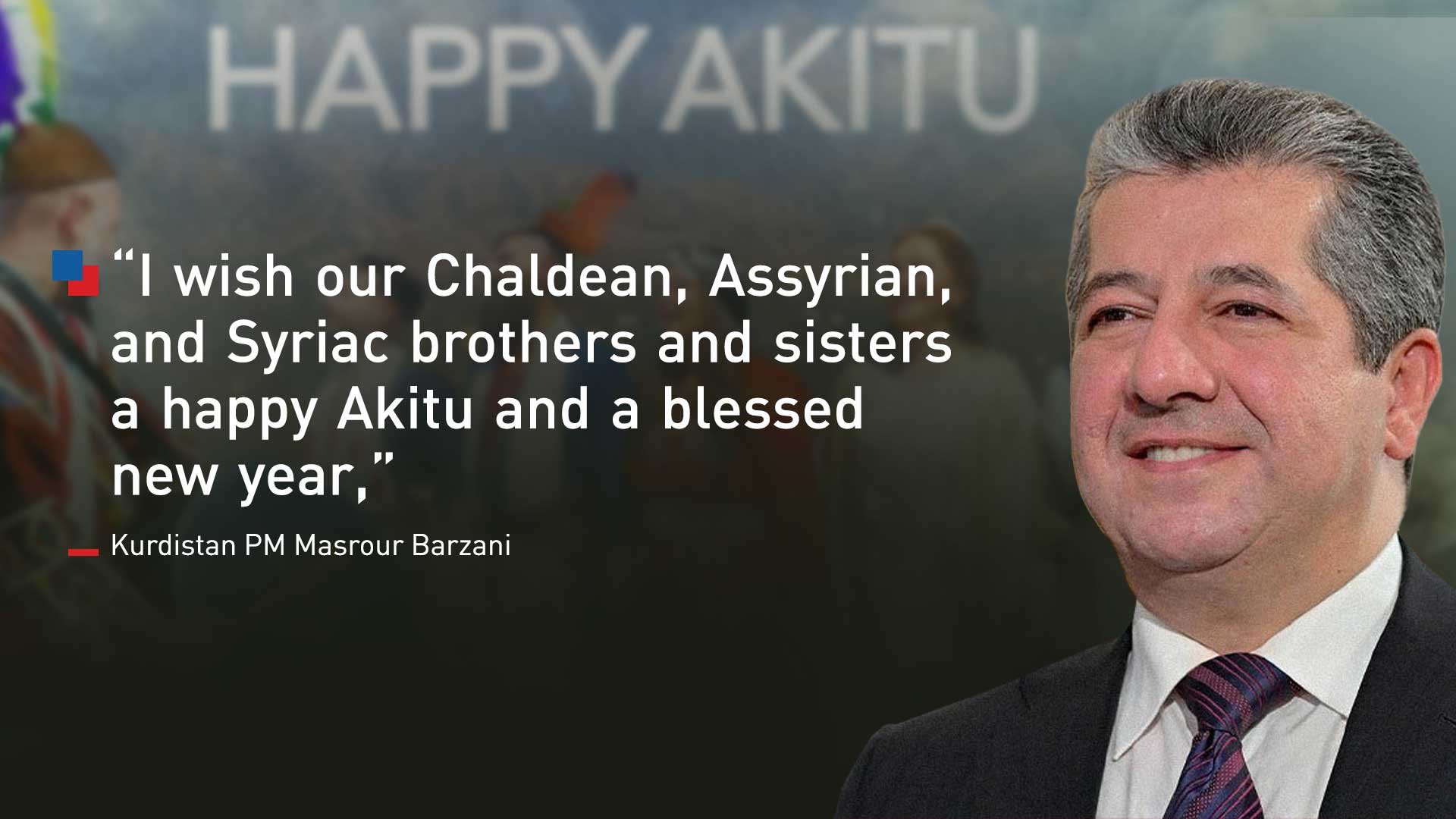
ERBIL (Kurdistan24) — Kurdistan Region Prime Minister Masrour Barzani on Wednesday extended his greetings to the Assyrian community on the occasion of Akitu, underscoring the Kurdistan Region’s enduring commitment to cultural diversity and peaceful coexistence.
In a message posted on his official X account, the prime minister said: “I wish our Chaldean, Assyrian, and Syriac brothers and sisters in Kurdistan and around the world a happy Akitu and a blessed new year.”
I wish our Chaldean, Assyrian, and Syriac brothers and sisters in Kurdistan and around the world a happy Akitu and a blessed new year. pic.twitter.com/UTtSM4ovpB
— Masrour Barzani (@masrourbarzani) April 1, 2026
Akitu, celebrated annually on April 1, is one of the oldest known festivals in human history, dating back more than 6,000 years to ancient Mesopotamia. Traditionally marking the Assyrian and Babylonian New Year, the festival symbolizes renewal, fertility, and the triumph of order over chaos.
Today, it remains a cornerstone of identity for Assyrian, Chaldean, and Syriac communities across the Middle East and diaspora.
In the Kurdistan Region, Akitu is observed with vibrant public celebrations, particularly in areas such as Ankawa and Duhok, where participants wear traditional attire, hold parades, and raise Assyrian flags.
The festivities often blend ancient rituals with modern expressions of cultural pride, reflecting both continuity and resilience after decades of displacement and conflict in Iraq.
The prime minister’s message comes amid broader efforts by the Kurdistan Regional Government (KRG) to preserve minority heritage and promote inclusivity.
Under Barzani’s leadership, policies have focused on safeguarding religious freedoms, supporting minority-language education, and ensuring political representation for diverse communities, including Christians, Yazidis, and Turkmen.
The Kurdistan Region has long distinguished itself within Iraq as a relatively stable and pluralistic environment, where different ethnic and religious groups coexist with a degree of harmony rarely seen elsewhere in the country.
Churches, mosques, and temples often stand in close proximity, particularly in urban centers like Erbil, reflecting a social fabric shaped by mutual respect and shared history.
This coexistence has also been reinforced through institutional support, including reserved parliamentary seats for minority groups and government-backed reconstruction projects in areas affected by conflict with the Islamic State. Such initiatives have encouraged many displaced families to return, particularly to the Nineveh Plains and parts of the Kurdistan Region.
Barzani’s Akitu message thus carries significance beyond a ceremonial greeting, serving as a reaffirmation of the Region’s identity as a refuge for diversity and a model of intercommunal coexistence in a region often marked by sectarian divisions.
As Assyrian communities celebrate the new year, the occasion stands as both a cultural milestone and a reminder of the Kurdistan Region’s ongoing efforts to sustain unity through diversity.