Iran Military Denounces US Naval Blockade as ‘Illegal’ and ‘Piracy,’ Warns of Regional Maritime Retaliation
Tehran cautions that no Gulf or Arabian Sea ports will be safe if Iranian ports are threatened amid escalating US-Iran maritime tensions
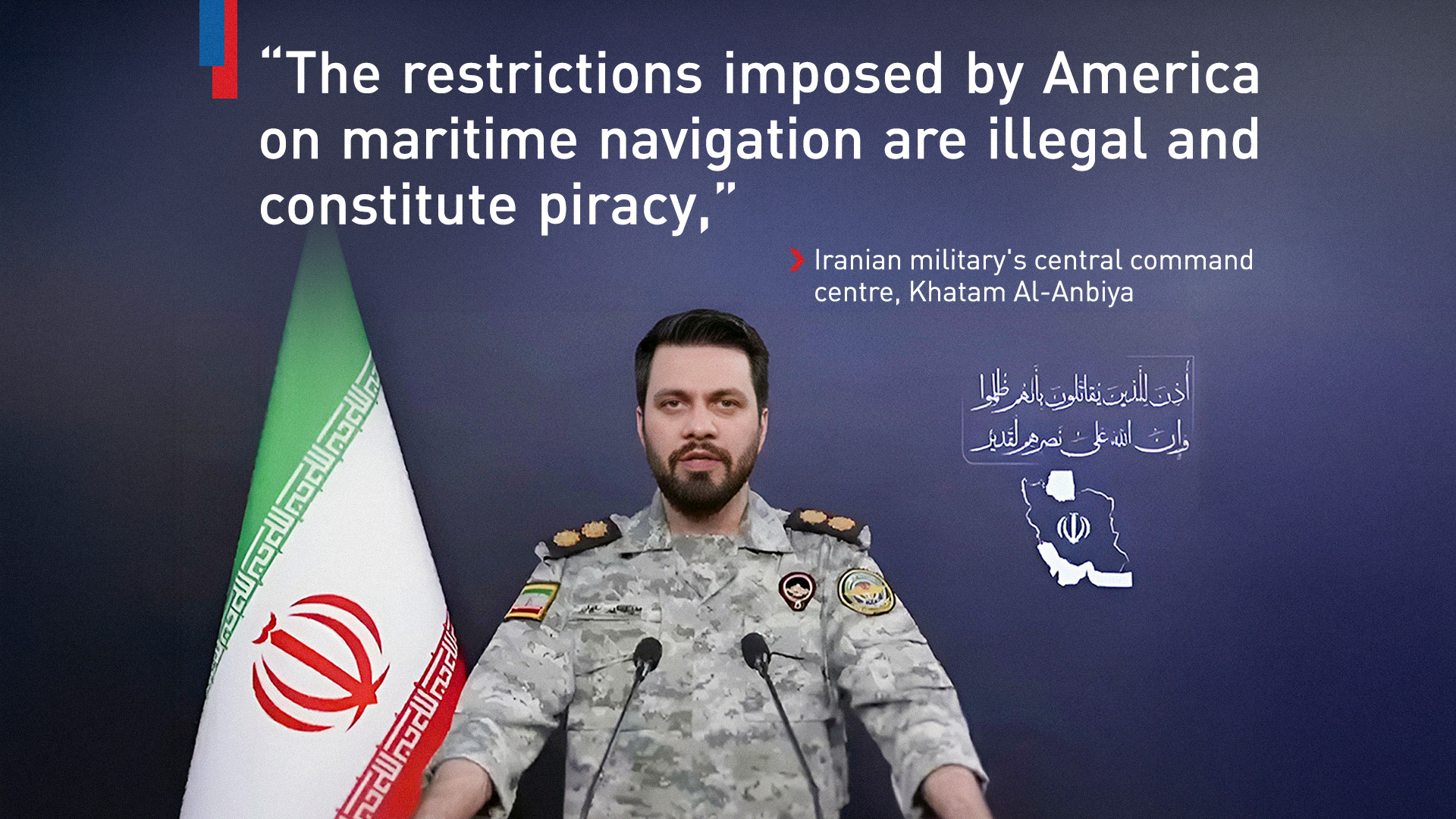
ERBIL (Kurdistan24) — Iran’s military has condemned an announced US naval blockade targeting Iranian maritime traffic as “illegal” and an act of “piracy,” warning that any threat to Iranian port security could endanger shipping across the wider Gulf and Arabian Sea.
In a statement issued by the Islamic Republic’s military central command, Khatam Al-Anbiya, and broadcast on state television, Tehran said the planned restrictions on maritime navigation constitute a violation of international law.
“The restrictions imposed by criminal America on maritime navigation and transit in international waters are illegal and constitute an example of piracy,” the statement said.
Lieutenant Colonel Ebrahim Zolfaghari, Khatam Al-Anbiya's spokesperson, who read the statement, further warned of reciprocal consequences, adding: “If the security of the Islamic Republic of Iran’s ports in the waters of the Persian Gulf and the Arabian Sea is threatened, no port in the Persian Gulf and the Arabian Sea will be safe.”
The Iranian response comes as tensions sharply escalate following a US decision to intensify maritime enforcement measures against Iranian shipping activity.
According to a statement issued by the US Central Command (CENTCOM) in Tampa, Florida, a maritime blockade on all vessels entering or exiting Iranian ports is set to begin on April 13 at 10 a.m. ET, under a presidential directive.
CENTCOM said the operation would apply to ships of all nationalities operating within Iranian territorial waters, including ports in the Arabian Gulf and the Gulf of Oman, and would be enforced on an “impartial” basis, signaling a wide operational scope that could affect commercial shipping tied to Iran’s maritime trade networks.
US officials also clarified that the measure would not disrupt international navigation through the Strait of Hormuz, a critical global energy chokepoint through which a significant share of the world’s oil exports passes.
Vessels traveling to and from non-Iranian ports, according to CENTCOM, would continue to transit freely without obstruction.
The latest exchange underscores rising friction between Washington and Tehran over maritime security in the Gulf region, an area that has repeatedly been at the center of geopolitical tensions involving naval deployments, sanctions enforcement, and competing interpretations of international maritime law.
Analysts warn that the escalation could have broader implications for regional shipping stability, insurance costs, and global energy flows, particularly if it extends beyond the declared enforcement zones.
As both sides harden their rhetoric, the risk of miscalculation at sea is seen as increasing, with the Gulf remaining one of the world’s most strategically sensitive maritime corridors.