Spain’s Sanchez Urges China’s Role in Ending War, Calls for More “Representative” Global Order
Spanish leader reinforces early opposition to US-led war as tensions with Trump administration deepen
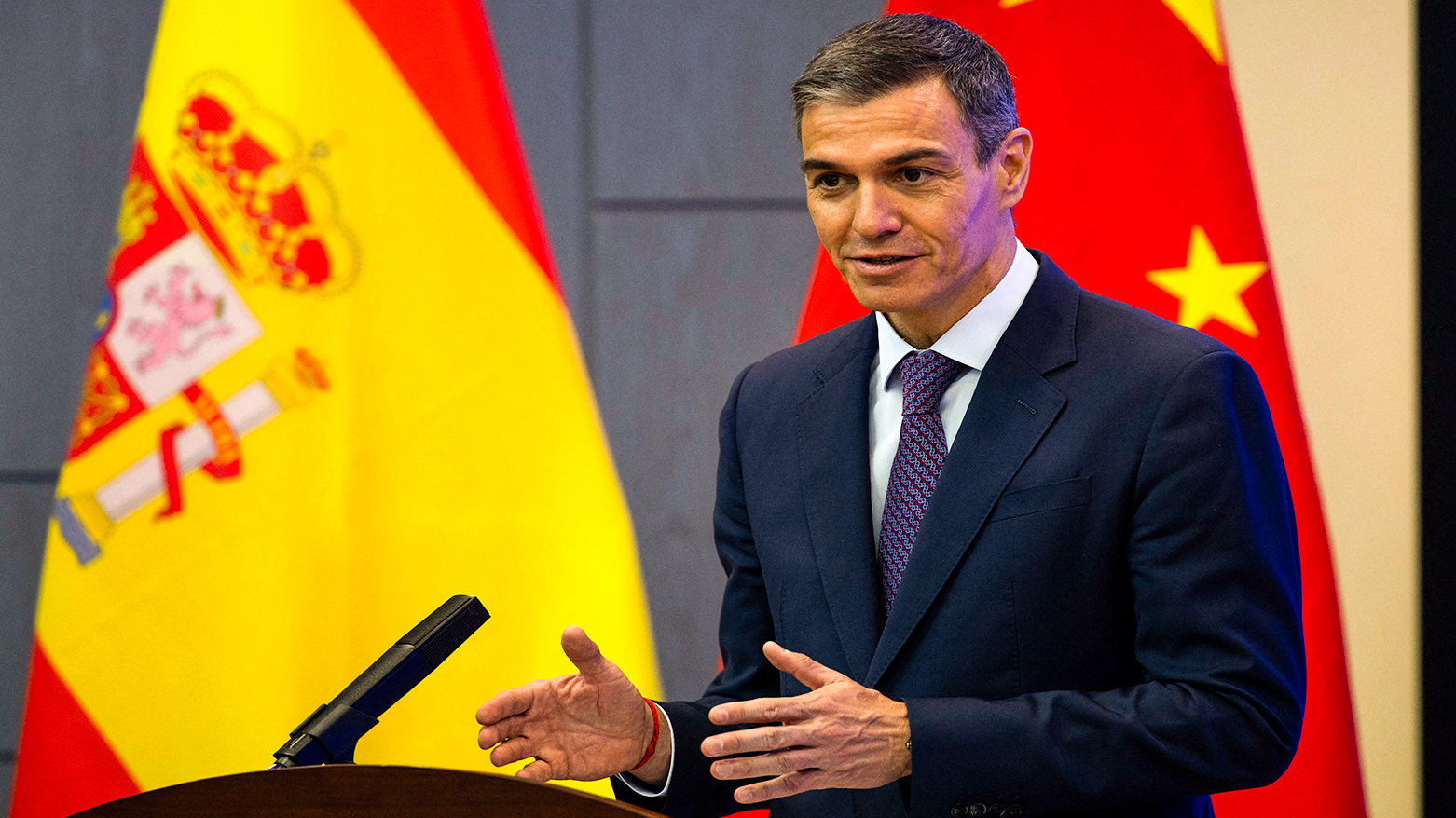
ERBIL (Kurdistan24) — Spanish Prime Minister Pedro Sanchez on Tuesday called for a greater diplomatic role for China in resolving the ongoing Middle East war, emphasizing the need for a more inclusive and representative global order following failed US-Iran negotiations.
Speaking in Beijing after meeting Chinese President Xi Jinping, Sanchez said Beijing could play an “important” role in pushing forward diplomatic efforts to end the conflict and restore regional stability.
“The role China can play is important to find diplomatic means that end this war and contribute to stability and peace,” Sanchez told a joint press conference, adding that countries not directly involved in the conflict are “absolutely necessary” to achieving a resolution.
His remarks come as negotiations between Washington and Tehran collapsed over the weekend, prolonging a war that began on February 28 when the United States, under President Donald Trump, launched military action against Iran over allegations of nuclear weapons development—claims Tehran has consistently denied.
From the outset of the conflict, Sanchez has positioned Spain in firm opposition to the war, declining to align with Washington’s military approach and instead advocating for diplomacy, de-escalation, and adherence to international law.
His government has repeatedly described the conflict as lacking sufficient legal justification, placing Madrid at odds with the Trump administration.
This divergence has fueled growing political tensions between Sanchez and Trump, with disagreements spanning both the conduct of the war and broader transatlantic relations.
Spanish officials have expressed concern over what they view as unilateral US actions, including military escalation and the imposition of a naval blockade on Iranian ports, warning such measures risk undermining global stability.
In Beijing, Sanchez broadened his message beyond the immediate conflict, calling for structural reforms to the international system. He stressed the importance of adapting global governance frameworks to reflect a shifting geopolitical landscape.
“What we prefer is dedicating all our efforts to reforming a world order that has guaranteed peace for many decades, and also to make it a lot more inclusive, more representative and more democratic,” he said.
Sanchez added that his discussions with Xi focused on the need to modernize multilateral institutions to better reflect what he described as the “multipolar reality” of today’s world—an apparent reference to the growing influence of powers such as China amid declining Western dominance.
China has maintained a relatively neutral stance throughout the conflict, calling for restraint while criticizing actions that threaten global trade routes, particularly in the Gulf.
Beijing’s economic ties with Iran and its broader strategic competition with the United States position it as a potentially influential mediator, though its direct involvement remains limited.
Sanchez’s outreach to China underscores a wider European effort to diversify diplomatic channels and reduce reliance on US-led initiatives, particularly as divisions deepen over the handling of the war.
As the conflict enters a critical phase, with a fragile ceasefire holding and negotiations stalled, Spain’s position reflects a broader push among some international actors to shift from military escalation toward a multilateral diplomatic framework—one that could redefine not only the outcome of the war but also the structure of global governance itself.