China Condemns US Naval Blockade of Iranian Ports as 'Dangerous and Irresponsible'
China warns of “resolute countermeasures” over US tariff threats tied to Iran military allegations
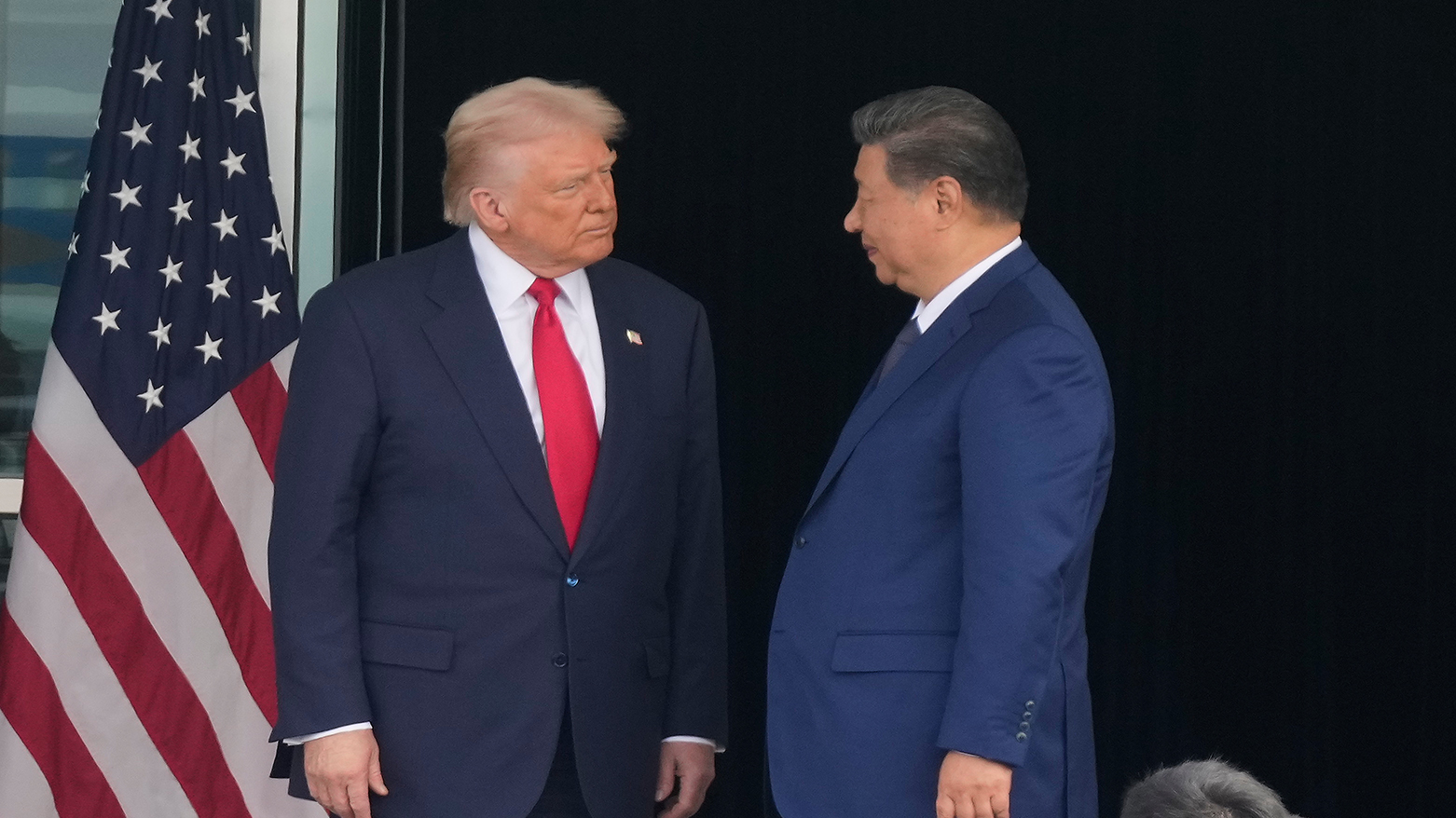
ERBIL (Kurdistan24) — China on Tuesday sharply criticized the United States over its naval blockade of Iranian ports, calling the move “dangerous and irresponsible” as tensions escalate across both military and economic fronts in the widening Middle East crisis.
Chinese Foreign Ministry spokesman Guo Jiakun said Washington’s actions risk undermining a fragile ceasefire and destabilizing one of the world’s most critical maritime corridors.
“The US increased military deployments and took a targeted blockade action, which will only exacerbate tensions and undermine the already fragile ceasefire agreement,” Guo told a press conference, warning it would also jeopardize safe passage through the Strait of Hormuz. “This is dangerous and irresponsible behavior,” he added.
The blockade, ordered by US President Donald Trump, came into force on Monday, targeting vessels entering or leaving Iranian ports and coastal areas in the Gulf. The move followed the collapse of US-Iran talks over the weekend and coincided with Trump’s threat to sink any ships attempting to breach the restrictions.
The escalation has unfolded despite a two-week ceasefire agreed days earlier, heightening fears of a broader confrontation. Iran had already restricted access through the Strait of Hormuz to what it considers “friendly” shipping, including vessels linked to China.
Analysts say the US blockade is designed to choke off Iran’s oil revenues while simultaneously pressuring Beijing—Tehran’s largest oil customer—to use its leverage to reopen the strait, through which roughly one-fifth of global oil supplies transit.
Tehran has condemned the blockade as a “grave violation” of its sovereignty, with its ambassador to the United Nations warning of serious consequences if the standoff escalates further.
China, while maintaining strong economic ties with Iran, has positioned itself as a diplomatic actor rather than a military partner. It remains heavily dependent on Gulf energy flows and has repeatedly emphasized the importance of stability in the region.
Chinese President Xi Jinping reinforced that stance on Tuesday, calling for respect for sovereignty and urging a return to diplomacy.
Meeting Abu Dhabi Crown Prince Sheikh Khaled bin Mohamed bin Zayed Al Nahyan in Beijing, Xi said China would continue to play a “constructive role” in promoting peace talks.
“The sovereignty, security, and territorial integrity of the Gulf countries in the Middle East should be sincerely respected,” Xi said, according to state media, while warning against a return to the “law of the jungle” in international relations.
Xi also called for safeguarding a United Nations-based international order and coordinating efforts on security and development, framing China as a defender of multilateralism amid what it describes as growing global “chaos and turmoil.”
The geopolitical crisis has been compounded by rising economic tensions between Washington and Beijing. China warned it would take “resolute countermeasures” if the United States follows through on threats to impose additional tariffs over allegations that Beijing is supporting Iran militarily.
Trump has threatened to levy tariffs of up to 50 percent on Chinese goods if Beijing provides weapons to Tehran—claims China has firmly denied as “completely fabricated.”
Reports from US media outlets have suggested China could be preparing to supply air defense systems or may have already transferred shoulder-fired missiles to Iran, citing intelligence assessments. Beijing has rejected the allegations outright.
The dispute highlights the increasingly interconnected nature of global competition, where military, economic, and diplomatic arenas are converging.
China’s diplomatic activity has intensified in parallel with the crisis. Senior global figures, including Russian Foreign Minister Sergei Lavrov and Spanish Prime Minister Pedro Sanchez, arrived in Beijing this week for talks that include the Middle East conflict.
Sanchez has publicly supported a greater Chinese role in mediation, reflecting a broader shift among some US allies toward diversifying diplomatic engagement amid concerns over Washington’s unilateral approach.
US President Donald Trump is expected to visit Beijing next month for high-level talks with Chinese President, a trip that analysts say could prove pivotal amid rising tensions over Iran, tariffs, and regional security.
The visit is widely seen as an attempt to stabilize strained US-China relations while addressing a widening set of disputes spanning trade policy, military posturing in the Middle East, and competing visions for global governance.
Meanwhile, the failure of initial US-Iran negotiations—held in Pakistan—has left the diplomatic track uncertain. US Vice President JD Vance said Washington had presented its “final” offer, placing responsibility on Tehran to respond.
The convergence of a naval blockade, stalled nuclear talks, and a potential US-China trade escalation underscores the widening scope of the crisis, extending far beyond the Middle East.
At stake is not only the outcome of the US-Iran confrontation, but also the shape of the global order—whether it remains anchored in US-led security frameworks or shifts further toward a multipolar system where powers like China play a central mediating role.
As military pressure mounts and diplomatic channels remain fragile, the coming days will be critical in determining whether the crisis moves toward de-escalation—or a broader geopolitical rupture.