EU Energy Costs Rise €22 Billion as Von der Leyen Urges Regional Cooperation.
European Commission President Ursula von der Leyen announced on Monday that the European Union’s fossil fuel import bill has increased by more than €22 billion since the outbreak of the Middle East conflict 44 days ago.
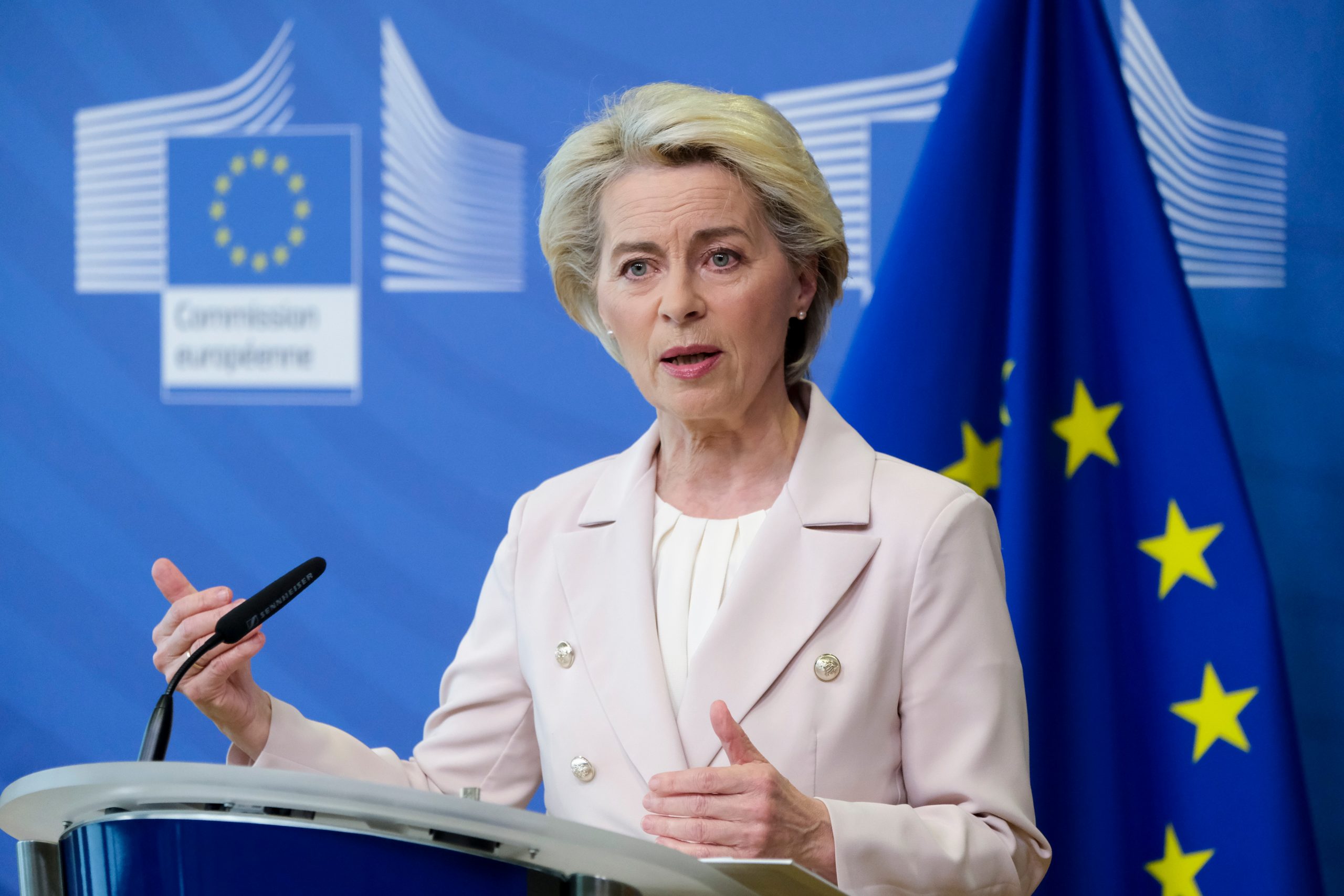
ERBIL (Kurdistan24) — European Commission President Ursula von der Leyen announced on Monday that the European Union’s fossil fuel import bill has increased by more than €22 billion since the outbreak of the Middle East conflict 44 days ago. Speaking following a high-level orientation debate in Brussels, von der Leyen detailed the severe economic strain caused by the ongoing war involving the United States, Israel, and Iran, while calling for a robust coordination framework to mitigate disruptions to energy supplies and global maritime navigation.
The Commission President noted that the €22 billion increase in costs occurred without any additional volume of energy entering the European market, illustrating what she described as the "enormous impact" of the crisis on the regional economy. Even in the event of an immediate cessation of hostilities, von der Leyen cautioned that disruptions to energy supplies from the Gulf are expected to persist for a significant duration. The remarks come ahead of an informal European Council (EUCO) summit scheduled for next week in Cyprus, where leaders are expected to review a formal communication on emergency economic measures.
Addressing the geopolitical dimensions of the conflict, von der Leyen acknowledged the diplomatic efforts facilitated by Pakistan in securing a preliminary ceasefire announcement. However, she noted that negotiations have since stalled. The Commission President emphasized that any final agreement must address Iran’s nuclear and ballistic missile programs, alongside actions obstructing navigation through the Strait of Hormuz.
The ongoing closure of the Strait of Hormuz remains a primary concern for the European Union. Von der Leyen stated that the restoration of freedom of navigation is of "paramount importance," as the closure directly impacts fuel prices, household bills, and the cost of consumer goods across the continent. She further highlighted the precarious situation in Lebanon, noting that continued strikes on the country threaten to derail the broader peace process. In response, the EU is mobilizing ReliefEU stocks to provide immediate aid to the Lebanese population.
"You cannot have stability in the Middle East or the Gulf while Lebanon is in flames," the Commission President stated, urging all parties to respect Lebanese sovereignty and implement a complete cessation of hostilities.
The orientation debate centered on a three-pronged strategy to address the crisis: immediate coordination, support for vulnerable sectors, and structural energy reform. To ensure unity, von der Leyen proposed a robust coordination mechanism among Member States, modeled after the 2022 energy crisis interventions. This includes utilizing the EU Energy Platform, which previously helped aggregate 90 billion cubic metres of gas purchases and matched 77 billion cubic metres between suppliers and off-takers.
Under the proposed immediate measures, the European Commission is exploring EU-wide coordination of gas storage filling to prevent Member States from competing against each other on the open market. Additionally, the Commission intends to coordinate oil stock releases to maximize their market impact and ensure that emergency measures do not fragment the EU’s Single Market.
Regarding support for households and industries, the Commission President emphasized that any interventions must be targeted, timely, and temporary. The European Commission plans to consult with Member States this week on more flexible State aid rules. The goal is to adopt a new temporary framework still this month, providing governments with the legal space to support the most exposed industrial sectors. "My goal is that this temporary State aid framework should be adopted still this month—so that we have the new temporary framework for State aid in April," von der Leyen noted.
The third element of the Commission’s immediate response focuses on demand reduction. Officials are looking at energy efficiency levers, such as the renovation of buildings and the renewal of industrial equipment. Von der Leyen stated that reducing consumption remains the least expensive way to manage the energy deficit, provided it respects consumer choice.
Beyond immediate relief, the Commission is advocating for structural changes to the European energy market. Von der Leyen identified the energy source itself as the largest component of household bills, followed by grid charges, taxes, and the Emissions Trading System (ETS). To stabilize the ETS, the Commission has proposed changes to the Market Stability Reserve, including stopping the cancellation of allowances and increasing the reserve’s capacity to ensure price predictability. A full review of the ETS system is on track for presentation in July.
Furthermore, legislative proposals regarding electricity taxes and grid charges are expected to be presented in May. Von der Leyen argued that the current crisis—the second fossil fuel-related shock in recent years—underscores the risks of "overdependency" on external fossil fuels. She stated that homegrown energy, particularly renewables and nuclear power, currently accounts for over 70% of the EU’s electricity generation and represents the only lasting way to achieve energy security.
To facilitate this transition, the Commission is calling for the acceleration of the Grids package, originally slated for the end of the year. Von der Leyen urged co-legislators to approve the package by the beginning of the summer, citing a high sense of urgency. An electrification strategy, including ambitious new targets, is also expected before the summer.
To fund these structural shifts, the Commission President encouraged Member States to utilize existing EU funding, such as Cohesion Funds, for investments in grids, batteries, and storage. She also announced plans for an Investment Conference to mobilize private capital, noting that public funds alone would be insufficient to modernize the European energy system.
The orientation debate concluded with a consensus to finalize these proposals in a formal communication next Wednesday, providing a roadmap for the upcoming European Council discussions in Cyprus.