153 Anfal Victims’ Remains Still Held in Baghdad, Yet to Be Returned
Speaking to Kurdistan24, Habil Ahmed, director of the Anfal Monument in Chamchamal, said that 1,010 sets of remains belonging to Anfal victims have been recovered in the Chamchamal area.
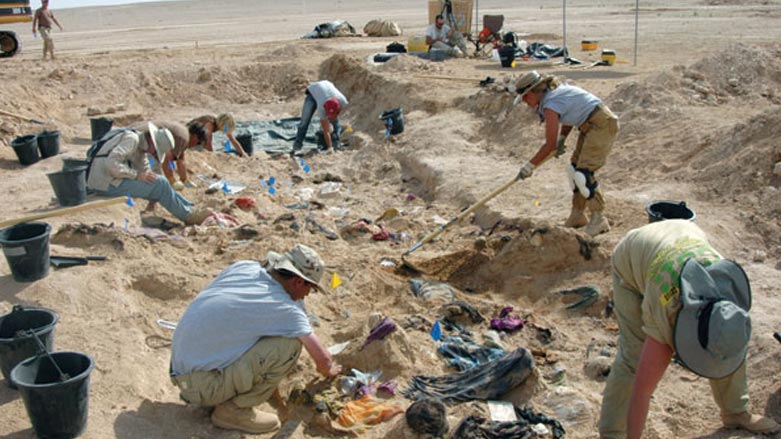
ERBIL (Kurdistan24) – The remains of 153 victims of the Anfal campaign are still held by the Baghdad Medico-Legal Institute and have not yet been returned, an official said on Tuesday, as the 38th anniversary of the genocide passed without commemorative events due to the current situation in the region.
Speaking to Kurdistan24, Habil Ahmed, director of the Anfal Monument in Chamchamal, said that 1,010 sets of remains belonging to Anfal victims have been recovered in the Chamchamal area. However, the total number of victims from the 14 villages in the region is estimated at around 5,000.
He also noted that, in addition to the Barzani Anfal victims, 401 remains have been returned to the Garmiyan independent administration, 256 in Dukan district, and 80 in Topzawa village.
The Anfal campaign, carried out in 1988 under the regime of Saddam Hussein, consisted of eight phases targeting rural Kurdish areas:
First Phase (Jafayati Valley): February 23 to March 19, 1988: Covered Sergalou and Bergalou, destroying 25 to 30 villages.
Second Phase (Qara Dagh Region): March 22 to April 1, 1988: Targeted Qara Dagh, Takiya, and Sewsenan, where chemical weapons were used.
Third Phase (Garmiyan Region): April 7 to April 20, 1988: The largest phase, affecting Chamchamal, Kalar, Kifri, and Khurmatu, and causing the highest number of casualties.
Fourth Phase (Little Zab Valley): May 3 to May 15, 1988: Included Kirkuk, Koya, Taqtaq, and the surrounding plains.
Fifth, Sixth, and Seventh Phases (Shaqlawa and Rawanduz Regions): May 15 to August 26, 1988: Covered Balisan Valley, Malakan, and the areas around Erbil.
Eighth and Final Phase (Badinan Region): August 25 to September 6, 1988: Encompassed Duhok, Zakho, Amedi, and Akre, marked by heavy weapon use and particularly harsh treatment.
Since 2007, the Kurdistan Regional Government has designated April 14 each year as a day of remembrance for the victims of the Anfal campaign.