No Vessels Pass: US Navy Tightens Grip on Iranian Ports Amid Rising Tensions
CENTCOM says no ships passed Iranian ports during the first 48 hours of a U.S. naval blockade, as tensions rise with Washington signaling it will not extend the ceasefire with Tehran.
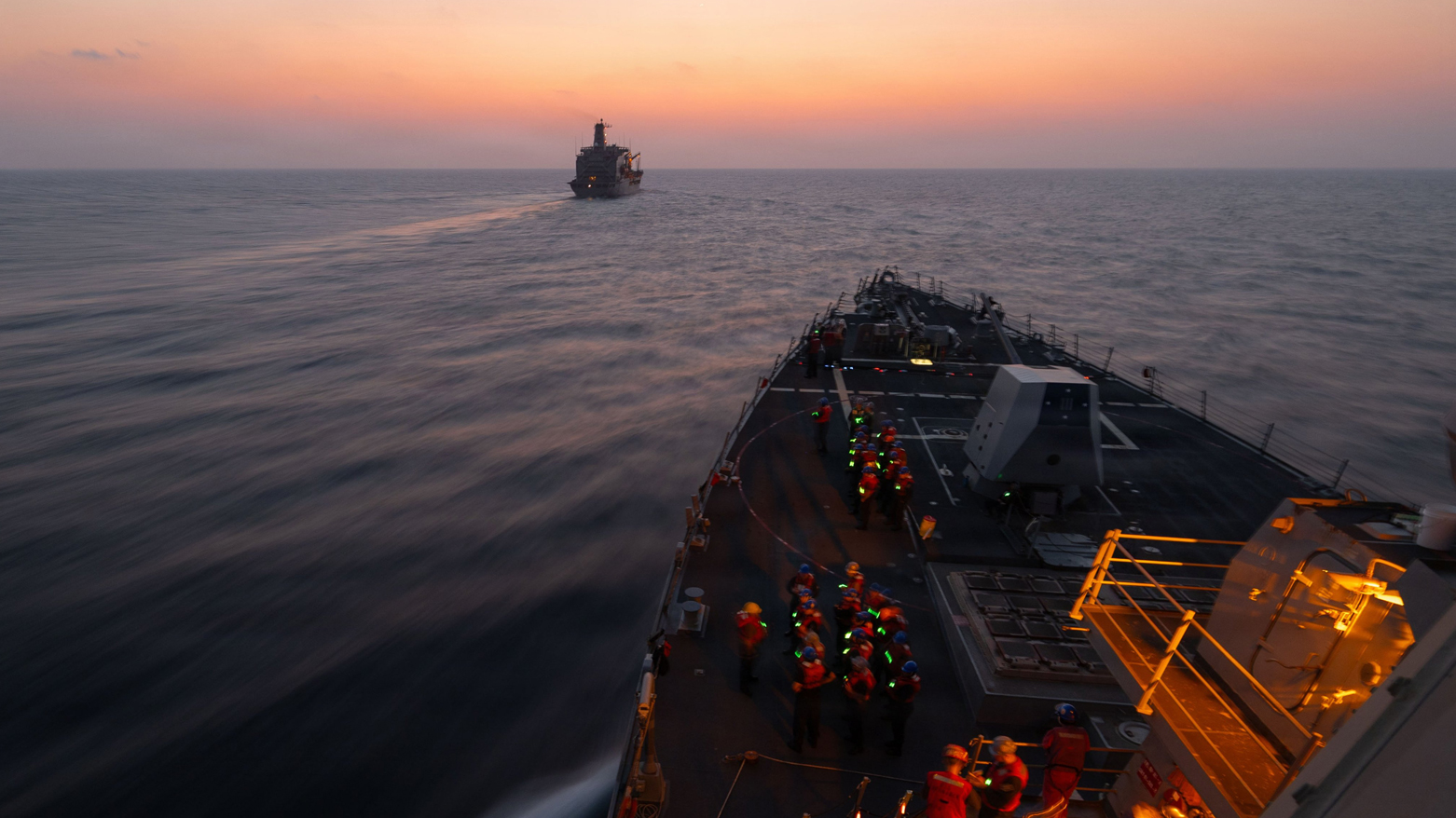
ERBIL (Kurdistan24) - A sweeping U.S. naval blockade on Iranian ports has entered a decisive phase, with American forces asserting total control over maritime movement as no vessels were able to pass during the first 48 hours of operations.
On Wednesday, the United States Central Command (CENTCOM) announced via X that its forces had successfully enforced the opening stage of the blockade, preventing all ships from entering or exiting Iranian ports.
“During the first 48 hours of the U.S. blockade on ships entering and exiting Iranian ports, no vessels have made it past U.S. forces,” CENTCOM stated, adding that nine commercial vessels had complied with U.S. directives and were forced to change course and return toward Iranian ports or coastal areas.
In a follow-up statement, CENTCOM confirmed that U.S. naval vessels remain actively deployed in the Gulf of Oman, continuing patrol operations as part of the blockade. The command emphasized that American forces are “present, vigilant, and ready to ensure compliance,” underscoring a sustained military posture in the area.
Escalation amid uncertain ceasefire prospects
The escalation at sea comes against a backdrop of growing political tension between Washington and Tehran, as indications emerge that the United States is not moving to extend the current ceasefire.
U.S. President Donald Trump, speaking in a recent interview with ABC News, said he is not considering extending the ceasefire deadline with Iran. He noted that while the situation could conclude in various ways, reaching an agreement would be the best option for Iran, as it would provide an opportunity to rebuild the country.
According to Axios, citing a U.S. official, Washington has not formally agreed to extend the ceasefire, despite ongoing communication channels between the two sides aimed at reaching a broader framework agreement.
“Up to this moment, the United States has not formally agreed to extend the ceasefire, but talks and contacts toward a deal are ongoing,” the official said.
Diplomatic deadlock raises regional risks
These developments follow stalled diplomatic efforts after a round of negotiations in Islamabad, Pakistan, failed to produce a breakthrough. Although discussions about a potential new round of talks continue, the absence of a decision to extend the ceasefire has heightened concerns over a possible return to conflict.
Observers suggest that Trump’s firm stance represents a form of “final pressure” on Tehran, aimed at compelling Iran to accept Washington’s conditions before the ceasefire deadline expires.
As U.S. naval forces maintain strict control over maritime routes and diplomatic efforts remain uncertain, the region faces an increasingly volatile moment that could shape the next phase of confrontation or negotiation.