KDP Official Calls Kirkuk Governorship Handover an 'Under-the-Table Agreement'
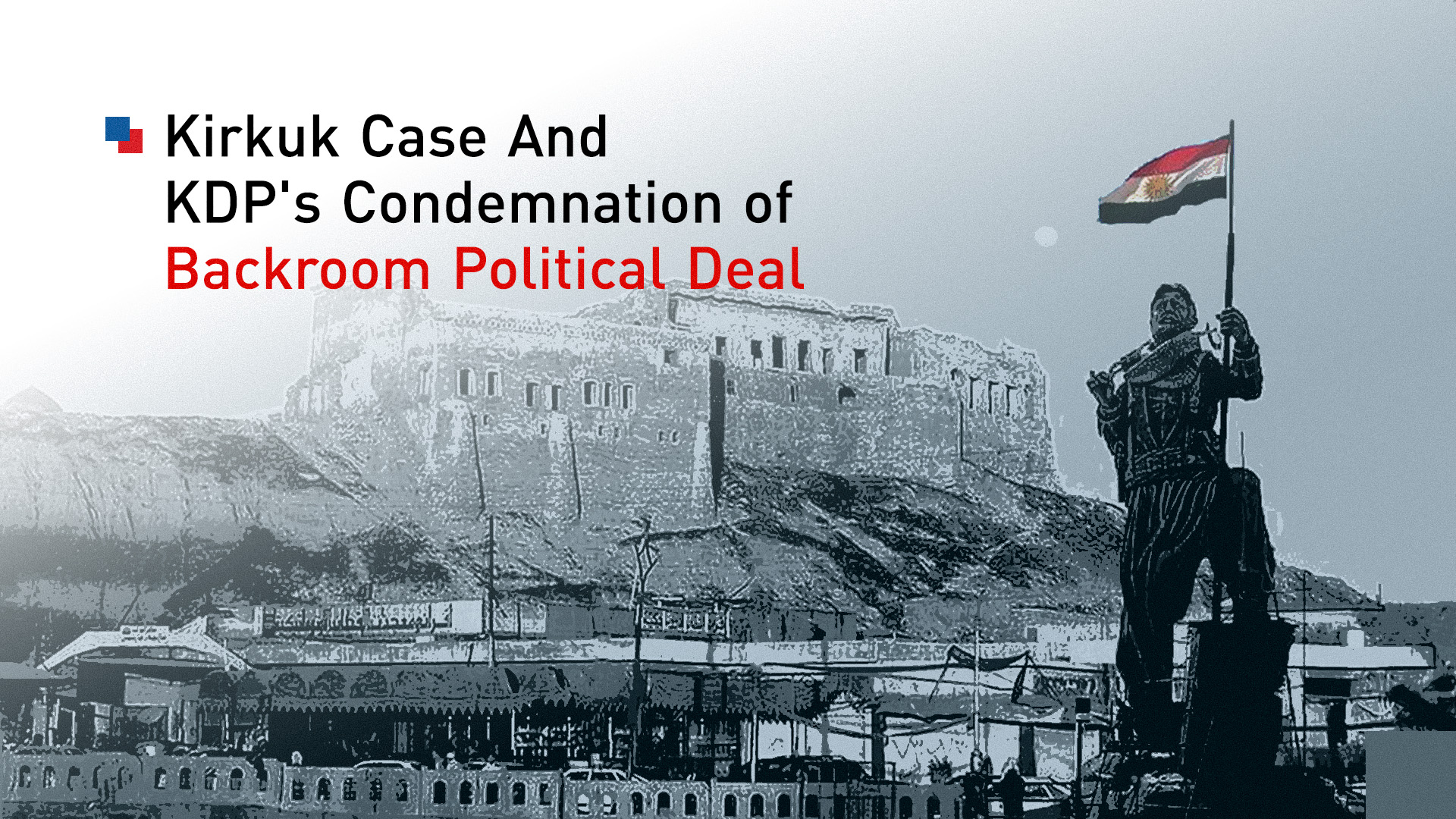
Kirkuk case & KDP's condemnation of backroom political deal: "In the process they [PUK] conducted, the people of Kurdistan are the primary party who bear the cost, because an under-the-table agreement was made at the expense of the rights of the people of Kurdistan," Gailani, a KDP official, said.
ERBIL (Kurdistan24) - A senior member of the Kurdistan Democratic Party (KDP) Central Committee expressed formal dissatisfaction with the method of designating Kirkuk's new governor, characterizing the process as an opaque political exchange that compromised Kurdistani identity for federal power.
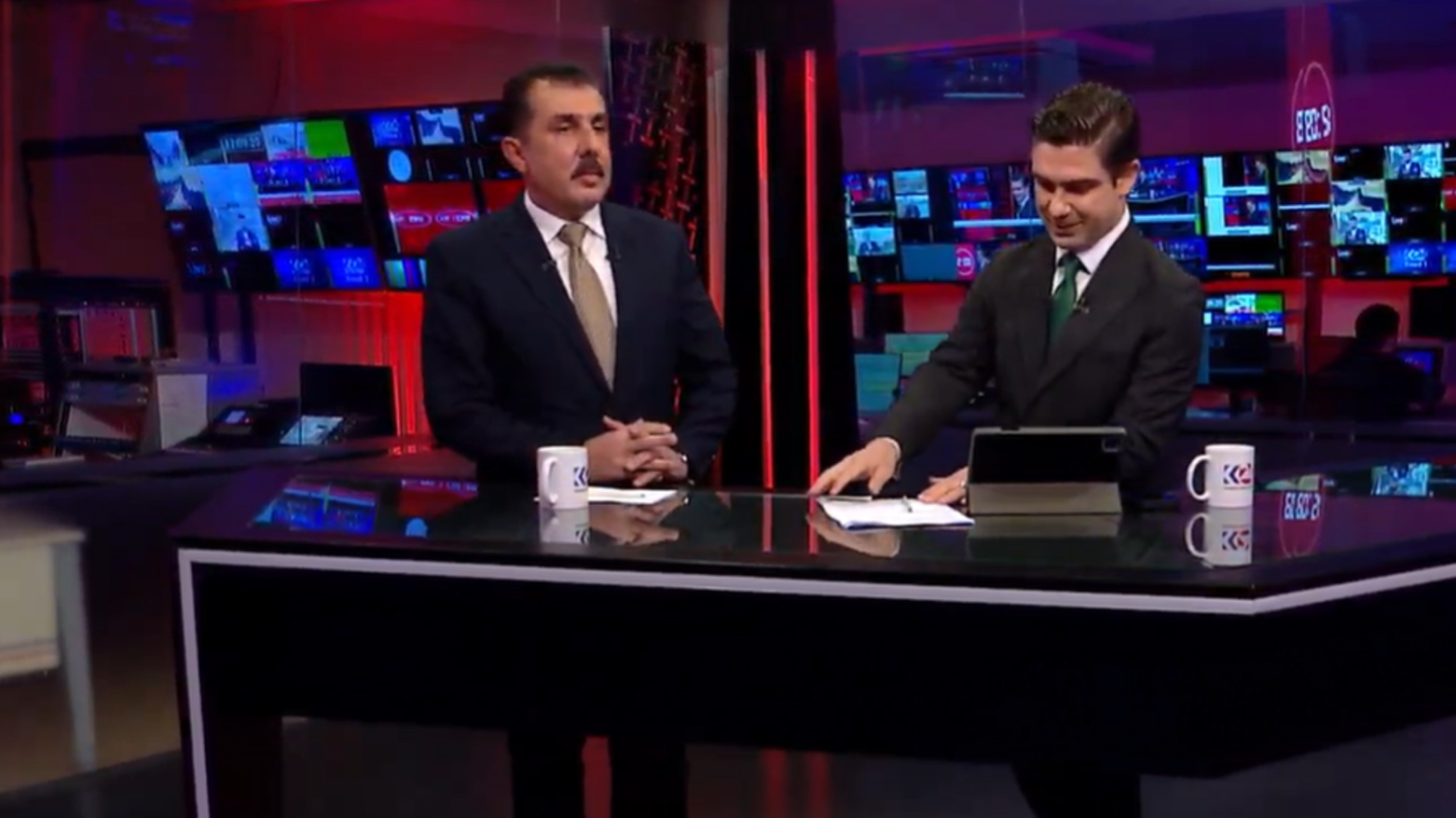
On Saturday, KDP Central Committee member Hiwa Gailani stated during a Kurdistan24 news bulletin that the party's vision for Kirkuk remains anchored in coexistence among all its components, though he firmly emphasized that the city's fundamental identity is "Kurdistani."
Addressing the recent administrative overhaul in the Kurdistani province, Gailani directed criticism at the Patriotic Union of Kurdistan (PUK), asserting that the federal presidency and the Kirkuk governorship were negotiated as a single transactional package in Baghdad.
"In the process they conducted, the people of Kurdistan are the primary party who bear the cost, because an under-the-table agreement was made at the expense of the rights of the people of Kurdistan," Gailani stated.
He emphasized that the KDP's objection lies in the political mechanics of the transition rather than animosity toward the appointed governor. "It is not important to us who that person is; what is important to us is that all parties agree that Kirkuk's identity is Kurdistani."
Gailani explicitly rejected allegations that the KDP's political posture forced the PUK to surrender the provincial leadership to non-Kurdish factions. Instead, he highlighted the KDP's historical backing of PUK-affiliated governors, such as the late Najmaldin Karim, who was a member of the PUK Politburo, to maintain Kurdish administrative cohesion and operational success in the province.
Gailani added that the current Iraqi President, designated through this exchange, does not effectively represent the diverse components or constitutional interests of the Kurdistan Region.
The public rejection of this administrative handover highlights a profound structural fracture in the Kurdistan Region's relationship with federal Iraq.
By decoupling local governance in historically Kurdistani territories from a unified Kurdish consensus, political entities are increasingly utilizing provincial executive offices as leverage to secure federal sovereignty.
This paradigm shift directly challenges the established ethno-sectarian power-sharing model in Baghdad, potentially diminishing Erbil's constitutional negotiating power and rendering local Kurdish administration vulnerable to cross-sectarian parliamentary bartering.
Gailani's televised remarks directly followed a definitive and controversial restructuring of the province's local administration earlier in the week.
Last Thursday, the Kirkuk Provincial Council convened an official session to formally accept the resignation of PUK Governor Rebwar Taha.
In a session attended by 14 council members, 12 voted to appoint Mohammed Samaan, the head of the Iraqi Turkmen Front, to assume the executive role. The council also appointed Nashat Shawez as Deputy Chairman, finalizing the province's legal and administrative framework.
This leadership transition materialized a political pact originally negotiated on Aug. 10, 2024, at Baghdad's Rasheed Hotel.
According to informed political sources, the rotation of the strategic provincial office was structured through an agreement involving PUK President Bafel Talabani, Progress Party leader Mohammed al-Halbousi, Asa'ib Ahl al-Haq Secretary-General Qais al-Khazali, and Babylon Movement leader Rayan al-Kildani.
The core terms of the pact mandated that in exchange for legislative backing from Turkmen and Arab factions to elect Nizar Amedi as the President of Iraq, the PUK would surrender the governorship.
Under the established administrative timeline, Samaan and the Turkmen component will govern Kirkuk for an initial period of seven months. Following this term, the executive office is scheduled to transfer to a Sunni Arab representative, who will retain authority until the next provincial elections are conducted.
In exchange for conceding the top post, the PUK formally requested and secured several compensatory positions, including the post of Deputy Governor, command of the Kirkuk Police Directorate, and the mayoralties of the Dibis and Daquq districts.
The KDP has uniformly condemned the circumvention of the traditional Kurdish consensus model.
Shakhawan Abdullah, head of the KDP faction in the Iraqi Council of Representatives, categorized Thursday's session as an "illegal process carried out outside the will of the people of Kirkuk," emphasizing that the party firmly rejects arrangements finalized outside legal electoral frameworks and the mandate of Kirkuk voters.
Ali Hussein, a KDP Politburo member and head of the Sulaimani-Halabja Organizing Office, detailed the party's structural objections, clarifying that the opposition stems from political principles established after 2003 rather than partisan hostility toward the newly elected president.
"Each component designates its own representative itself. The Shiites together designate the Prime Minister, and the Sunnis together designate the Parliament Speaker," Hussein explained. He argued that Kurdistani political entities should have jointly determined the presidential candidate before presenting a unified front to the broader legislature.
Hussein also drew a direct correlation between the fragmentation of Kurdish unity in Baghdad and the deteriorating security environment in the Kurdistan Region, noting that a consolidated political front serves as a deterrent against kinetic aggression.
"Those who elected the President were the very same ones who were bombarding Kurdistan," Hussein stated, adding that relying on external political alliances empowers federal Arab parties to extract significant political concessions at the direct expense of Erbil's institutional interests.
Responding to reports of a KDP withdrawal from Baghdad, Hussein clarified that President Masoud Barzani had merely summoned parliamentary and governmental factions to Erbil for strategic consultation.
Kirkuk remains one of Iraq's most heavily contested geopolitical flashpoints, serving as a focal point for competing Kurdish, Arab, and Turkmen claims. Following the fall of the Ba'ath regime, Kurdish leaders held the governorship for over a decade, beginning with Abdulrahman Mustafa in 2005.
The administrative balance shifted decisively after the military events of Oct. 16, 2017, when federal Iraqi forces reasserted control over the province. With only two provincial elections held in 18 years, in 2005 and 2023, governance in Kirkuk is frequently characterized by interim, negotiated arrangements rather than continuous electoral mandates.
The KDP maintains that unified representation is strictly necessary to enforce Article 140 of the Iraqi Constitution and protect Kurdish demographics facing systemic marginalization.
The structural mechanics of the Rasheed Hotel agreement reflect an evolving dynamic in Iraqi federal politics, wherein traditional ethno-sectarian blocs demonstrate a willingness to fragment their own communal unity to forge cross-sectarian, transactional alliances.
By decentralizing the Kurdish negotiating posture, federal actors can now leverage competing Kurdish interests against one another, indicating that local administrative control in historically Kurdistani zones functions as tradable political capital within Baghdad's broader parliamentary calculations.
The ultimate viability of the newly established administrative structure in Kirkuk remains untested as the Turkmen Front initiates its seven-month mandate before an anticipated transition to Arab leadership.
Meanwhile, the KDP's formal rejection of the process and its ongoing internal consultations in Erbil suggest a deliberate recalibration of its federal strategy, leaving the future architecture of Kurdish institutional participation in Baghdad deeply unresolved.