KDP’s Fazel Mirani Calls for Respect of Parliamentary System, Stresses Kurdish Unity and Rights
Mirani stressed that Iraq functions under a parliamentary system and called on all political actors to respect its structure.
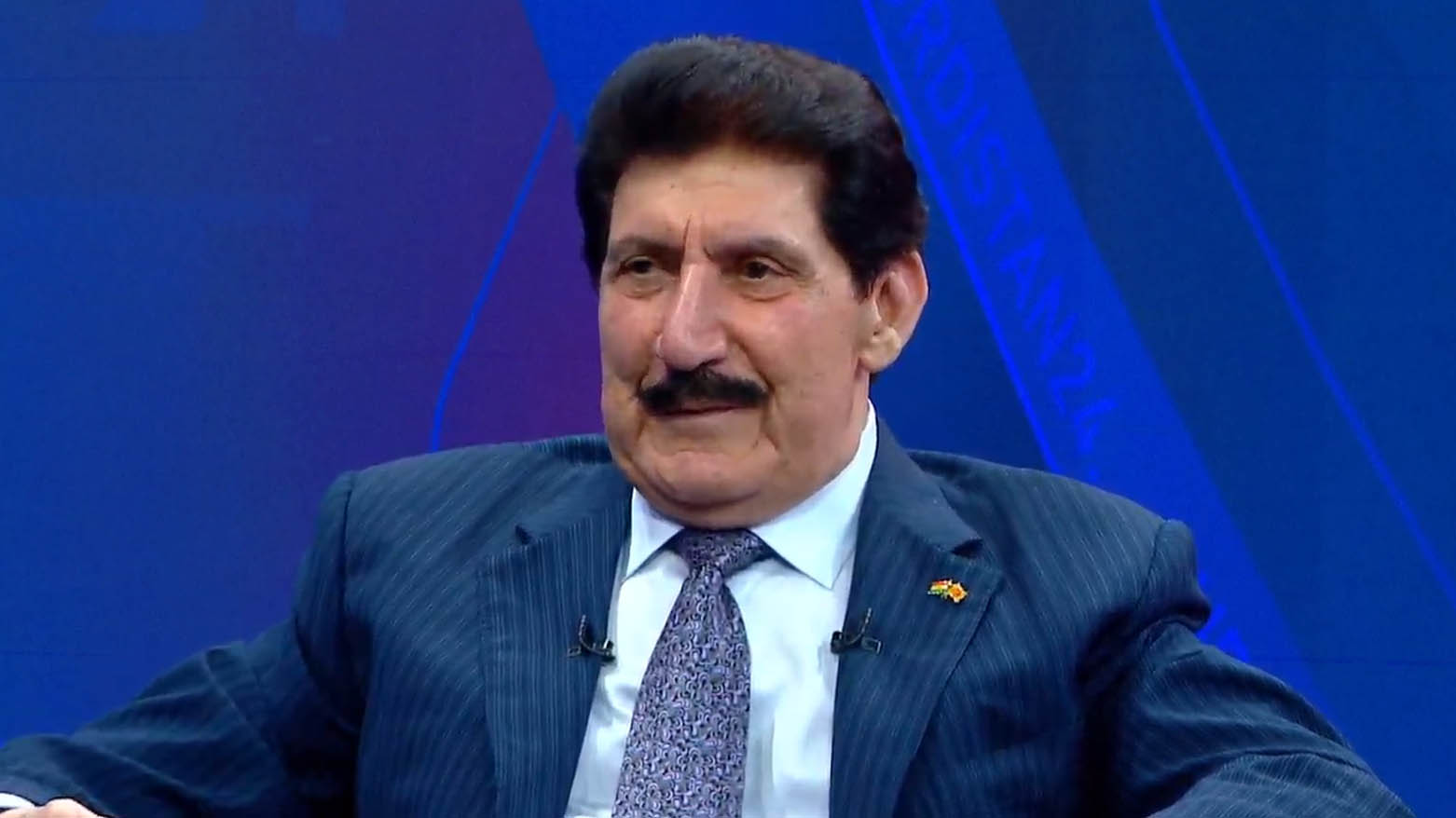
ERBIL (Kurdistan24) — Fazel Mirani, head of the Executive Committee of the Political Bureau of the Kurdistan Democratic Party (KDP), outlined his party’s positions on key political issues in Iraq and the Kurdistan Region during an exclusive interview with Kurdistan24 on Sunday.
Mirani stressed that Iraq functions under a parliamentary system and called on all political actors to respect its structure. He underscored that the KDP acts not merely as a partisan entity but as a major political force bearing national responsibility, representing a significant segment of the Kurdish population.
On the issue of political boycotts, Mirani said that suspending participation in parliamentary proceedings is a legitimate right of political blocs and does not constitute a withdrawal from the political process. Instead, he described such actions as a signal aimed at reforming and correcting Iraq’s political course.
Addressing the distribution of senior government positions, Mirani referred to the post-2003 political framework in Iraq, where the presidency is traditionally held by Kurds, the premiership by Shiite leaders, and the speakership of parliament by Sunni representatives. He emphasized that the KDP’s goal has not been to monopolize the presidency but to safeguard Kurdish rights within this arrangement.
Mirani also expressed optimism about resolving long-standing disagreements between the KDP and the Patriotic Union of Kurdistan, highlighting that Kurdish unity remains a fundamental demand of the people of Kurdistan rather than a mere political objective. He noted that disputes, including those over the presidency, should not be seen as insurmountable between the two main Kurdish parties.
Reaffirming the KDP’s priorities, Mirani stated that protecting the Kurdish liberation movement and preserving the achievements of the Kurdish people remain central concerns for the party.
Turning to Kirkuk, Mirani criticized divisions among Kurdish factions, arguing that a unified electoral list could have enabled the Kurds to secure the governorship. He added that, given the city’s history and status, the position should have been held by a Kurdish representative, with other components participating through different administrative roles.
Mirani reiterated the KDP’s long-standing stance as a defender of Kurdish territory, emphasizing the party’s opposition to any efforts aimed at compromising Kurdish land.