Poetics of Space Travel: A Snipview of Earth, Shy Behind the Moon
From what Commander Reid Wiseman calls "the most foreign seat in the cosmos," the Earth appears not as a dominant world, but as a shy, blue crescent. His iPhone video of an "earthset" marks the precise moment Artemis II transformed deep-space theory into the cold, triumphant calculus of a lunar age.
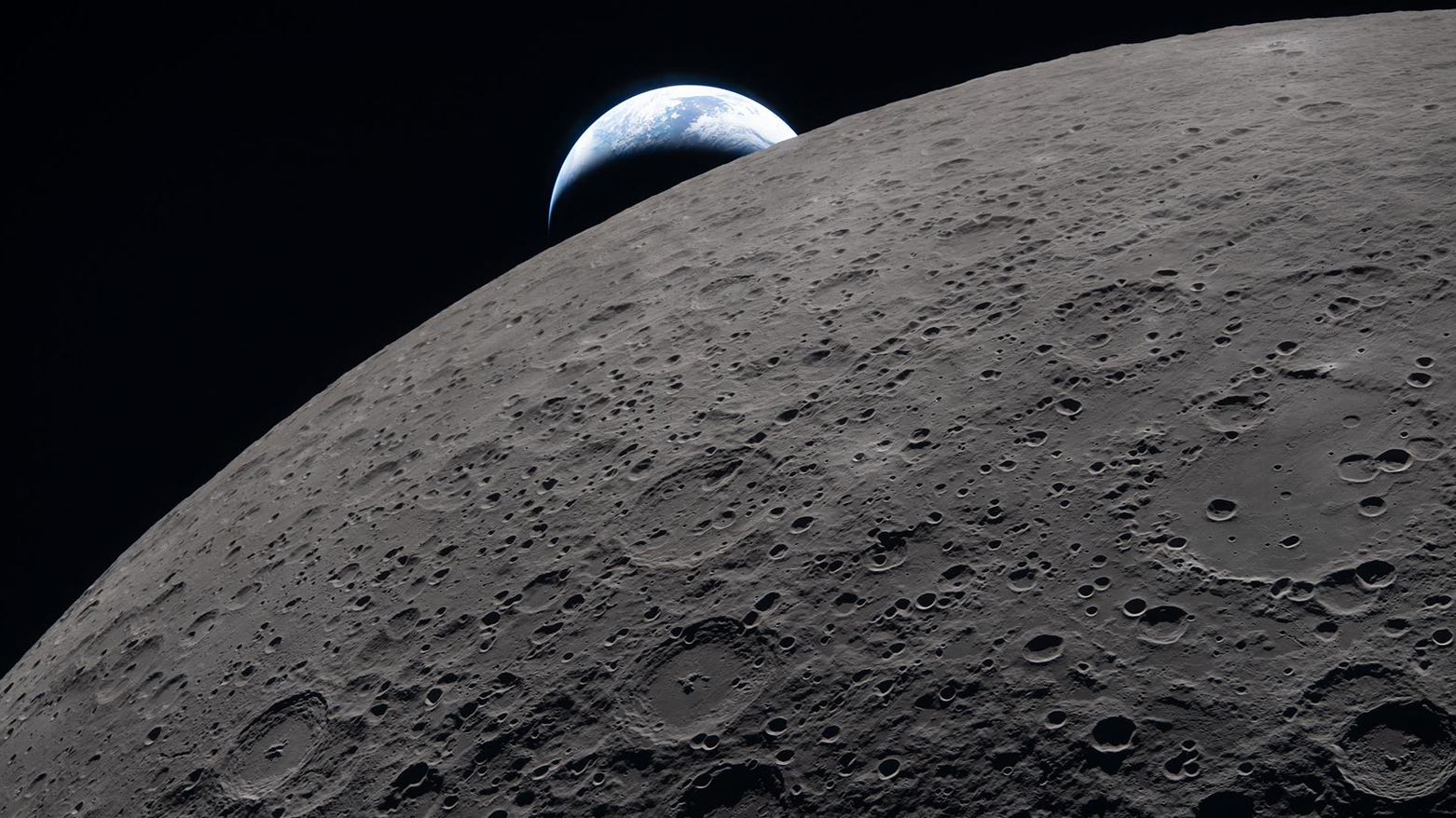
ERBIL (Kurdistan24) - From a vantage point Commander Reid Wiseman described as "the most foreign seat in the cosmos," the Earth appeared not as a dominant world, but as a fragile blue crescent retreating behind the monochromatic edge of the Moon.
Wiseman, an astronaut and aquanaut leading NASA’s Artemis II mission, documented this "earthset" through a mobile device—a low-fidelity counterpoint to the high-resolution clinical precision of the mission’s official imaging. Sharing the footage on his verified X account on Monday, Wiseman’s observation provided a rare intersection of personal reflection and technical documentation.
"Only one chance in this lifetime… I couldn’t resist a cell phone video of Earthset," he stated, noting that the 8x zoom was "quite comparable to the view of the human eye."
Behind the silence of his video, the operational reality of the Orion spacecraft remained audible: the rhythmic shutter of Mission Specialist Christina Koch’s Nikon capturing three-shot brackets through a 400mm lens, while Pilot Victor Glover and Canadian Mission Specialist Jeremy Hansen watched from adjacent viewports.
This moment of celestial shyly-hidden beauty was more than a photographic opportunity; it was the visual confirmation of a profound shift in the geopolitical and scientific landscape.
The Artemis II mission, which concluded with a successful splashdown on April 10, 2026, represents the definitive return of the United States to cislunar space.
By placing human eyes behind the Moon for the first time since 1972, the mission has moved the Artemis program from the realm of theoretical engineering to a demonstrated capability of national and international power.
Only one chance in this lifetime…
— Reid Wiseman (@astro_reid) April 19, 2026
Like watching sunset at the beach from the most foreign seat in the cosmos, I couldn’t resist a cell phone video of Earthset. You can hear the shutter on the Nikon as @Astro_Christina is hammering away on 3-shot brackets and capturing those… pic.twitter.com/8aWnaFJ69c
Geopolitical and Strategic Context
The significance of Artemis II extends beyond the "poetics" of its imagery into the cold calculus of global space leadership.
As the first crewed flight of the Space Launch System (SLS) and the Orion spacecraft, the 10-day mission (precisely 9 days, 1 hour, and 32 minutes) validated the foundational infrastructure required for sustained lunar presence.
For the United States, the mission re-establishes a monopoly on crewed deep-space transit, providing a strategic advantage in the race to secure the lunar South Pole and its suspected water-ice resources.
Furthermore, the inclusion of a Canadian astronaut underscores a coalition-based model of space exploration—an "Artemis Accords" architecture designed to create a Western-led normative framework for the cislunar economy.
Technical Precision and Mission Trajectory
The mission began on April 1, 2026, at the Kennedy Space Center’s Launch Complex 39B. The SLS rocket, the primary vehicle for NASA’s deep-space ambitions, delivered 8.8 million pounds of thrust to send the Orion capsule, named Integrity, into a high-Earth orbit.
Following a successful translunar injection burn, the craft began a trajectory that would eventually cover 694,481 miles.
According to NASA mission summaries, Orion reached its closest lunar approach on April 6, flying just 4,067 miles above the surface.
At its farthest point from Earth, the spacecraft reached a distance of 252,756 miles, shattering the record for a crewed vehicle set by the Apollo 13 mission in 1970. These metrics are not merely milestones; they are data points confirming the thermal and structural integrity of the Orion heat shield and the life-support systems required to sustain humans in a high-radiation environment for extended durations.
Scientific Insights and the Human Element
While the world observed the "earthset" through Wiseman’s lens, the crew was engaged in a suite of scientific validations.
Aboard the spacecraft, the AVATAR (A Virtual Astronaut Tissue Analog Response) experiment utilized bone marrow-derived organ chips to monitor human tissue response to microgravity and deep-space radiation.
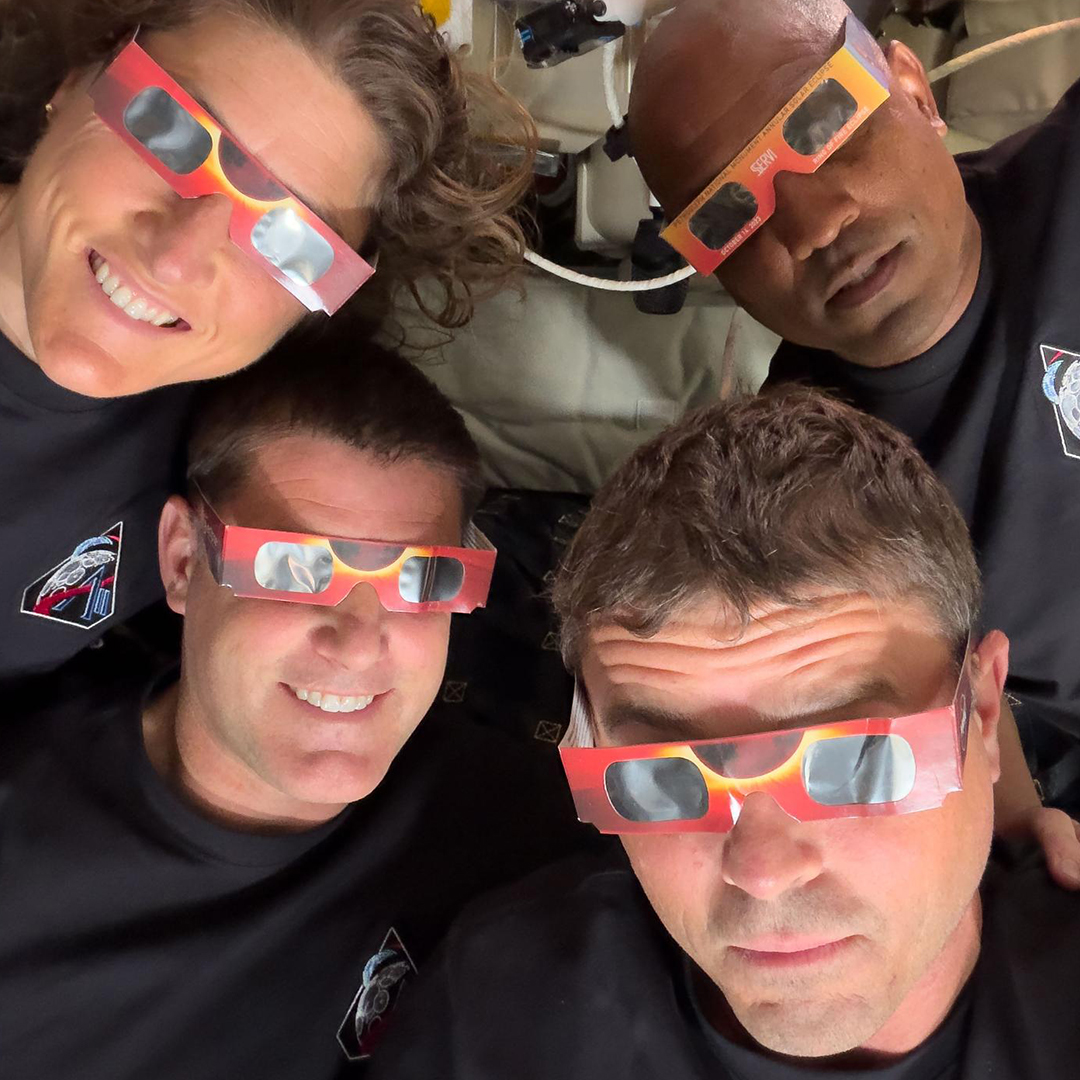
The Artemis II crew – Mission Specialist Christina Koch (top left), Mission Specialist Jeremy Hansen (bottom left), Commander Reid Wiseman (bottom right), and Pilot Victor Glover (top right) – uses eclipse viewers, identical to what NASA produced for the 2023 annular eclipse and 2024 total solar eclipse, to protect their eyes at key moments during the solar eclipse they experienced during their lunar flyby. This was the first use of eclipse glasses at the Moon to safely view a solar eclipse.
Image Credit: NASA
This research, conducted in partnership with agencies such as BARDA and the National Institutes of Health, seeks to develop personalized medicine for long-duration spaceflight.
The "human element" was meticulously managed through controlled communications.
During the lunar flyby, the crew participated in a satellite call with President Donald J. Trump, the first such interplanetary presidential engagement since the Apollo era.
According to White House transcripts, President Trump addressed the crew as "modern-day pioneers," emphasizing that the mission had made "all of America really proud." He invited the crew to the Oval Office, framing their achievements as "triumphs" that the "whole world is talking about."
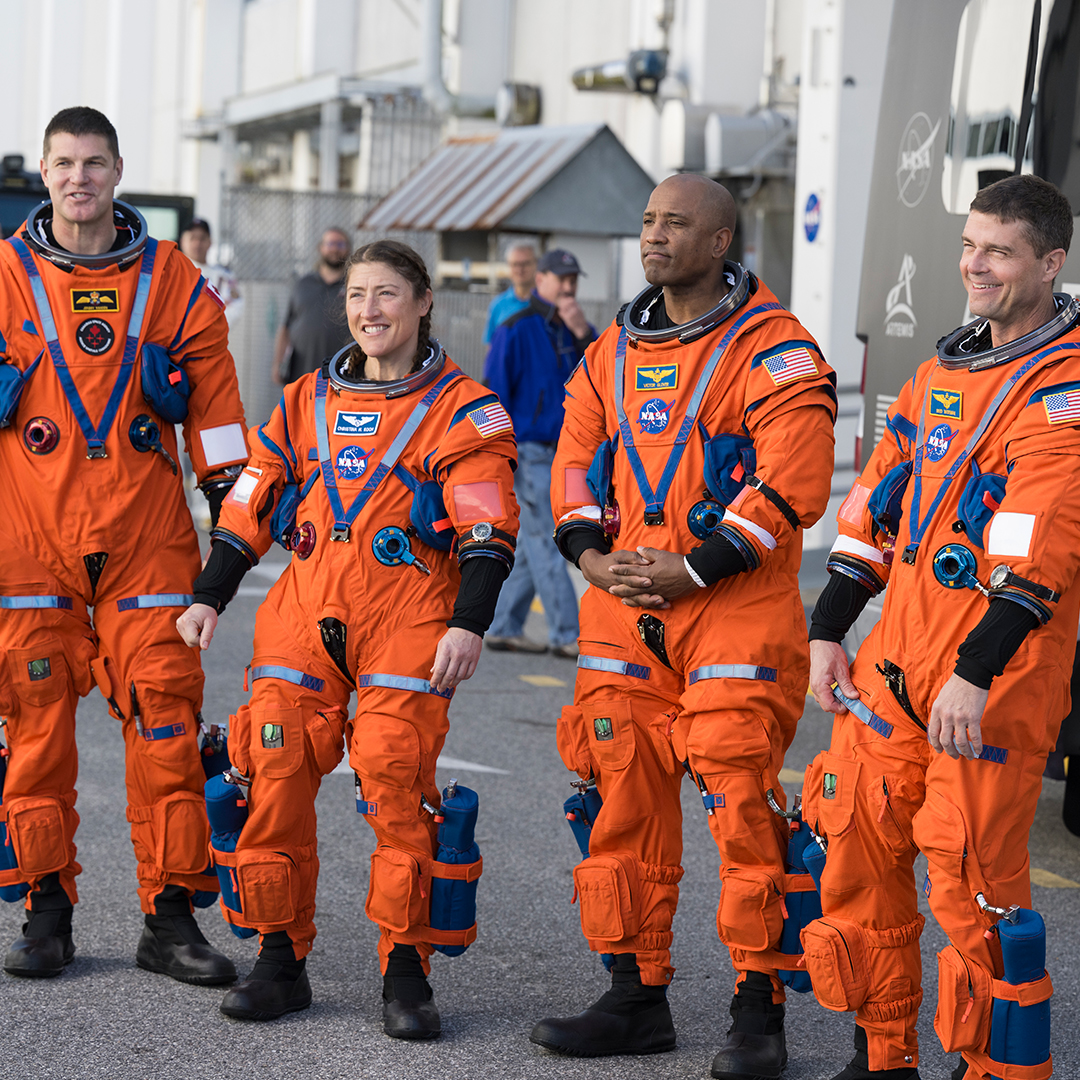
NASA astronauts Victor Glover, pilot, front left; Reid Wiseman, commander, front right; Christina Koch, mission specialist, back right; and CSA (Canadian Space Agency) astronaut Jeremy Hansen, mission specialist, back left, are seen as they depart the Neil A. Armstrong Operations and Checkout Building to board their Orion spacecraft atop NASA’s Space Launch System rocket inside the Vehicle Assembly Building as part of the Artemis II countdown demonstration test, Saturday, Dec. 20, 2025, at NASA’s Kennedy Space Center in Florida. For this operation, the Artemis II crew and launch teams are simulating the launch day timeline including suit-up, walkout, and spacecraft ingress and egress. Through the Artemis campaign, NASA will send astronauts to explore the Moon for scientific discovery, economic benefits, and to build the foundation for the first crewed missions to Mars, for the benefit of all.
Image Credit: NASA/Aubrey Gemignani
Wiseman’s personal reflections, shared via his X account after the mission, added a layer of intimacy to the institutional narrative.
He described the "incredible feeling" of the recovery team welcoming them aboard the USS John P. Murtha after their 700,000-mile journey.
He also revealed that he had carried a zero-gravity indicator named "Rise"—a plush toy carrying 5.6 million names—within his pressure suit, ensuring its survival alongside the crew.
The International Dimension
The presence of Jeremy Hansen of the Canadian Space Agency (CSA) served as a living testament to the international collaboration inherent in the Artemis program.
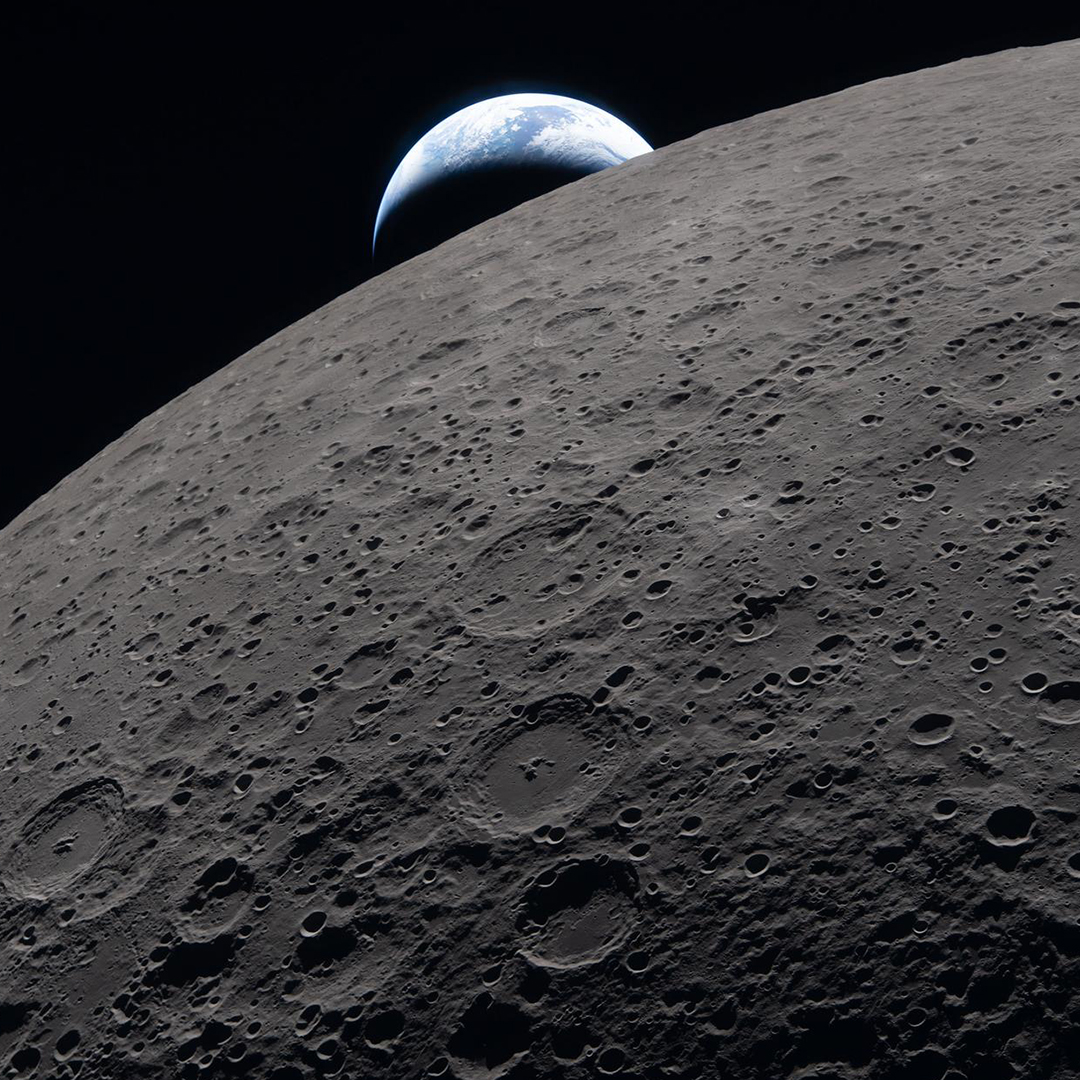
The lunar surface fills the frame in sharp detail, as seen during the Artemis II lunar flyby, while a distant Earth sets in the background. This image was captured at 6:41 p.m. EDT, on April 6, 2026, just three minutes before the Orion spacecraft and its crew went behind the Moon and lost contact with Earth for 40 minutes before emerging on the other side. In this image, the dark portion of Earth is experiencing nighttime, while on its day side, swirling clouds are visible over the Australia and Oceania region. In the foreground, Ohm crater shows terraced edges and a relatively flat floor marked by central peaks — formed when the surface rebounded upward during the impact that created the crater.
Image Credit: NASA
During the presidential call, Trump acknowledged Hansen’s courage and the pride of the Canadian people, specifically mentioning his conversations with the Canadian Prime Minister.
This bilateral partnership is a core component of U.S. space policy, which seeks to leverage allied expertise—such as Canada’s robotics contributions—to accelerate the timeline for lunar surface habitation.
Post-Mission Outlook and Forward Strategy
With the splashdown in the Pacific Ocean off San Diego, NASA’s focus has transitioned to the data-intensive debriefing phase.
The crew returned to Houston’s Johnson Space Center on April 11 for reunions and medical evaluations.
Technical teams are now analyzing over 7,000 images of the lunar far side and telemetry from the SLS rocket to refine the flight plan for Artemis III.
Artemis III, the mission’s successor, is mandated to land the first humans on the lunar South Pole.
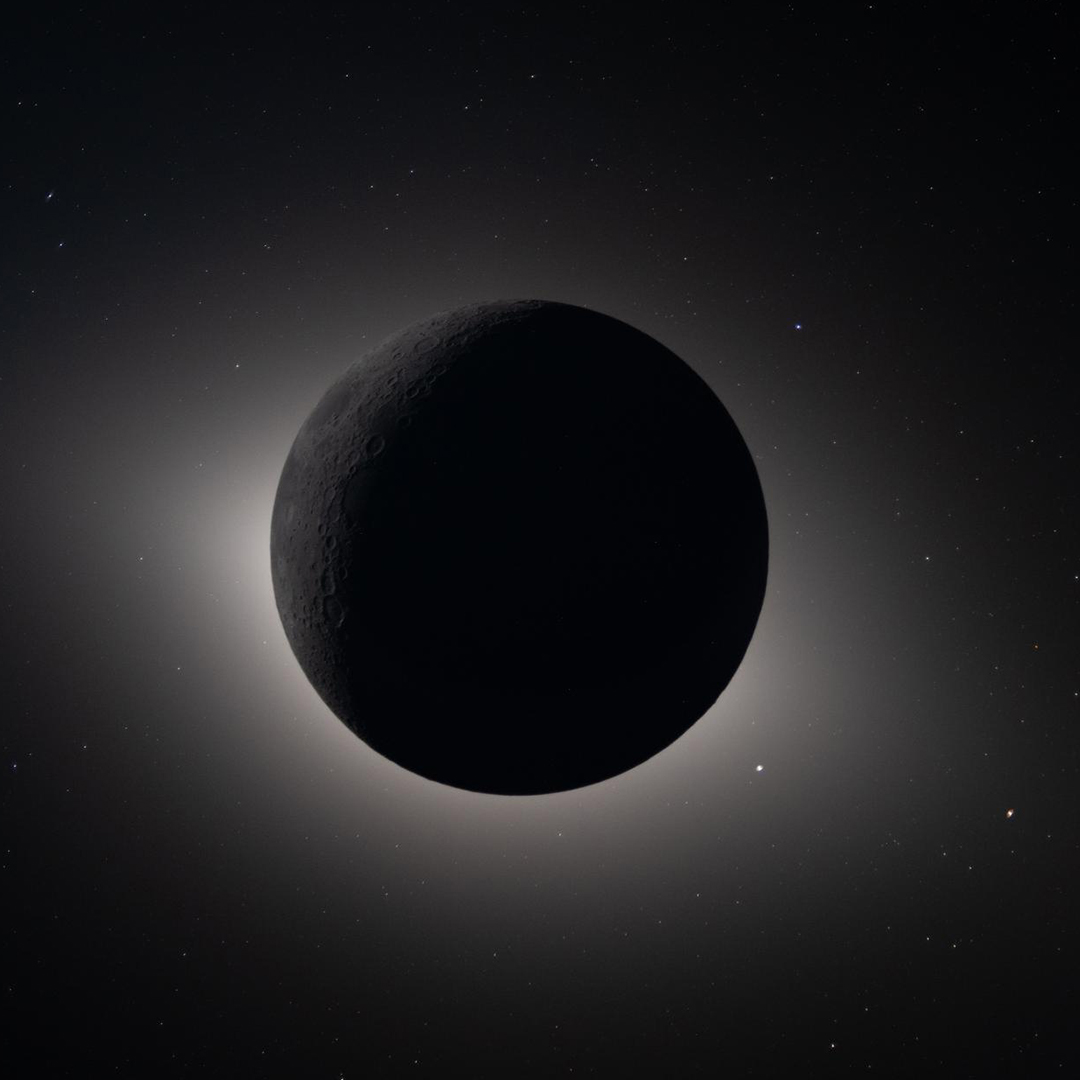
Captured by the Artemis II crew during their lunar flyby on April 6, 2026, this image shows the Moon fully eclipsing the Sun. From the crew’s perspective, the Moon appears large enough to completely block the Sun, creating nearly 54 minutes of totality and extending the view far beyond what is possible from Earth. We see a glowing halo around the dark lunar disk. The science community is investigating whether this effect is due to the corona, zodiacal light, or a combination of the two. Also visible are stars, typically too faint to see when imaging the Moon, but with the Moon in darkness stars are readily imaged. This unique vantage point provides both a striking visual and a valuable opportunity for astronauts to document their observations during humanity’s return to deep space. The faint glow of the nearside of the Moon is visible in this image, having been illuminated by light reflected off the Earth. Editor's note: This caption was updated on April 8, 2026, to reflect ongoing scientific observations and discussion about the image.
Image Credit: NASA
The success of Artemis II confirms that the transport architecture is viable; the challenge now shifts to the integration of commercial landing systems and the establishment of surface logistics.
The Structural Implications
The philosophical resonance of Earth appearing "shy" behind the Moon masks a harder structural reality: the cislunar domain is no longer a wilderness, but a frontier being actively mapped for development.
The successful verification of the SLS-Orion stack mitigates the primary engineering risks that have historically stalled deep-space exploration.
By proving that a crew can survive the transit, maintain manual control in lunar proximity, and successfully execute a high-velocity re-entry (approximately 25,000 mph), the United States has formalized its return to the role of the world’s primary spacefaring power.
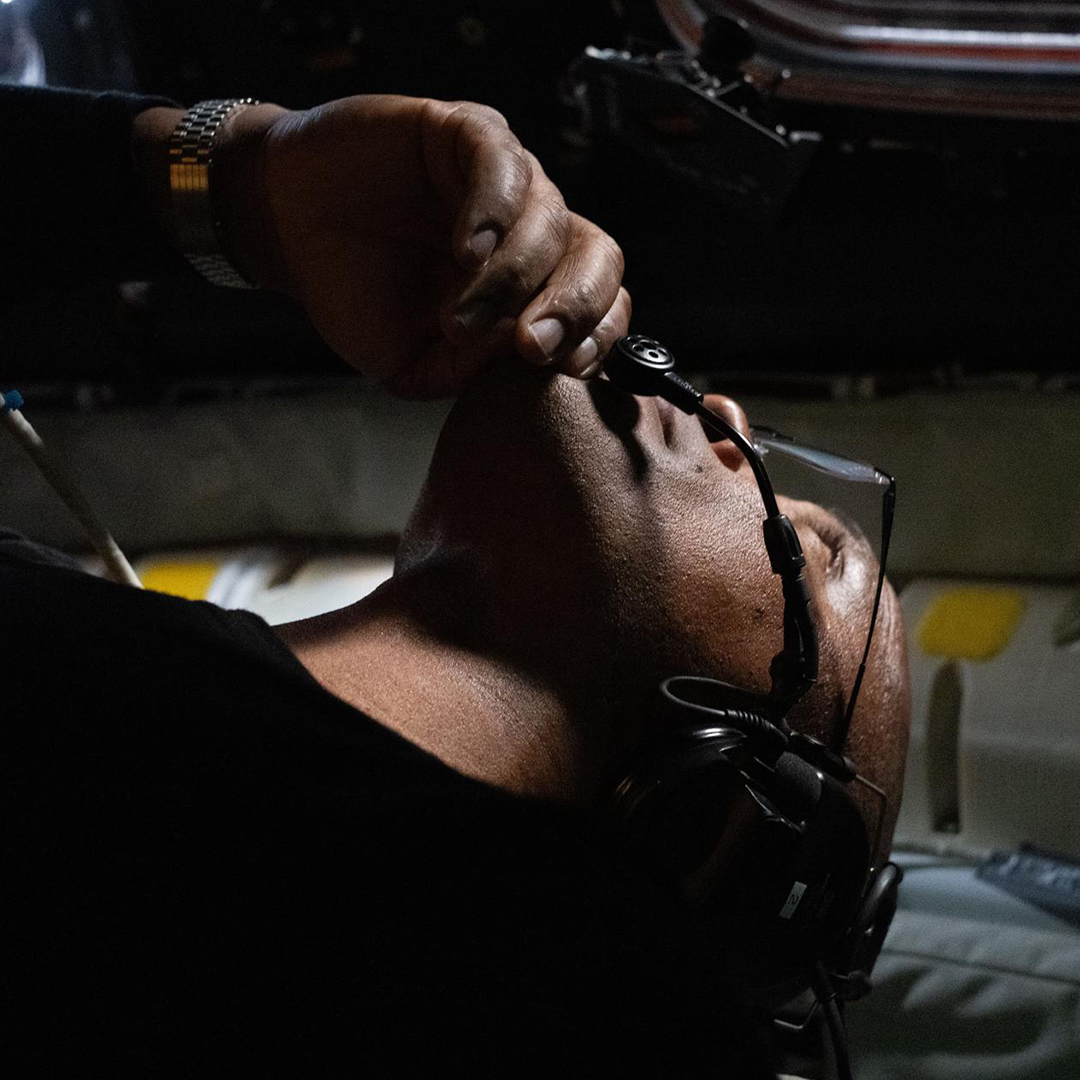
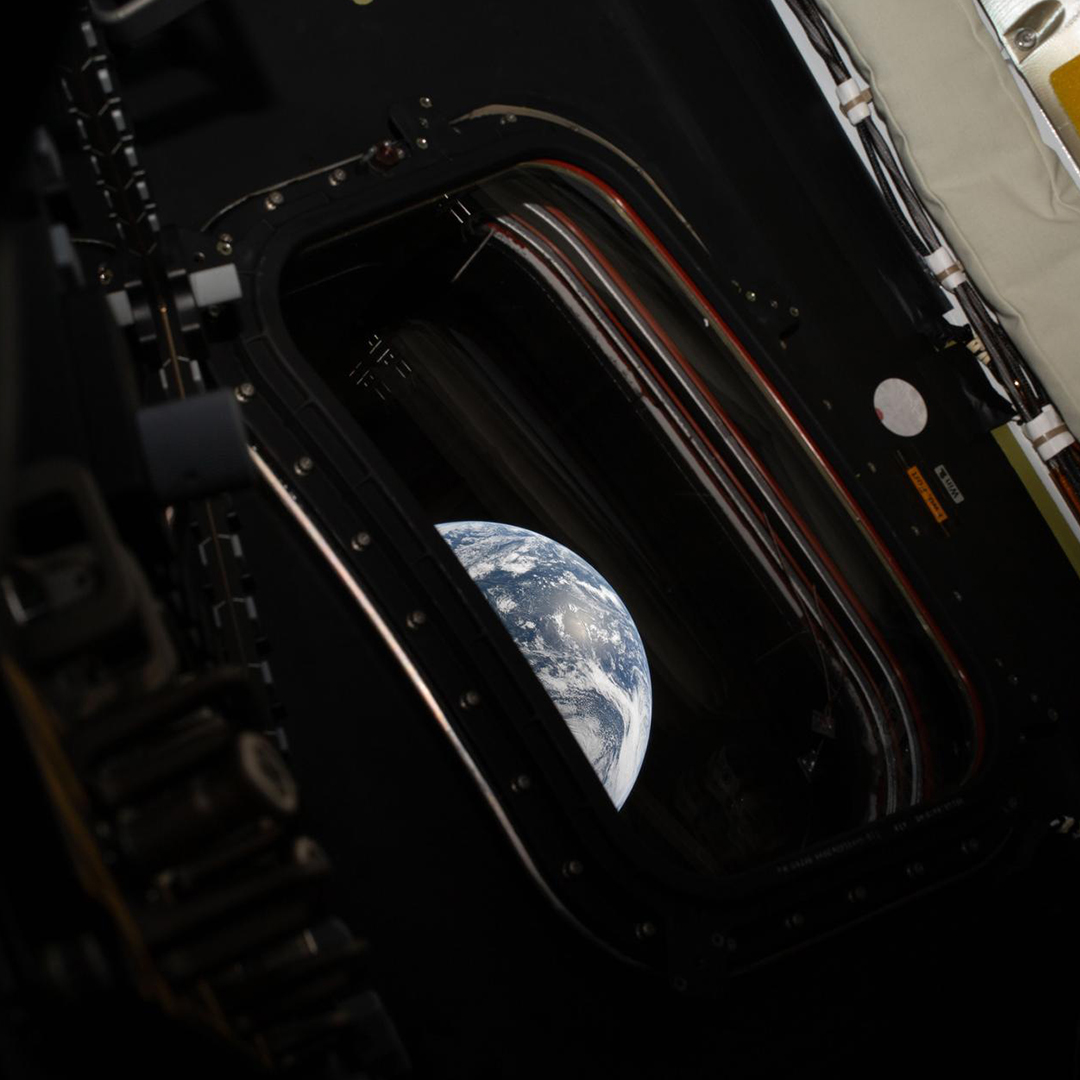
NASA astronaut and Artemis II Pilot Victor Glover pictured here in the Orion spacecraft during the Artemis II lunar flyby. Glover and his fellow crewmates spent approximately seven hours taking turns at the Orion windows capturing science data to share with their team back on Earth. At closest approach, they came within 4,067 miles of the Moon’s surface.
Image Credit: NASA
As the Orion spacecraft moved into the lunar shadow on April 6, the communication blackout lasted 45 minutes. Christina Koch described the "first glimpses of planet Earth again" as a reminder of the mission’s weight and the necessity for the nation to "lead and not follow."
The "Poetics of Space Travel" are often found in these small, uncropped snipviews—an iPhone zoom of a retreating home, the sound of a Nikon shutter in a vacuum, the sight of Mars as a distant red hue.
Yet, as the official records from NASA and the White House make clear, these moments of awe are the dividends of a rigorous, multi-billion-dollar strategic mandate.
Artemis II has closed the gap between the memory of Apollo and the reality of a permanent presence in the stars. The Earth may have seemed shy behind the Moon, but the technology that captured it was anything but.
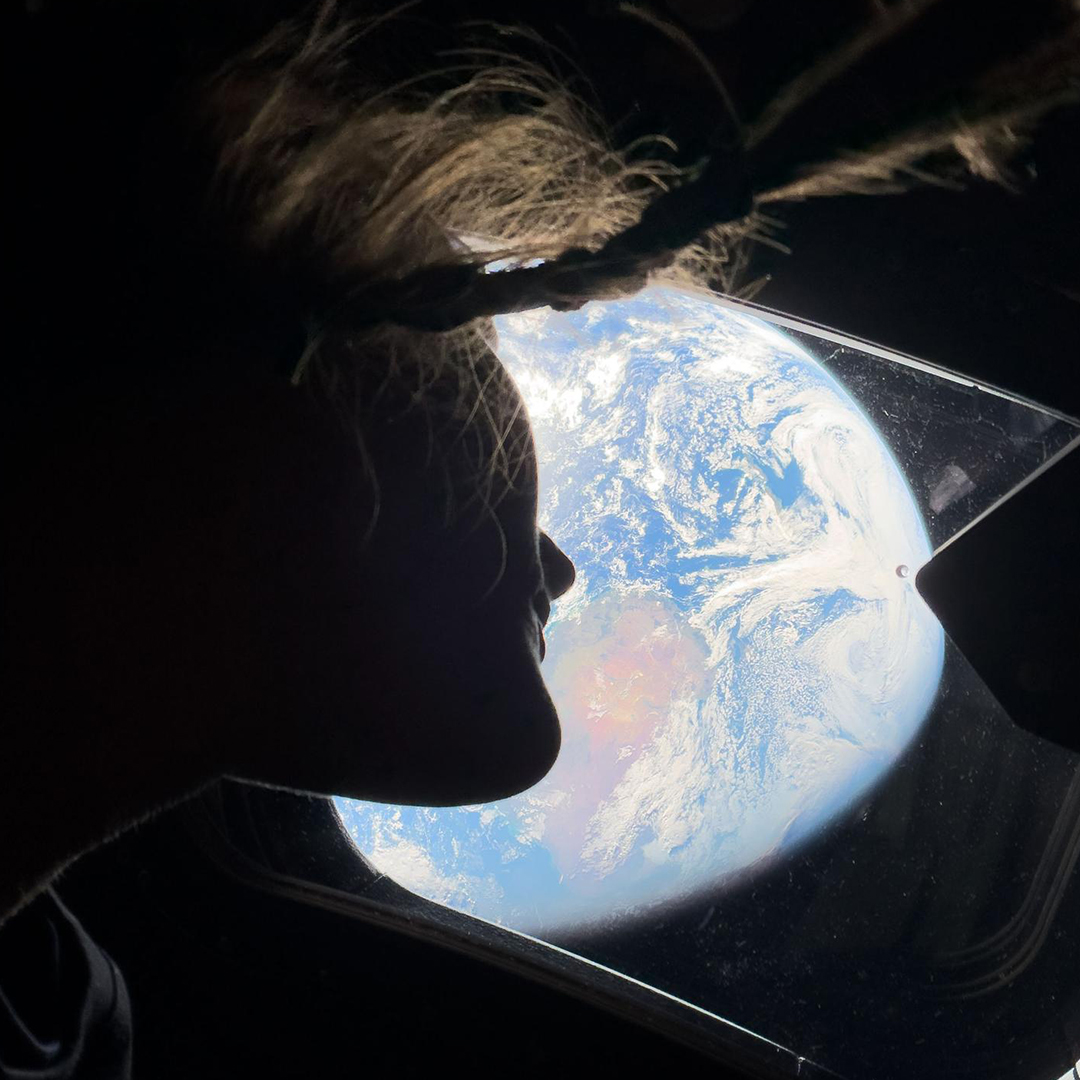
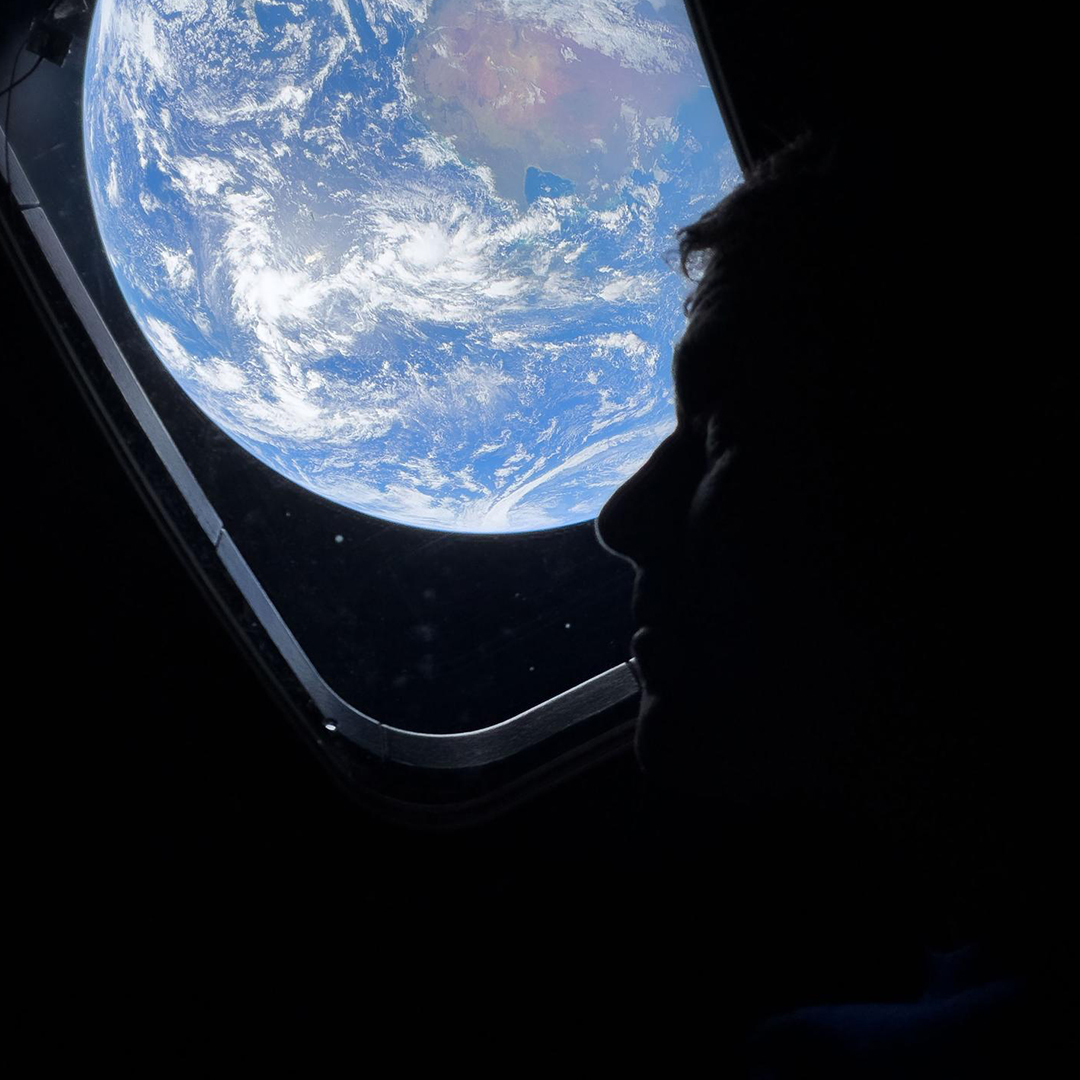
NASA astronaut and Artemis II mission specialist Christina Koch peers out of one of the Orion spacecraft's main cabin windows, looking back at Earth, as the crew travels towards the Moon.
Image Credit: NASA
STRATEGIC SIGNIFICANCE AND MISSION DATA
Mission Metrics
- Spacecraft: Orion (Integrity)
- Max Distance from Earth: 252,756 miles
- Total Distance Traveled: 694,481 miles
- Duration: 9 days, 1 hour, 32 minutes
- Launch Date: April 1, 2026
- Splashdown: April 10, 2026
- Institutional Statements
NASA Administrator Jared Isaacman: "NASA is grateful to President Donald Trump and partners in Congress for providing the mandate... this moment belongs to the thousands of people across fourteen countries."
Commander Reid Wiseman: "the creative genius of our greatest minds will have us [on Mars] very soon. LETS GO."
The mission serves as the first crewed validation of the U.S.-led "Artemis Accords" framework, ensuring that the next phase of lunar exploration is conducted under a collaborative, Western-aligned coalition.