Trump, Netanyahu Hold Phone Call as Israel-Iran Exchange Fire After Ceasefire
The call came amid reports of growing tensions between the two leaders, with media reports indicating that Trump had recently described Netanyahu as "crazy" during a separate conversation.
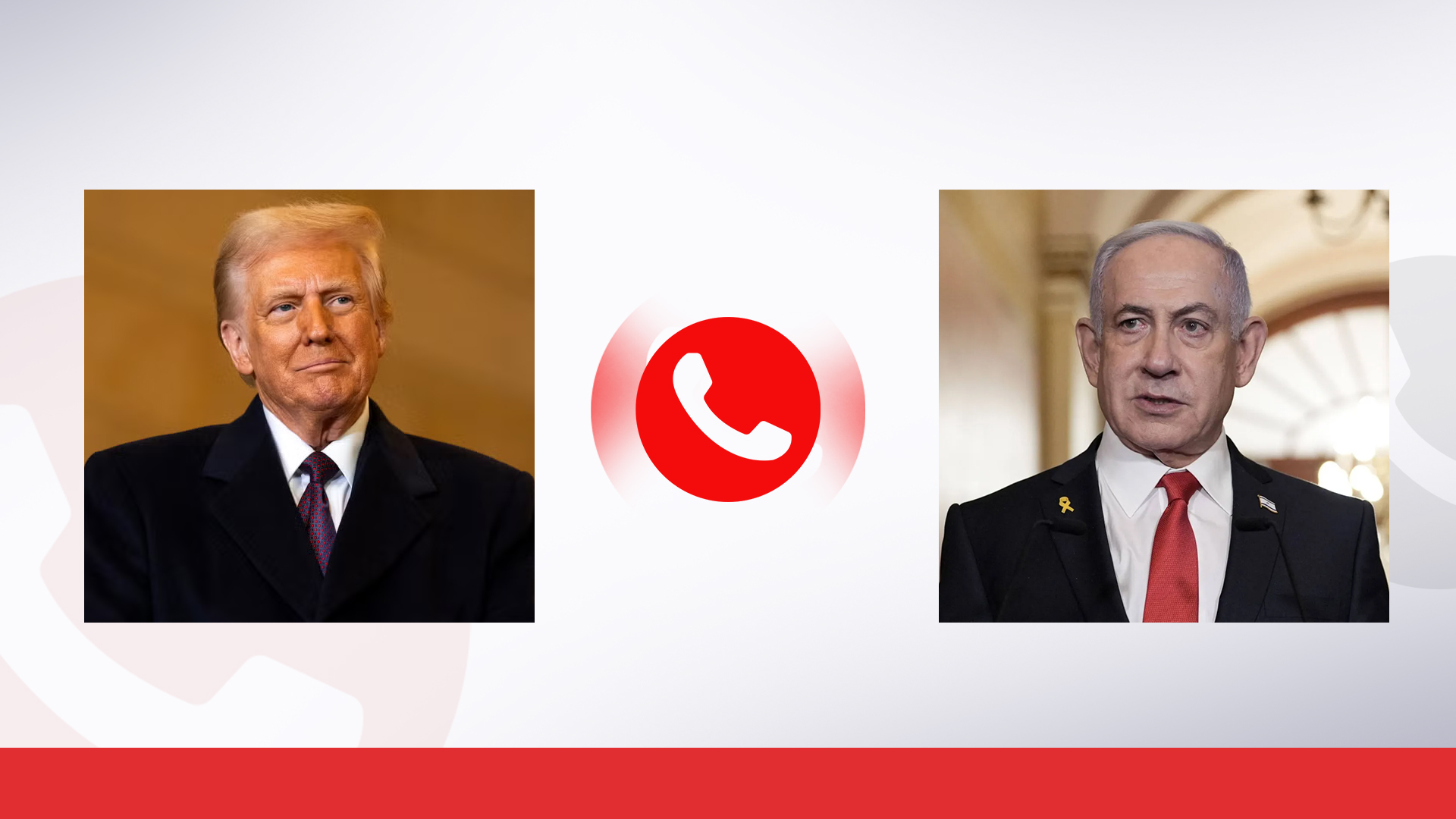
ERBIL (Kurdistan24) – U.S. President Donald Trump spoke by phone with Israeli Prime Minister Benjamin Netanyahu on Monday following the first direct exchanges of fire between Israel and Iran since an April ceasefire, a White House official told AFP.
The call came amid reports of growing tensions between the two leaders, with media reports indicating that Trump had recently described Netanyahu as "crazy" during a separate conversation.
Earlier on Monday, Trump urged both sides to end the hostilities.
"Israel and Iran must immediately stop 'shooting'," the U.S. president wrote on social media.
The White House official confirmed that Trump and Netanyahu had spoken but did not provide further details about the discussion.
The latest escalation began overnight after Iran's Islamic Revolutionary Guard Corps (IRGC) launched a volley of ballistic missiles toward Israeli targets, including the Nevatim and Tel Nof air bases, and reportedly a petrochemical facility in Haifa. Iranian media described the attack as retaliation for an Israeli strike on Beirut that targeted Hezbollah.
Israeli air defense systems intercepted most of the missiles, with authorities reporting limited damage and no major casualties. Some missile impacts or near misses were reported in areas around Tel Aviv and the West Bank.
Iran released footage of the missile launches and portrayed the operation as the beginning of a sustained military campaign.
In response, Israel carried out airstrikes against military targets in western and central Iran, targeting air defense systems, missile infrastructure, and a petrochemical complex, including facilities in Mahshahr. Explosions were also reported in Tehran, Tabriz, Isfahan, and several other locations.
The renewed hostilities have heightened concerns over the possibility of a broader regional conflict, despite the ceasefire that had largely halted direct military exchanges between the two countries since April.