U.S., Iran Signal Readiness for War as Ceasefire Nears Expiry Amid Uncertain Pakistan Talks
Tehran escalates accusations over seized vessel, questions negotiations as tensions persist across Gulf and Lebanon
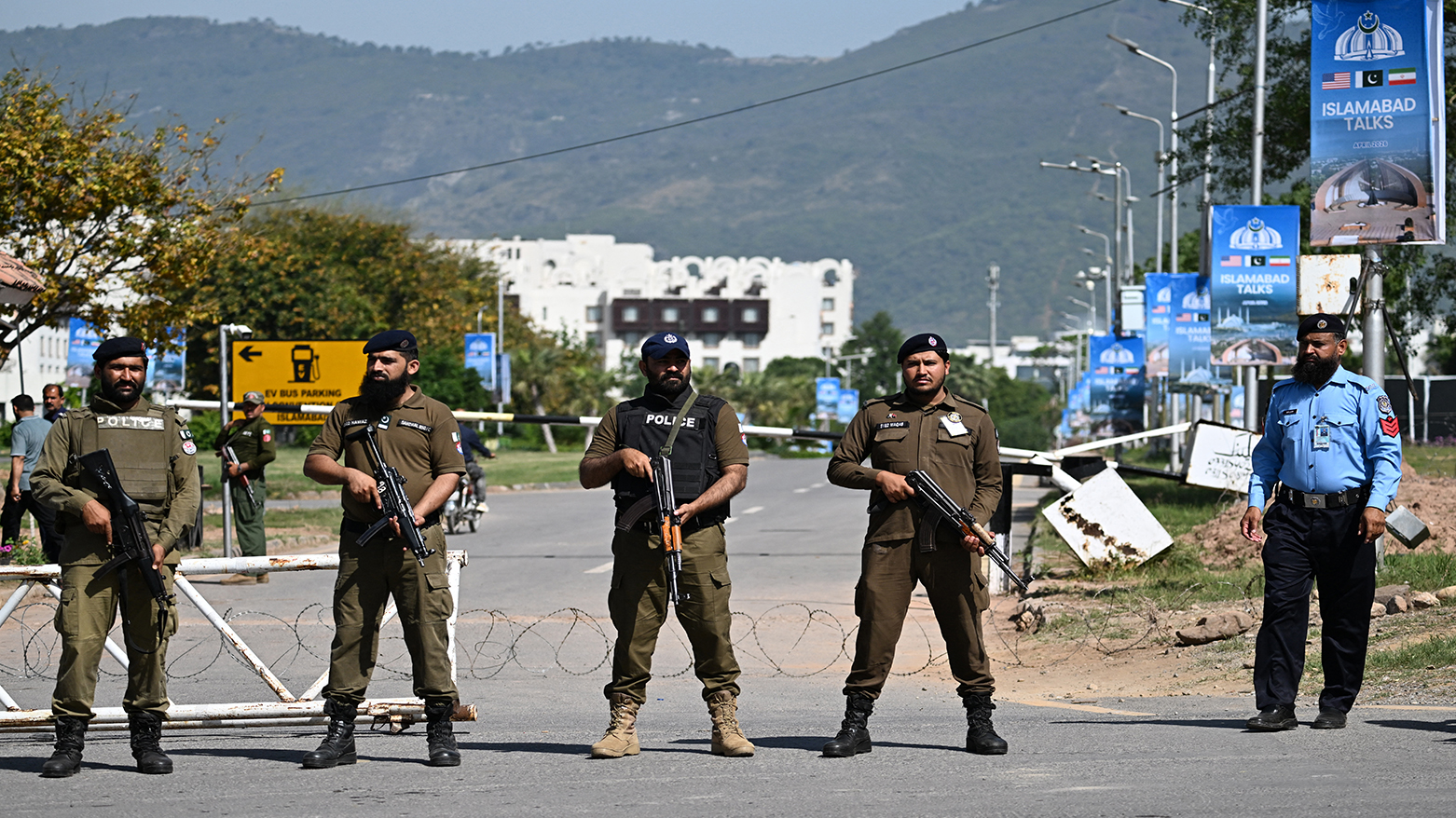
ERBIL (Kurdistan24) — The United States and Iran have both warned they are prepared for renewed conflict as a fragile ceasefire nears its expiration, casting uncertainty over planned negotiations that Donald Trump said would resume in Pakistan.
The White House said Vice President JD Vance stood ready to return to Islamabad for a second round of talks aimed at ending a war that has engulfed the Middle East and rattled global markets. However, Tehran has yet to confirm its participation, accusing Washington of breaching the truce through a blockade of Iranian ports and the seizure of a vessel.
In a fresh escalation, Iran’s foreign ministry condemned the U.S. military’s seizure of an Iranian commercial ship, identified as “Touska,” near the coasts of the Gulf of Oman on April 20.
Tehran described the move as an “illegal act of maritime piracy” and a violation of international law and the United Nations Charter, stressing that it breached the April 8 ceasefire agreement and constituted a direct infringement on Iran’s sovereignty.
The ministry called on the Secretary-General of the United Nations, António Guterres, the United Nations Security Council, and the International Maritime Organization to take a firm stance against Washington’s actions, warning they pose a threat to international maritime trade.
Tehran also demanded the immediate release of the vessel, its crew, and their families, asserting that it would use “all available means” to defend its national security and citizens. Iranian officials reiterated that responsibility for escalating tensions in the region lies with the United States.
Iranian parliament speaker Mohammad Bagher Ghalibaf, who previously led Tehran’s delegation in Pakistan, sharply criticized Washington’s actions, warning that negotiations under pressure would not be accepted.
“By imposing a blockade and violating the ceasefire, Trump wants to turn this negotiating table into a surrender table,” Ghalibaf said, adding that Iran had been preparing “new cards on the battlefield” in recent weeks.
The Islamic Revolutionary Guard Corps (IRGC) further escalated rhetoric, warning it could target vessels attempting to pass through the Strait of Hormuz without authorization.
The strategic waterway—through which roughly a fifth of global oil supplies transit—has become a central flashpoint, with Iran previously restricting access in retaliation for a war launched on February 28 by the United States and Israel.
Washington, in turn, has accused Tehran of violating the ceasefire by harassing commercial shipping in the strait. According to maritime intelligence reports, more than 20 Iranian “shadow vessels” were observed bypassing the U.S. blockade on Tuesday, even as the channel typically handles around 120 daily transits under normal conditions.
Trump insisted the blockade was “absolutely destroying” Iran and would remain in place until a deal is reached, particularly on Tehran’s disputed nuclear program. He warned that failure to sustain the ceasefire could result in a rapid return to hostilities.
“If the truce expires, then lots of bombs start going off,” he said, adding separately that extending the current two-week pause was “highly unlikely.”
Confusion remains over the precise expiration of the ceasefire, with timelines differing between Tehran and Washington. While the truce is expected to lapse overnight Tuesday Tehran time, Trump indicated it could extend until Wednesday evening U.S. time.
Despite the tensions, global markets showed cautious optimism. Oil prices fell, and equities rose on hopes that a diplomatic breakthrough could reopen the Strait of Hormuz and stabilize energy flows.
Separately, Iranian foreign ministry spokesman Esmail Baghaei said Tehran had rejected sending a delegation to Pakistan for the anticipated talks, while as of Tuesday, U.S. negotiators had yet to arrive in the host country, further clouding prospects for diplomacy.
Meanwhile, a separate ceasefire involving Israel and Lebanon has opened another diplomatic track. A second round of talks is scheduled in Washington on Thursday, even as sporadic violence continues along the border.
Israel has warned civilians against returning to parts of southern Lebanon, alleging violations by Hezbollah. The United Nations Security Council on Monday condemned the killing of a French peacekeeper, reportedly ambushed while en route to a United Nations Interim Force in Lebanon (UNIFIL) outpost.
Hezbollah lawmaker Hassan Fadlallah said the group would continue efforts to challenge Israeli military positions in the south, while still expressing support for maintaining the ceasefire.
Another major sticking point in U.S.-Iran diplomacy remains Tehran’s stockpile of enriched uranium. Trump said earlier claims that Iran had agreed to transfer the material were overstated, describing the process as “long” and “difficult” following U.S. strikes on Iranian nuclear facilities last year.
Referring to those strikes, Trump said “Operation Midnight Hammer” had obliterated Iran’s “nuclear dust” sites—a term he uses for enriched uranium stockpiles—though he acknowledged that recovery or removal would be complex.
Iran’s foreign ministry has rejected any suggestion of transferring its uranium reserves, insisting the issue was never part of negotiations and that the stockpile “is not going to be transferred anywhere.”