Ultimatums and Oralloy: Deconstructing the ‘Sign or Strike’ Logic of the Iran Deadlines
In an interview with CNBC’s “Squawk Box,” Trump stated he expects a "great deal" to emerge from an upcoming second round of peace negotiations.
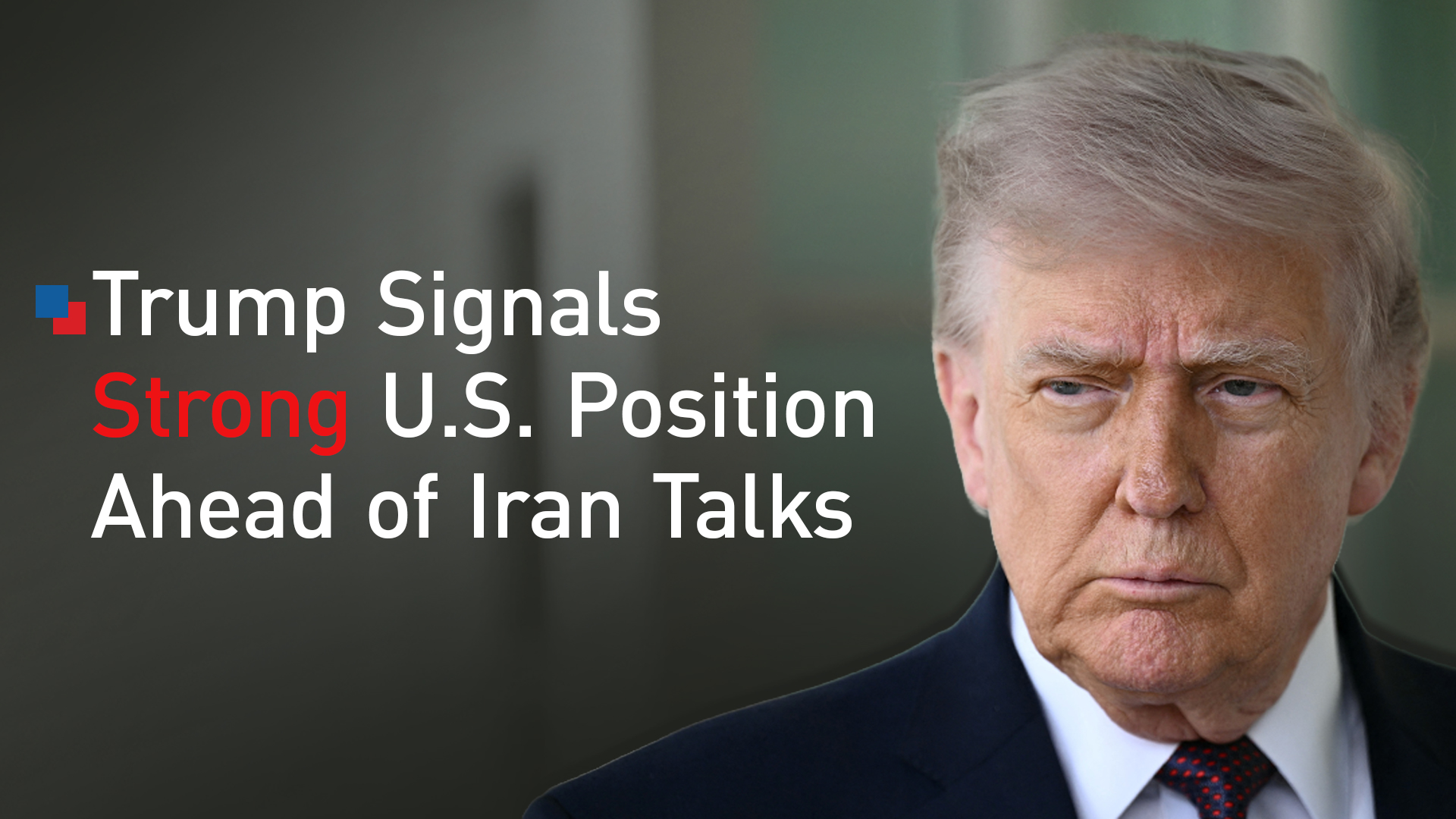
ERBIL (Kurdistan24) - In an expansive interview with CNBC’s Squawk Box on Tuesday, President Donald J. Trump articulated a fundamental realignment of U.S. power in the Middle East, framing the current standoff with Iran not as a traditional diplomatic stalemate, but as the final phase of a high-pressure campaign to secure a “great deal.”
The president noted that while Tehran had initially signaled an unwillingness to participate in the discussions, the Iranian leadership has "no choice" but to negotiate.
This development comes amid an active ceasefire that is scheduled to expire tomorrow. President Trump indicated that the United States is currently evaluating whether to allow the ceasefire to continue, noting that any extension would depend on the immediate prospects for a signed agreement.
According to the president, the United States has conducted an extensive military campaign that has fundamentally altered the strategic landscape in the region. President Trump asserted that U.S. forces "took out" the entirety of the Iranian Navy, specifically citing the destruction of 159 ships during the first three days of operations.
The U.S. President further stated that the Iranian Air Force, radar systems, and anti-aircraft apparatus have been neutralized, and that the country’s leadership has been significantly impacted.
"It is regime change, no matter what you want to call it," President Trump said during the interview, characterizing the current situation as an "indirect" shift in the Iranian governing structure. He argued that the removal of conventional military options has forced the remaining leadership in Tehran to become "much more rational" in their approach to diplomacy.
Trump contrasted the current administration's actions with a "47-year period" of previous U.S. policy, during which he alleged the Iranian government was responsible for the deaths of numerous American soldiers and other individuals.
Domestic conditions within Iran were also a primary focus of the president’s remarks. President Trump cited reports that 42,000 unarmed and "innocent" protesters have been killed over the last two months, noting that many were executed by hanging.
These developments occur alongside what has been described as 100 days of the largest protests in Iran since the 1979 revolution. The president stated that while the Iranian people are "incredible," they are currently led by "bloodthirsty" and "tough" individuals whose actions have been "very negative" for the country's standing.
Regarding the maritime security situation, the president reported that the United States maintains total control over the Strait of Hormuz. Despite claims from Tehran that they would "open the straight," President Trump asserted that the U.S. blockade has been a "tremendous success" and that the waterway would remain closed to the regime until a final deal is reached.
In a specific operational detail, the president mentioned that U.S. forces intercepted a ship yesterday carrying unspecified items, which he suggested may have been a "gift from China," despite his previous understandings with President Xi Jinping.
The president also addressed the tactical status of Iran’s missile programs, stating that U.S. operations have "obliterated most of their missiles." He alleged that the Iranian military has attempted to move remaining missile assets during the current ceasefire.
In response to these movements, President Trump noted that the U.S. military has utilized the pause in hostilities to "restock" ammunition and equipment, claiming the military is "much more powerful" than it was five weeks ago.
When questioned about the potential for further escalation, President Trump stated that he "expects to be bombing" if a signed deal is not forthcoming. He emphasized that the U.S. military is "raring to go" and "ready to go," describing the current force as the most powerful in the world.
The president criticized the state of the military he inherited from the previous administration, specifically mentioning former President Barack Hussein Obama, describing it as "depleted" and "sad" at the time of his first term. He claimed that his administration’s rebuilding efforts, which continued into the first year of his second term, have provided the necessary leverage to secure what he termed a "great deal."
The president’s strategy appears to involve the potential targeting of Iranian infrastructure if negotiations fail. During the interview, references were made to the possibility of strikes against bridges and the electric grid.
The president argued that such targets are used by the Iranian military for weapon and missile movements, asserting that while such actions would affect the population, they are necessary to hinder the regime’s military capabilities.
President Trump concluded by restating that Iran has the opportunity to become a "strong" and "wonderful" nation again if they choose to use "reason and common sense" to reach a legitimate agreement. He emphasized that the current U.S. negotiating position is the strongest it has been in decades, driven by a combination of military success and a strict diplomatic timeline.
President Trump confirmed Tehran will meet with Vice President Vance but warned that U.S. strikes could resume if a signed deal is not reached before tomorrow's ceasefire deadline.
A New Negotiating Reality
The core of the President’s assertion is that the United States has successfully transitioned from containment to active "regime recalibration."
By claiming the neutralization of Iran’s naval and aerial capabilities—including the destruction of 159 vessels—Trump is signaling that the U.S. has effectively removed Iran’s ability to project power or threaten global energy corridors like the Strait of Hormuz.
For policy analysts and investors, this represents a significant shift in the risk calculus of the region.
The administration is no longer seeking a return to the 2015 JCPOA status quo; rather, it is utilizing a self-described “restocked” and "incredible" military to dictate the terms of a new regional order.
Within this interview, Trump portrays the upcoming deadline for a ceasefire not as a point of crisis, but as a moment of clarity for a regime that he argues has historically only responded to the credible threat of overwhelming force.
Deciphering the Operational Narrative
While the U.S. President’s narrative emphasizes a state of total military readiness, his claims function as a potent form of strategic signaling intended to maintain a psychological advantage over Tehran.
Military Dominance: The President’s assertion that U.S. forces “took out” 159 Iranian ships and obliterated their air defense apparatus serves to underscore the massive asymmetry currently defining the theater. While independent verification of such specific attrition rates remains a matter of intelligence debate, the lack of a significant Iranian maritime response to the ongoing blockade suggests that U.S. operations have, at the very least, achieved a state of functional naval supremacy.
The Human Rights Imperative: By citing a figure of 42,000 unarmed protesters killed by the regime in recent months, Trump is anchoring his aggressive posture in a moral framework. While this figure is higher than some NGO estimates, it highlights the administration's view that the internal stability of the Islamic Republic is at a historic low, further justifying a policy of uncompromising pressure.
The Chinese Factor: Trump’s mention of an intercepted ship carrying "gifts" from China indicates a high level of situational awareness regarding Tehran’s attempts to bypass the blockade. By mentioning his relationship with President Xi in this context, Trump is subtly signaling that the U.S. will not allow external actors to dilute the efficacy of American sanctions.
Analytical Bridge: The Mechanics of Compellence
The Trump administration’s approach represents a masterclass in the application of "compellence"—the use of force to stop an adversary from a current course of action or to force a new one.
Unlike previous administrations that favored incrementalism, the current White House uses a definitive diplomatic clock to prevent Tehran from using negotiations as a stalling tactic.
What appears as negotiation pressure is, in effect, calibrated coercive signaling designed to compress Iran’s bargaining space.
This strategy relies on the regime’s recognition that the President is willing to target dual-use infrastructure, such as the “bridges and electric grid”, if a deal is not forthcoming.
By making the costs of non-compliance immediate and catastrophic, the administration is attempting to bypass the decades-long cycle of inconclusive proxy warfare.
Strength as a Stabilizer
The signature insight of the Squawk Box interview is the President’s belief that he has already achieved “indirect regime change.”
In Trump’s view, a regime that has lost its navy, air force, and radar is a regime that has lost its ability to function as a regional threat, regardless of who sits in the seat of power.
He describes the current Iranian leaders as "much more rational" now, suggesting that the removal of their military options has fundamentally altered their psychology.
This "peace through strength" model assumes that the IRGC and the clerical leadership are ultimately self-preserving.
By positioning the U.S. military as "raring to go" and "totally loaded up," Trump is ensuring that the Iranian delegation enters the room with Vice President Vance fully cognizant of the kinetic consequences of a failed summit.
The Iranian Predicament
From Tehran’s perspective, the structural constraints are unprecedented.
The country is facing one of its most complex and uncertain periods since 1979, beginning with widespread protests and a 39-day war involving the United States and Israel.
It is now contending with a severely weakened economy under sanctions, the emerging threat of a blockade in the Strait of Hormuz, and a U.S. president who has demonstrated a willingness to bypass traditional diplomatic norms.
Iran's decision to send representatives despite initial refusals indicates that there might be some glimmer of hope for a deal or compromise.
The structural incentives now favor a tactical retreat by Tehran, as the alternative described by the President, namely a resumption of high-intensity bombing, would likely lead to the total disintegration of the state’s ability to govern.
Forward-Looking Scenarios
As the ceasefire deadline approaches, the following scenarios are most likely:
The Landmark Framework: A rapid, high-level agreement that addresses missile movements and regional proxies, which Trump would frame as the ultimate validation of his "first-term military rebuilding" efforts.
Calibrated Escalation: If negotiations stall, a targeted strike on high-value logistics (bridges or command hubs) to demonstrate that the deadline was not a rhetorical flourish, but an operational certainty.
The "Strong Footing" Pivot: A scenario where the U.S. allows Iran to begin "making themselves into a strong nation again" in exchange for immediate, verifiable disarmament steps, transitioning from a blockade to a managed reconstruction.
The interview reveals a President who views military hardware not as a deterrent to be held in reserve, but as an active component of the negotiating table.
By tying the fate of Iran’s infrastructure to a 48-hour diplomatic window, the administration has created a moment of profound strategic tension.
The success of this gambit rests on the "reason and common sense" the President demands from Tehran—a rationality that has been forged in the heat of a hundred days of protest and the shadow of an "incredible" military buildup.
The standoff remains a cold, calculated exercise in power, where the silence of the guns is now strictly conditional on the signatures of the diplomats.
This article was updated on Tuesday, Apr. 21, 2026, at 5:21pm.